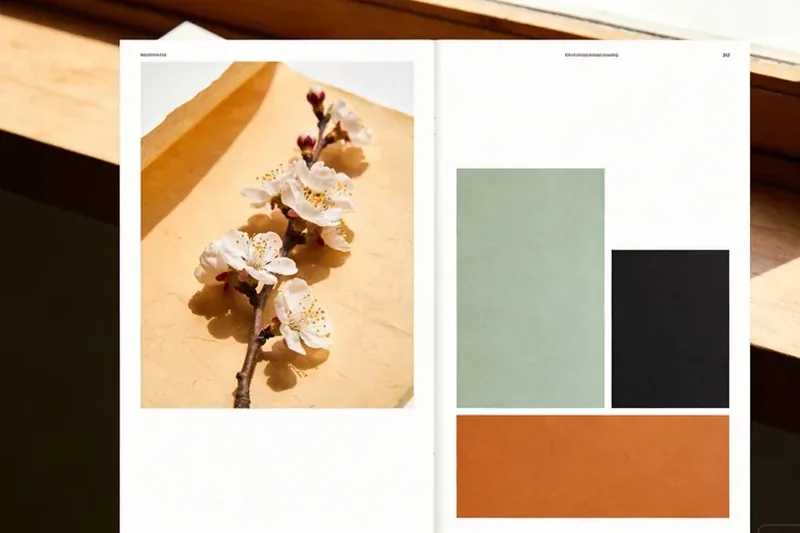
Definition: Osmanthus — guìhuā (桂花) in Chinese — is the small golden flower of Osmanthus fragrans, prized for a sweet, apricot- and honey-like fragrance. It is a classic Chinese fragrance, used in tea, desserts, and incense.
Key facts
| Chinese | 桂花 (guìhuā) |
| Botanical source | Osmanthus fragrans (olive family, Oleaceae) |
| What it is | A dried flower (not a wood or resin) |
| Aroma | Sweet, floral, apricot/honey |
| Traditional role | Fragrance, tea, desserts, incense |
Aroma profile
Direct answer: Osmanthus is sweet and fruity-floral — often described as ripe apricot or peach with a honeyed, nectar-like quality. It is one of the few flowers whose scent is naturally “fruity,” which sets it apart within the floral family and makes it a favorite for rounding out heavier woods.
Osmanthus has a distinctly sweet, fruity-floral scent — often described as ripe apricot or peach with a honeyed, nectar-like quality. It is a bright, uplifting note, very different from the deep woods (agarwood, sandalwood) and often used to add a sweet floral lift to blends.
The signature of osmanthus is its fruity sweetness — more apricot-and-honey than rose’s romantic florality or jasmine’s heady white-floral. It is one of the few flowers whose scent is naturally described as “fruity,” which makes it distinctive in the floral family and a favorite for rounding out heavier woods.
Botanical identity
Direct answer: Osmanthus is the flower of Osmanthus fragrans, an evergreen shrub or small tree in the olive family (Oleaceae). The fragrant material is the small golden flower, not the wood — the plant is also called “sweet olive” or “fragrant tea olive.”
Osmanthus fragrans belongs to the olive family (Oleaceae), which is why it is also called “sweet olive” or “fragrant tea olive.” This is a helpful disambiguation: “osmanthus” is a flower, not a wood or resin. The plant is an evergreen shrub or small tree, and the fragrant part used in tea, food, and fragrance is the small, golden, four-petaled flower. See Osmanthus in Flora of China and Osmanthus on GBIF.
Chinese name and terminology (the 桂 character)
Direct answer: The Chinese name 桂花 (guìhuā) shares the 桂 character with unrelated plants: 月桂叶 (bay leaf, Laurus nobilis) and 桂皮 (cinnamon, Cinnamomum cassia). In classical texts, 月桂 often means osmanthus — not the bay laurel — so the 桂 character needs careful reading.
The character 桂 (“guì”) appears in several unrelated plant names, which is a real source of confusion:
- 桂花 (osmanthus) — Osmanthus fragrans (Oleaceae), the sweet apricot-honey flower. This entry.
- 月桂叶 (bay leaf) — Laurus nobilis (Lauraceae), the Mediterranean bay laurel, a herbal leaf. See bay-leaf.
- 桂皮 (cinnamon/cassia) — Cinnamomum cassia (Lauraceae), a bark. See cinnamon.
The classical trap is 月桂: in old Chinese texts 月桂 usually denotes the osmanthus, not the bay laurel. When a source says 月桂子 (osmanthus fruit), it is describing osmanthus. The shared 桂 character connects three unrelated plants, and Chinese names — 桂花, 月桂叶, 桂皮 — keep them apart.
Where does osmanthus come from?
Direct answer: Osmanthus fragrans is native to East Asia — from the Himalaya through southern China to Taiwan and southern Japan — and is widely cultivated there for its autumn bloom and fragrance.
Osmanthus fragrans is native to East Asia, ranging from the Himalaya through southern and central China to Taiwan and southern Japan. It has been cultivated for centuries as a garden and fragrance plant, and its strong autumn bloom made it a cultural landmark — the flower that marks mid-autumn (中秋) in the Chinese calendar. Because it is a cultivated ornamental and fragrance crop rather than a wild-harvested material, supply is stable and the flower is economical.
Why is osmanthus used in incense?
Direct answer: Osmanthus is used in incense as a sweet, apricot-honey floral lift, often paired with woods — the classic pairing is osmanthus with agarwood (沉香), which the flower rounds out and sweetens. Its fruity-sweet character lightens deeper wood-and-resin blends without covering them.
Osmanthus enters incense as a bright, sweetening floral note. Its fruity-apricot character makes it a natural partner for heavier materials, where it lifts and sweetens without covering them. The classic pairing is osmanthus with agarwood (沉香) — the deep, resinous wood is rounded and brightened by the flower. In a blend, osmanthus sweetens and lightens; it is an accent rather than a base.
In Chinese tradition
Direct answer: Osmanthus is a classic Chinese fragrance dating back at least to the Tang dynasty, tied to the autumn Mid-Autumn festival. It is used in tea (桂花茶), desserts and confections (桂花糕, 桂花酒), and incense, where it pairs with woods like agarwood.
- Fragrance: a classic Chinese floral fragrance, dating back at least to the Tang dynasty.
- Tea (桂花茶): osmanthus flowers are commonly blended with tea or brewed as a floral tisane.
- Food: used to flavor desserts, sugar, and confections (桂花糕, 桂花酒).
- Incense: osmanthus is a floral incense ingredient, often paired with woods — a classic pairing is osmanthus with agarwood (沉香).
- Season: O. fragrans is famous for its strong autumn bloom, which ties it to mid-autumn (中秋) in Chinese culture.
Varieties (金桂 / 银桂 / 丹桂)
Direct answer: Osmanthus fragrans has several color variants: 金桂 (gold, richest and most fragrant), 银桂 (silver, lighter), 丹桂 (red, less fragrant), and 四季桂 (four-seasons, blooms repeatedly). The golden 金桂 type is the reference for fragrance and tea.
Osmanthus fragrans has several color variants, each with a slightly different character:
- 金桂 (gold osmanthus) — golden-yellow, the richest and most fragrant.
- 银桂 (silver osmanthus) — pale/white, lighter scent.
- 丹桂 (red osmanthus) — orange-red, less fragrant.
- 四季桂 (four-seasons osmanthus) — a less fragrant variety that blooms repeatedly.
In fragrance and tea, the golden (金桂) type is the reference. The color names appear in Chinese sources and product labels, so they are useful to recognize.
Osmanthus vs jasmine
Direct answer: Both are sweet Chinese florals, but osmanthus is fruity-apricot-honey while jasmine is heady and white-floral. Osmanthus is brighter and more delicate; jasmine is richer and more opulent. In a blend, osmanthus lifts and sweetens, while jasmine romanticizes.
Both are sweet Chinese florals, but they sit apart: osmanthus is fruity-apricot-honey, while jasmine is heady and white-floral. Osmanthus is brighter and more delicate; jasmine is richer and more opulent. In a blend, osmanthus lifts and sweetens, while jasmine romanticizes. See jasmine.
How is osmanthus processed?
Direct answer: Osmanthus is processed lightly: the flowers are picked and dried whole for tea and desserts, or made into osmanthus sugar or syrup. For perfumery, a solvent extraction yields osmanthus absolute, a costly natural floral extract.
Osmanthus processing is simple and mostly preserves the flower:
- Drying — the small flowers are picked and dried whole for tea (桂花茶), desserts, and blending.
- Sugar and syrup — fresh flowers are layered with sugar or steeped in syrup to make 桂花糖 (osmanthus sugar) and syrup, staples of Chinese desserts.
- Absolute — for perfumery, solvent extraction yields osmanthus absolute, a costly natural extract because the tiny flowers yield little.
What determines osmanthus quality?
Direct answer: Quality rests on the color variant (金桂 grades highest), freshness, and aroma intensity. The golden 金桂 type is the fragrance reference; fresh, fragrant, whole flowers beat faded or stem-heavy material.
The main quality factors:
- Color variant — 金桂 (gold) is the most fragrant and the reference; 丹桂 (red) is less so.
- Freshness — well-dried, fragrant flowers beat stale or faded ones.
- Cleanliness — freedom from stems, leaves, and debris.
- Aroma intensity — the sweet apricot-honey scent is the practical test.
Osmanthus is not graded by a formal standardized system; these are trade distinctions, and the color names on the label indicate the likely strength and character.
Common forms
Direct answer: Osmanthus is sold as dried flowers, osmanthus sugar and syrup, and — for perfumery — osmanthus absolute. The dried flower is the tea and incense material; the absolute is the costly natural floral extract.
| Form | Typical use |
|---|---|
| Dried flowers | Tea (桂花茶), desserts, incense blending |
| Osmanthus sugar / syrup | Desserts and confections |
| Osmanthus absolute | Perfumery |
The distinction between the dried flower and the absolute is functional — the flower is the everyday material, the absolute the concentrated perfumery extract.
Traditional use vs modern evidence
Direct answer: Osmanthus is a food-safe floral with documented tea, dessert, and fragrance use. We make no medical claims, and — importantly — a food-safe flower does not imply its smoke is harmless to inhale.
- Traditional Use — osmanthus scents tea, desserts, and incense, and is a classic Chinese floral fragrance.
- Historical Record — its use dates back at least to the Tang dynasty, tied to the autumn Mid-Autumn festival.
- Scientific Evidence — the flower’s volatile chemistry is studied, but we present no clinical or medical efficacy claims.
Osmanthus is a gentle floral note and is commonly used in tea and food; however, incense combustion still produces smoke and particulate matter.
Adulteration & misidentification
Direct answer: The two risks are naming — the 桂 character shared with bay leaf and cinnamon — and, for the absolute, substitution: genuine osmanthus absolute is expensive, and synthetic or extended “osmanthus” notes are common. Dried-flower color variants should also match the label.
Osmanthus’s risks are modest but real:
- Naming — 桂花 (osmanthus) shares the 桂 character with 月桂叶 (bay leaf) and 桂皮 (cinnamon); a classical text saying 月桂 usually means osmanthus, and the three are unrelated plants.
- Absolute substitution — genuine osmanthus absolute is costly, so synthetic osmanthus notes (built on ionones and related molecules) are common. This is legitimate when labeled, a problem only when sold as natural absolute.
- Color-variant accuracy — a label claiming 金桂 (gold) should not deliver a lower-fragrance 丹桂 (red).
Sustainability & sourcing
Direct answer: Osmanthus is a widely cultivated ornamental and fragrance crop, not an endangered material, so its supply is stable. Sourcing should confirm the color variant (金桂 preferred) and the form, since the costly absolute is the main substitution risk.
Osmanthus is farmed and garden-grown across East Asia, so it carries no conservation concern. The sourcing questions are commercial: which color variant, which form (dried flower, sugar, or absolute), and — for the absolute — how pure. See the wholesale guide for the general sourcing framework.
Modern commercial applications
Direct answer: Osmanthus serves tea (桂花茶), desserts and confections (桂花糕, 桂花酒), incense as a sweet floral accent, and — as an absolute — perfumery. The dried flower serves tea and incense; the absolute serves fine fragrance.
- Tea — osmanthus tea (桂花茶) and osmanthus-blended teas are classics.
- Food — osmanthus sugar and syrup flavor desserts and confections.
- Incense — the dried flower is blended as a sweet floral accent, often with woods.
- Perfumery — osmanthus absolute is a prized, costly natural floral extract.
What buyers should look for
Direct answer: Buyers should confirm the color variant (金桂 preferred), the form (dried flower, sugar, or absolute), and freshness. For the absolute, price should match the claimed purity; for the dried flower, the apricot-honey scent is the test.
For an incense maker or sourcing buyer:
- Color variant — 金桂 (gold) is the fragrance reference; confirm the label matches the material.
- Form — dried flowers, sugar/syrup, or absolute; each has a different use.
- Freshness — fragrant, whole flowers beat faded or stem-heavy material.
- Purity — for the absolute, price should match the claimed purity; genuine osmanthus absolute is never cheap.
Safety
Osmanthus is a gentle floral note and is commonly used in tea and food; however, incense combustion still produces smoke and particulate matter. Burn in a well-ventilated space. (Do not assume a food-safe flower implies its smoke is harmless to inhale.)
Our Industry View
Direct answer: In manufacturing, osmanthus’s value is its distinctive fruity-sweet character — an accent that lifts and sweetens a blend. The key variables are color variant, form, and whether the note is natural or synthetic, because genuine osmanthus absolute is too costly to be an economical incense ingredient.
From a manufacturing perspective, osmanthus earns its place through a specific, hard-to-substitute character: its fruity, apricot-honey sweetness that lightens heavier woods without covering them. It is an accent, not a base.
Two points follow:
- The variant is a specification. 金桂 (gold) is the most fragrant and the reference, while 丹桂 (red) is noticeably weaker. A formula built on gold osmanthus will not reproduce if the source silently delivers a less fragrant variant.
- Natural vs synthetic is the honesty question. Genuine osmanthus absolute is expensive, so most “osmanthus” in commercial incense is a reconstructed note built on ionones and related molecules. A well-built accord is often more consistent than the natural extract — but it must be labeled, and the buyer should not pay absolute prices for an accord.
In our view, the commercial sweet spot is a clearly labeled osmanthus note — dried flower or accord — bought in a consistent variant, used as a sweet floral accent. The exact dosing depends on formulation.
Summary
Osmanthus (桂花) is the small golden flower of Osmanthus fragrans, an olive-family (Oleaceae) shrub, prized for a sweet, apricot-and-honey fragrance. Its name shares the 桂 character with unrelated plants — 月桂叶 (bay leaf) and 桂皮 (cinnamon) — and classical 月桂 usually denotes osmanthus. It serves tea, desserts, and incense as a bright, fruity floral accent, with 金桂 (gold) as the fragrance reference. Its value rests on color variant, form, and — for the absolute — purity; a food-safe flower does not imply its smoke is harmless.
FAQ
Is osmanthus a wood or a flower? A flower — the bloom of Osmanthus fragrans (olive family). It is used dried in tea, food, and incense. The plant is an evergreen shrub or small tree in the Oleaceae family, also called “sweet olive” or “fragrant tea olive,” but the fragrant material used in fragrance is the small golden flower, not the wood. This is a helpful disambiguation: osmanthus is a delicate floral note, not a heavy wood or resin.
What does osmanthus pair with? Its sweet apricot-honey florals pair well with woods like agarwood and sandalwood, where it adds a bright, sweet lift. The classic pairing is osmanthus with agarwood (沉香), which the flower rounds out and sweetens; it also pairs naturally with other florals such as jasmine and rose. Its fruity-sweet character makes it useful for lightening heavier, deeper wood-and-resin blends without covering them.
What does osmanthus smell like? Distinctly sweet and fruity-floral — often described as ripe apricot or peach with a honeyed, nectar-like quality. It is a bright, uplifting note, and one of the few flowers whose scent is naturally described as “fruity,” which sets it apart within the floral family. More apricot-and-honey than rose’s romantic florality or jasmine’s heady white-floral, it is a favorite for rounding out heavier woods.
What is osmanthus tea? Osmanthus flowers brewed as a floral tisane or blended with tea leaves (桂花茶). It carries the same sweet apricot-honey aroma. The dried flowers are steeped alone or mixed into green or oolong tea, giving a delicate, fruity-sweet cup that is a classic of Chinese tea culture. Because the flowers are small and fragrant, only a small amount is needed to flavor a pot.
What is the difference between 金桂 and 丹桂? Both are Osmanthus fragrans color variants: 金桂 (gold) is the most fragrant, 丹桂 (red) is less so. The gold type is the reference for fragrance and tea. A third variant, 银桂 (silver), is paler with a lighter scent, and 四季桂 (four-seasons) is a less fragrant type that blooms repeatedly. Recognizing these color names is useful because they appear on Chinese product labels and indicate the likely strength and character of the scent.
Is osmanthus the same as bay leaf (月桂叶)? No. Osmanthus (桂花) is Osmanthus fragrans (Oleaceae), a sweet apricot-honey flower, while bay leaf (月桂叶) is Laurus nobilis (Lauraceae), a Mediterranean herbal leaf. The confusion comes from the shared 桂 character — and from the fact that in classical Chinese, 月桂 usually means the osmanthus, not the bay laurel. They are unrelated plants, and each has its own entry here. See bay-leaf.
See also: jasmine, rose, bay-leaf, orchid, silk tree flower and the full scent guide.
Evidence & Sources
Botanical identity
Source: Osmanthus in Flora of China · Osmanthus on GBIF. Evidence type: Established.
Traditional Chinese use
Source: this page records osmanthus as a classic Chinese fragrance dating back at least to the Tang dynasty, tied to mid-autumn (中秋). Evidence type: Historically documented — traditional use, not modern clinical evidence.
Commercial grading
Source: the color variants (金桂 / 银桂 / 丹桂 / 四季桂), with the golden (金桂) type as the fragrance reference. Evidence type: Trade terminology.
Safety
Source: osmanthus is food-safe, but incense combustion produces smoke and particulate matter; do not assume food-safety implies the smoke is harmless. Evidence type: Established.
Evidence status
| Layer | Status |
|---|---|
| Botanical identity | Established |
| Traditional use | Historically documented |
| Commercial grading | Trade terminology |
| Health claims | Not established |
Sources
Sources: botanical references on Osmanthus fragrans (Oleaceae, color variants) and commercial/cultural accounts of its use in tea and incense. This is editorial knowledge content.