Direct answer: Rose — méiguī (玫瑰, also 玫瑰花 méiguīhuā) in Chinese — is a sweet-scented flower, most classically the Chinese rose Rosa rugosa, used in tea, perfume, incense, and traditional materia medica.
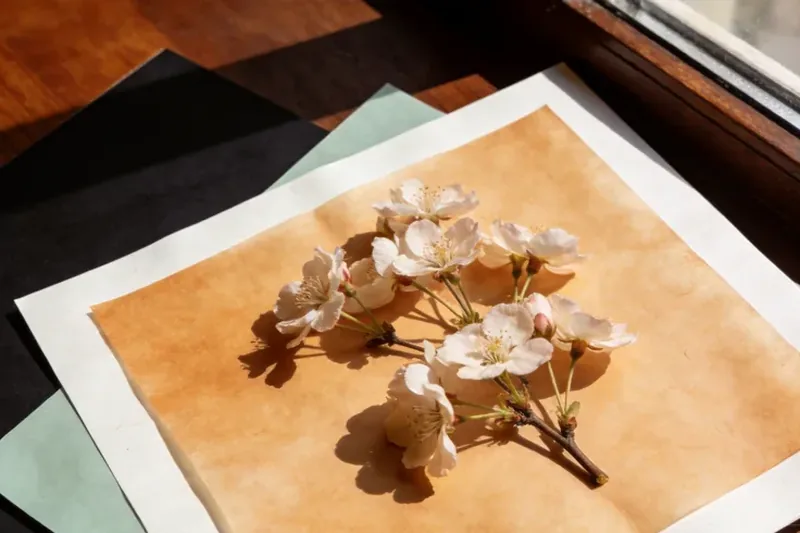
Key facts
| Chinese | 玫瑰 (méiguī), 玫瑰花 (méiguīhuā) |
| Botanical source | Rosa rugosa (Chinese rose); also R. damascena (damask rose) |
| What it is | A dried flower bud |
| Aroma | Sweet, floral, romantic |
| Traditional role | Tea, perfume, incense |
Aroma profile
Direct answer: Rose is sweet, floral, and “romantic.” The Chinese rose (R. rugosa) is fresher and fruitier; the damask rose (R. damascena) is the richer, dewier classic of Western perfume. In incense, “rose” is almost always a reconstructed accord over a wood or resin base.
Rose has a sweet, floral, “romantic” aroma. In Chinese fragrance the Chinese rose (R. rugosa) is the traditional material; the damask rose (R. damascena) dominates Western rose perfume. The two have related but distinguishable scents.
The damask rose reads as the “classic rose” of Western perfume — rich, dewy, slightly spicy; the Chinese rose (R. rugosa) is a touch fresher and fruitier, closer to a garden rose than a heavy perfume rose. In incense, “rose” is almost always a floral accord (a reconstructed rose note) layered over a wood or resin base, because true rose absolute is costly and delicate.
Botanical identity
Direct answer: Rose is the flower of Rosa species in the rose family (Rosaceae). The Chinese material is Rosa rugosa, a coastal East Asian species; the Western perfume standard is the hybrid Rosa damascena (damask rose). Both are shrubs grown for the flower, not the wood.
“Rose” is a genus, not a single plant. The two species a Chinese-incense buyer meets most often:
- Rosa rugosa — the Chinese/Japanese/Korean “rugosa rose,” a shrub native to coastal East Asia, whose buds (玫瑰花) are the tea and materia-medica material.
- Rosa damascena — the damask rose, an ancient hybrid grown chiefly for its oil, the “classic rose” of Western perfumery.
Both are members of the rose family (Rosaceae). The fragrant part is the flower — the bud for tea and the petal for oil — not the wood or leaf. See Rosa in Flora of China and Rosa on GBIF.
Chinese name and terminology (玫瑰 vs 月季 vs 蔷薇)
Direct answer: Chinese distinguishes three “rose” plants that English flattens into one: 玫瑰 (Rosa rugosa, the tea/fragrance rose), 月季 (Rosa chinensis, the garden rose), and 蔷薇 (wild/climbing roses). An ingredient list saying 玫瑰 means R. rugosa, not the garden 月季.
Chinese distinguishes several “rose” plants that English loosely calls “rose”:
- 玫瑰 (Rosa rugosa) — the “Chinese rose” of tea and materia medica.
- 月季 (Rosa chinensis) — the repeat-blooming China rose, the garden/ornamental rose.
- 蔷薇 (Rosa multiflora and climbing roses) — the wild/climbing roses.
They are all Rosa species, but in Chinese they are distinct words. When a Chinese ingredient list says 玫瑰, it means R. rugosa — the tea and fragrance rose — not the garden 月季.
Where does rose come from?
Direct answer: Rosa rugosa is native to coastal East Asia — northeastern China, Korea, Japan, and the Russian Far East — while damask rose oil is produced mainly in Bulgaria, Turkey, Iran, India, and Morocco. One is a wild coastal shrub, the other a cultivated perfume crop.
The two roses come from different places and different production systems:
- Rosa rugosa — a coastal shrub of northeastern China, Korea, Japan, and the Russian Far East, collected and cultivated for its buds.
- Rosa damascena — a cultivated hybrid grown across the “rose belt” for oil; Bulgaria, Turkey, Iran, India, and Morocco are the classic producing regions.
This split matters for sourcing: R. rugosa buds are a dried-flower commodity, while damask rose is grown in vast fields for distillation, with a very low oil yield.
Why is rose used in incense?
Direct answer: Rose appears in incense as a sweet, romantic floral lift, almost always as a reconstructed accord over a wood or resin base. True rose absolute is too costly and delicate to burn directly, so “rose” in a stick is usually a rebuilt note, not raw flower.
Rose appears in incense as a floral note, almost always as an accord over a wood or resin base, because true rose absolute is costly. It is also used to make rose water (玫瑰花水), a classic fragrance and culinary ingredient in Chinese and Middle Eastern traditions.
The same flower serves two distinct uses: dried buds for tea and materia medica, and distilled/solvent-extracted petals for rose oil and absolute in perfumery. In incense, the goal is the floral character, and most makers reach it with an accord rather than the expensive natural extract.
In Chinese tradition
Direct answer: Rose is used in China as a floral tea (玫瑰花茶), a fragrance note, and a traditional materia-medica item described for “regulating qi” (理气). That last description is traditional language, not modern clinical evidence.
- Tea: rose buds (玫瑰花) are brewed as a floral tea.
- Fragrance / perfume: rose is a classic floral note.
- Traditional materia medica: in traditional Chinese medicine, rose is described for “regulating qi” (理气) — smoothing emotional “stuckness.” This is traditional language, not modern clinical evidence.
How is rose processed?
Direct answer: Rose is processed in two paths: buds are picked and dried whole for tea and materia medica, while petals are steam-distilled or solvent-extracted to yield rose oil and absolute. Rose water is the aqueous by-product of distillation.
The processing splits by the part used:
- Buds — picked and dried whole for tea (玫瑰花茶) and materia medica; no extraction involved.
- Petals — steam-distilled to yield “rose otto” (oil) or solvent-extracted to yield rose absolute, the two forms used in perfumery.
- Rose water — the aqueous by-product of distillation, itself a fragrance and culinary ingredient.
The low oil yield is the defining economics: a very large quantity of hand-picked petals produces a small amount of oil, which is why genuine rose oil and absolute are expensive and why “rose” in incense is so often an accord.
What determines rose quality?
Direct answer: Quality rests on species (rugosa vs damask), freshness, and — for the oil — purity. The bud material should be whole, fragrant, and clean; the oil’s value hinges on its being genuine rose rather than an extended or reconstructed substitute.
The main quality factors:
- Species — R. rugosa (tea/fragrance rose) vs R. damascena (perfume rose); a different material, not a grade.
- Freshness — well-dried, fragrant buds beat stale or faded ones.
- Cleanliness — freedom from stems, leaves, and debris.
- Purity (for oil/absolute) — genuine rose oil is costly and frequently extended; the price should match the claimed purity.
Rose is not graded by a formal standardized ladder; these are trade distinctions, and the scent is the practical test.
Common forms
Direct answer: Rose is sold as dried buds, dried petals, rose oil/absolute, and rose water. Buds suit tea and materia medica, the oil and absolute suit perfumery, and rose water is a fragrance and culinary by-product.
| Form | Typical use |
|---|---|
| Dried buds (玫瑰花) | Tea and materia medica |
| Dried petals | Potpourri and incense blending |
| Rose oil / absolute | Perfumery and fine fragrance |
| Rose water | Fragrance and culinary use |
The distinction between bud and petal is functional — different parts, different uses.
Traditional use vs modern evidence
Direct answer: Rose’s traditional “regulating qi” and calming descriptions are materia-medica language, not established clinical fact. Its tea, fragrance, and perfume use is well documented; we make no medical claims.
Traditional descriptions of rose (“circulating qi,” calming) are traditional materia-medica language, not established clinical fact.
- Traditional Use — rose is brewed as a floral tea and used in fragrance, and described in traditional materia medica for “regulating qi” (理气).
- Historical Record — rose has a long cultural record in Chinese tea and fragrance and in Middle Eastern and European perfumery.
- Scientific Evidence — the flower’s volatile chemistry is studied, but we present no clinical or medical efficacy claims.
We describe rose’s aromatic and cultural use; we do not make medical claims.
Adulteration & misidentification
Direct answer: The two risks are naming (玫瑰 vs 月季 vs 蔷薇) and, for the oil, extension — genuine rose oil is expensive and frequently cut with geraniol, geranium, or palmarosa. In incense, “rose” is usually an accord, which is legitimate but should be labeled as such.
Rose’s risks are substitution and extension:
- Naming — 玫瑰 (R. rugosa) is not the garden 月季 (R. chinensis) or the wild 蔷薇; a Chinese ingredient list is specific, an English “rose” is not.
- Oil extension — rose oil and absolute are among the most expensive natural extracts, so they are frequently extended with geraniol, geranium, or palmarosa oil; a cheap “rose oil” is rarely pure rose.
- Accord vs natural — in incense, “rose” is usually a reconstructed accord. This is legitimate, but a label should not imply natural rose absolute when it is a synthetic or blended note.
Sustainability & sourcing
Direct answer: Rose is a cultivated crop, not an endangered material, but genuine rose oil is resource-intensive — its very low petal-to-oil yield makes it expensive. Sourcing should confirm species, form, and — for the oil — purity, since extension is the main risk.
Rose carries no conservation concern, but the oil is economically “scarce” by virtue of its low yield: producing a small amount of oil requires a very large quantity of hand-picked petals. For a buyer the practical questions are commercial — which species, which form, and (for the oil) how pure. See the wholesale guide for the general sourcing framework.
Modern commercial applications
Direct answer: Rose serves tea, perfume, and incense — the dried buds go to tea, the oil and absolute to fine fragrance, and “rose” in incense is usually an accord. Rose water spans fragrance and culinary use.
- Tea — dried rose buds (玫瑰花茶) are a classic floral tea.
- Perfumery — rose oil and absolute are among the most prized natural fragrance materials.
- Incense — “rose” appears as a floral accord over a wood or resin base.
- Rose water — a fragrance and culinary ingredient in Chinese, Middle Eastern, and South Asian traditions.
What buyers should look for
Direct answer: Buyers should confirm the species (R. rugosa vs R. damascena), the form (buds, petals, oil, or water), and — for the oil — purity. In incense, confirm whether “rose” is natural or an accord, and request a sample against the formula.
For an incense maker or sourcing buyer:
- Species — R. rugosa (tea rose) vs R. damascena (perfume rose); a real seller names which.
- Form — buds, petals, oil/absolute, or rose water; each has a different use.
- Purity — for the oil, price should match the claimed purity; genuine rose oil is never cheap.
- Accord vs natural — in incense, confirm whether “rose” is natural extract or a reconstructed accord.
Safety
Incense combustion produces smoke and particulate matter. Burn in a well-ventilated space; avoid inhaling concentrated smoke.
Our Industry View
Direct answer: In manufacturing, “rose” usually means a floral accord, not raw flower — and that is the honest way to treat it. The key variables are species, form, and whether the note is natural or reconstructed, because genuine rose oil is too costly to be an economical incense ingredient.
From a manufacturing perspective, rose is the clearest example of a floral whose market form diverges from its natural form. The flower is real, but in incense the note is almost always rebuilt, because true rose oil and absolute are too expensive and too delicate to be a practical stick ingredient.
Two points follow:
- “Rose” is a specification question, not a single material. It can mean R. rugosa buds, R. damascena oil, or a synthetic accord — three different things with different costs and behaviors. A formula built on an accord will not reproduce with raw buds, and vice versa.
- The accord is not a defect. A well-built rose accord is often more stable and consistent than the natural extract, which varies by harvest. The requirement is honesty: the label should say whether the rose note is natural or reconstructed, and the buyer should not pay natural-absolute prices for an accord.
In our view, the commercial sweet spot is a clearly labeled rose note — natural or accord — bought in a consistent form, used as a sweet floral accent rather than a lead that would overwhelm a blend. The exact dosing depends on formulation.
Summary
Rose (玫瑰) is the flower of Rosa species — most classically the Chinese rose Rosa rugosa, distinct from the garden 月季 and the damask rose (R. damascena) of Western perfume. The buds are dried for tea and materia medica; the petals are distilled or extracted for costly oil and absolute. In incense, “rose” is almost always a reconstructed accord over a wood or resin base. Its value rests on species, form, and — for the oil — purity, and its “regulating qi” description is traditional language, not clinical evidence.
FAQ
What is the difference between Chinese rose and damask rose? Chinese rose (Rosa rugosa) is the traditional Chinese material; damask rose (Rosa damascena) is the classic Western perfume rose. They are different species with related but distinct scents. The damask rose reads as the rich, dewy, slightly spicy “classic rose” of Western perfume, while the Chinese rose is a touch fresher and fruitier, closer to a garden rose. In Chinese ingredient lists, 玫瑰 means R. rugosa.
Is rose a wood or a flower? A flower — the dried bud of Rosa species, used in tea, perfume, and incense. The fragrant material is the flower bud or petals, not any wood; in incense, “rose” is almost always a floral accord layered over a wood or resin base, because true rose absolute is costly. So rose is a light floral note that is usually delivered as a reconstructed accord in fragrance, not as raw flower material.
What does rose incense smell like? Sweet, floral, and “romantic” — a classic floral note, either the Chinese rose (Rosa rugosa) or the Western damask rose (R. damascena). In incense, rose is usually a reconstructed accord over a wood or resin base, so the exact character can range from a fresh, garden-like rose to a rich, dewy, slightly spicy perfume rose. The two species read slightly differently, with damask leaning richer and the Chinese rose fresher and fruitier.
Is rose used in Chinese incense? Yes, as a sweet floral note, usually blended rather than burned alone. It also appears in rose tea (玫瑰花茶) and traditional materia medica. Because true rose absolute is costly, rose in incense is typically a floral accord over a wood or resin base, where it adds a romantic, sweet lift to the blend. It is more common in floral-forward and modern blends than in the classical wood-and-resin canon.
What is the difference between 玫瑰, 月季, and 蔷薇? Three Rosa species in Chinese: 玫瑰 is R. rugosa (tea/fragrance rose), 月季 is R. chinensis (garden rose), and 蔷薇 covers climbing roses. They are distinct words and plants. In an ingredient list, 玫瑰 means R. rugosa — the tea and fragrance rose — not the ornamental garden 月季. English loosely calls all of them “rose,” but the Chinese terms separate the fragrant tea rose from the ornamental and climbing types.
What part of the rose is used? The flower bud — dried rose buds (玫瑰花) are used for tea and materia medica, while the petals are distilled for rose water and rose oil. The buds are picked and dried whole; the petals are processed by steam distillation or solvent extraction to yield rose oil and absolute for perfumery. So the bud is the tea ingredient and the petal is the perfumery material, two different parts with two different uses.
See also: jasmine and osmanthus, its fellow florals, banksia rose, violet plus the full scent guide.
Evidence & Sources
Botanical identity
Source: Rosa in Flora of China · Rosa on GBIF. Evidence type: Established.
Traditional Chinese use
Source: this page records rose (玫瑰) described for “regulating qi” (理气) in traditional Chinese medicine. Evidence type: Historically documented — traditional materia-medica language, not modern clinical evidence.
Authenticity / adulteration
Source: the 玫瑰 (Rosa rugosa) / 月季 (Rosa chinensis) / 蔷薇 naming distinction, and “rose” usually being a floral accord in incense. Evidence type: Practical screening.
Safety
Source: incense combustion produces smoke and particulate matter; burn in a well-ventilated space. Evidence type: Established.
Evidence status
| Layer | Status |
|---|---|
| Botanical identity | Established |
| Traditional use | Historically documented |
| Authenticity test | Practical screening |
| Health claims | Not established |
Sources
Sources: botanical references on Rosa (R. rugosa vs R. damascena) and TCM descriptions of 玫瑰花. Medicinal claims are treated as traditional, not clinical. This is editorial knowledge content, not medical advice.