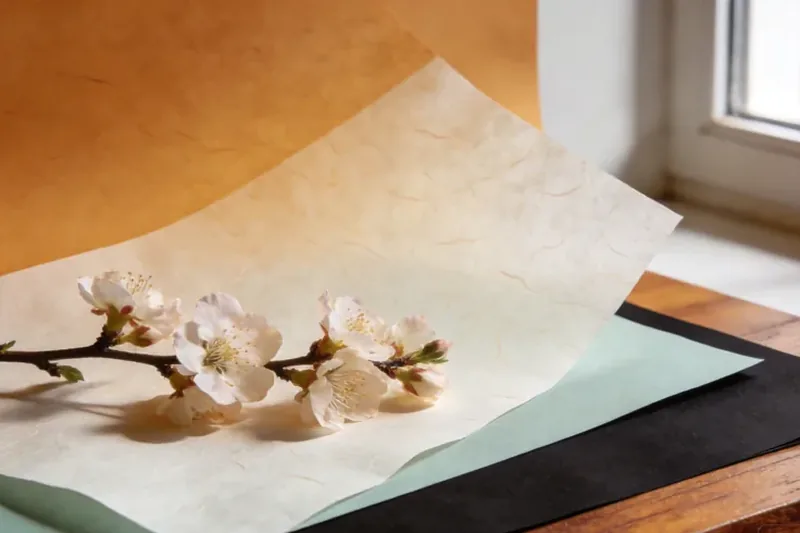
Direct answer: Banksia rose (木香花, mùxiānghuā) is the flower of Rosa banksiae, a climbing rose of the rose family (Rosaceae) native to central and western China. It is a sweet, honeyed, lightly green floral used in Chinese incense and recorded as a flower material in the classical compendium 香乘. Its name is easily confused with 木香 (costus), an entirely different aromatic root.
Key facts
| Chinese | 木香花 (mùxiānghuā) — “muxiang flower” |
| Botanical source | Rosa banksiae (family Rosaceae) — the flowers |
| What it is | A flower, not a wood or root |
| Aroma | Sweet, floral, honeyed, lightly green |
| Traditional role | Floral note; recorded in 香乘 |
Aroma profile
Direct answer: 木香花 is a sweet, gentle rose-family floral, honeyed and slightly green, with none of the heady indole of jasmine or the sharp spice of a dried bud. It sits closer to a light, clear “rose” register than to the opulent white florals. In a blend it reads as a soft floral top note, adding a clean, honeyed lift rather than heavy sweetness.
木香花 is a sweet, gentle rose-family floral, honeyed and slightly green, with none of the heady indole of jasmine or the sharp spice of a dried bud. It sits closer to a light, clear “rose” register than to the opulent white florals. In a blend it reads as a soft floral top note, adding a clean, honeyed lift rather than heavy sweetness. Flora of China adds a precise caveat about the fragrance: the cultivated double forms are not fragrant, while the single-flowered forms are fragrant or not — a point that matters for buyers, developed below.
Botanical identity
Direct answer: Rosa banksiae is an evergreen climbing rose of the rose family (Rosaceae). Flora of China describes a shrub climbing to 6 m, with leaflets in 3s to 5s and small flowers 1.5–2.5 cm across in clusters of 4–15, white or yellow, flowering April–May. Notably, the double or semi-double forms are not fragrant, while the single-flowered forms may be fragrant — a botanical detail that bears directly on what makes “木香花” an incense material at all.
Flora of China describes Rosa banksiae precisely: evergreen climbing shrubs to 6 m tall, with old branches bearing large rigid prickles; leaves with 3–5 (rarely 7) leaflets, elliptic-ovate to oblong-lanceolate, 2–5 × 0.8–1.8 cm, leathery; flowers 4–15 in simple umbels or corymbs, 1.5–2.5 cm across, petals 5, semi-double, or double, white or yellow, “fragrant or not”; hip orange or black-brown, globose or ovoid, 5–7 mm; flowering April–May, fruiting August–October. Crucially, Flora of China keys the forms by fragrance: “flowers double or semi-double, not fragrant; flowers single, fragrant or not.” The double white and yellow forms — the ones most cultivated, including the classic yellow “Lady Banks’ rose” — are not fragrant; only the single-flowered form may be. This is a botanical fact with direct commercial consequence for a material sold as an incense flower. See Rosa banksiae in Flora of China and Rosa banksiae on GBIF.
Chinese name and terminology
Direct answer: The name 木香花 means “muxiang flower” — it shares the characters 木香 with the root 木香 (costus), which is the source of a classic confusion. The flower is 木香花 (Rosa banksiae, a rose); the root is 木香 (Saussurea costus, an Asteraceae root). The two appear as separate items in the same 香乘 recipe, which is exactly why the species must be pinned down.
The name 木香花 means “muxiang flower,” and it shares the characters 木香 with an entirely different material:
- 木香花 (banksia rose) — Rosa banksiae, a climbing rose flower (Rosaceae). This entry.
- 木香 (costus) — Saussurea costus, a deep, earthy, musky-animalic Asteraceae root (see costus).
The characters are identical (木香), and only the trailing 花 (“flower”) distinguishes them — or fails to, when a label is abbreviated. The two appear as separate items in the same classical recipe (香乘 卷二十五, 宣庙御衣攒香 lists 木香花 and 木香 side by side), which is the clearest possible evidence that they are different materials and must not be conflated.
The 木香花 / 木香 confusion (read this)
Direct answer: 木香花 and 木香 share the characters 木香 but are different materials from different plant families: 木香花 is a rose flower (Rosa banksiae, Rosaceae), while 木香 is a root (Saussurea costus, Asteraceae). They appear side by side in the same 香乘 recipe — proof they are distinct — and a buyer must resolve the species, not rely on the shared characters.
The confusion is built into the name, and the classical record resolves it:
- 木香 (costus) — the dried root of Saussurea costus (Asteraceae), a deep, earthy, musky-animalic root used as a fixative. Its own entry.
- 木香花 (Banksia rose) — the flower of Rosa banksiae (Rosaceae), a sweet, honeyed climbing-rose bloom. This entry.
The decisive evidence is that the 香乘 (卷二十五, 宣庙御衣攒香) lists 木香花 and 木香 side by side in the same recipe — a single formula calling for both the flower and the root, which would be impossible if they were the same material. This page describes 木香花 = Rosa banksiae. When a source means 木香, it is describing costus root, a different material.
The double-flower fragrance note (read this)
Direct answer: Flora of China records that the cultivated double and semi-double forms of Rosa banksiae are not fragrant, while the single-flowered form may be fragrant. This is a botanical fact with commercial force: the showy double “Lady Banks’ rose” is grown for appearance, not scent, so a buyer seeking fragrant 木香花 must ask about flower form, not just the species name.
This is the most useful buyer-intelligence point about 木香花, and it comes straight from Flora of China:
- Double / semi-double forms — the cultivated double white and yellow forms (including the classic “Lady Banks’ rose”) are not fragrant.
- Single-flowered form — fragrant or not, per Flora of China.
The consequence is direct: the showy double forms that dominate gardens are grown for appearance, not scent, so a label that says “木香花” or “Banksia rose” does not by itself guarantee a fragrant material. A buyer seeking 木香花 as an incense flower should ask about the flower form (single vs double), because the species name alone — Rosa banksiae — covers both the fragrant and the scentless forms.
Where does banksia rose come from?
Direct answer: Rosa banksiae is native to central and western China — Gansu, Guizhou, Henan, Hubei, Jiangsu, Sichuan, and Yunnan — growing in thickets, scrub, valleys, and stream sides at 500–2,200 m, and widely cultivated. It was later exported to Western gardens as the “Lady Banks’ rose.”
Rosa banksiae is native to central and western China — Gansu, Guizhou, Henan, Hubei, Jiangsu, Sichuan, and Yunnan — in thickets, scrub, valleys, stream sides, and roadsides at 500–2,200 m, and is widely cultivated in China. It was later exported to Western gardens as the “Lady Banks’ rose.” Its native, wild, single-flowered forms are the ones that may be fragrant, while the cultivated double forms are the ornamental, scentless ones — a geographic-plus-form distinction that matters for anyone sourcing it as an aromatic.
Why is it used in incense?
Direct answer: 木香花 is recorded in 香乘 as a flower material in incense recipes — for example, 宣庙御衣攒香 (香乘 卷二十五) — and, like other sweet florals, its blooms were used to scent and to add a floral lift in blended incense. It is a light, honeyed top note, usually blended rather than burned alone.
木香花’s role in incense is as a sweet floral note: its blooms were used to scent and to add a floral lift in blended incense, and it is recorded as a flower material in the classical compendium 香乘 — for example, in 宣庙御衣攒香 (香乘 卷二十五), where it appears alongside the root 木香. It is a light, honeyed top note, usually blended rather than burned alone. Its classical documentation is real but specific: it is a flower material in recipes, not a lead 香材, and — given the double-flower fragrance caveat — the fragrant form must be specified.
How is it processed?
Direct answer: 木香花 is a flower, handled by gentle drying to preserve its sweet, honeyed note. The form matters more than for most flowers: the fragrant single-flowered form is the aromatic material, while the showy double form is scentless, so “processing” begins with selecting the right flower form, then drying it gently.
木香花 is a flower, handled by gentle drying to preserve its sweet, honeyed, lightly green note. But there is a step before drying that matters here more than for most flowers: selecting the fragrant form. Because the cultivated double forms are not fragrant, the aromatic material must come from the single-flowered form. Once the right form is selected, gentle, low-temperature drying preserves the light floral note; harsh heat flattens it. Dried material should be clean and retain a sweet floral character.
What determines banksia rose quality?
Direct answer: Quality turns on two things at once: the flower form (single-flowered = potentially fragrant; double = scentless) and freshness of drying. A clean, well-dried, fragrant single-flowered material with a sweet, honeyed note is the good grade; musty or faded blooms are lower. The 木香花/木香 root distinction is the identity check.
The quality factors, in rough order:
- Flower form — single-flowered (fragrant) vs double (scentless); the single form is the aromatic material.
- Aroma — sweet, honeyed, lightly green; a clean note beats a faded or musty one.
- Condition — clean, well-dried blooms.
- Identity — the flower (Rosa banksiae), not the root 木香 (Saussurea costus).
There is no standardized commercial grading ladder, but “single-flowered, clean, fresh, and correctly identified” is the durable signal.
Common forms
Direct answer: 木香花 is sold as the dried flower — the fragrant single-flowered form being the aromatic material, while the double form is ornamental and scentless. There is no meaningful wood, resin, or root form for this ingredient; the root 木香 (costus) is a different material altogether.
| Form | Typical use |
|---|---|
| Dried single-flowered blooms | Scenting; floral top note in blends |
| Double-flowered blooms | Ornamental (scentless) — not an incense material |
In Chinese tradition
- Incense flower (Historical Record): 木香花 is recorded in 香乘 as a flower material in incense recipes (for example, 宣庙御衣攒香, 香乘 卷二十五).
- Scenting and 合香 (Traditional Use): like other sweet florals, its blooms were used to scent and to add a floral lift in blended incense.
- Garden rose (Historical Record): the plant is a celebrated climbing rose of Chinese gardens, exported to the West as the Banksia/Lady Banks’ rose.
Traditional use vs modern evidence
Direct answer: The floral incense use is documented in the classical record (香乘). Medicinal or other uses are not the subject here, and this page makes no medical claims. The documented facts are botanical identity, the Rosaceae placement, the 香乘 record, the flower/root distinction from 木香 (costus), and the double-vs-single fragrance caveat from Flora of China.
- Traditional Use — 木香花 as a sweet floral note in incense and scenting.
- Historical Record — 木香花 recorded in 香乘 (宣庙御衣攒香, 卷二十五) as a flower material, listed alongside the root 木香.
- Scientific Evidence — the botanical identity of Rosa banksiae (Rosaceae), including Flora of China’s record that the double forms are not fragrant while the single form may be; we present no clinical or medical efficacy claims.
The floral incense use is documented in the classical record (香乘). Medicinal or other uses are not the subject here, and we make no medical claims.
What buyers should look for
Direct answer: Buyers must resolve two things before price: the 木香花/木香 distinction (flower vs root — different families), and the flower form (single = fragrant, double = scentless). Then judge a sweet, honeyed, lightly green aroma from clean, well-dried blooms. Dried material should be clean and retain a sweet floral character; musty or faded blooms are lower grade.
For an incense maker or sourcing buyer:
- Identity — 木香花 (Rosa banksiae, a flower), not 木香 (Saussurea costus, a root); different families, overlapping Chinese names.
- Flower form — single-flowered (fragrant) vs double (scentless); the single form is the aromatic material.
- Aroma — sweet, honeyed, lightly green; a clean note beats a faded one.
- Condition — clean, well-dried blooms, free of mold.
Our Industry View
Direct answer: 木香花’s commercial lesson is double disambiguation: the name collides with costus root, and the species covers both fragrant and scentless forms. A buyer must resolve the name to a plant part (flower vs root) and then resolve the species to a flower form (single vs double) — because neither the shared characters nor the species name alone guarantees a fragrant flower.
From a manufacturing perspective, 木香花 is a two-step disambiguation problem. Two points follow:
- The name collides with a root. 木香花 shares the characters 木香 with 木香 (costus), a root from a different family, and the two are listed side by side in the same 香乘 recipe — proof they are distinct. A buyer who reads only the shared characters buys the wrong material. The first specification is plant part: flower vs root.
- The species covers both fragrant and scentless forms. Even after resolving to the flower, Rosa banksiae includes the showy double forms (scentless) and the single-flowered form (fragrant). The species name alone does not guarantee a fragrant flower. The second specification is flower form: single vs double.
In our view, 木香花 is a light, honeyed floral top note with a genuinely documented 香乘 record — but it must be specified twice: first as the flower (not the costus root), then as the single-flowered fragrant form (not the ornamental double). That double disambiguation is the whole commercial story of the material.
Summary
木香花 (mùxiānghuā) is the flower of Rosa banksiae, a climbing rose (Rosaceae) of central and western China, recorded in the 香乘 as a flower material in incense recipes and listed there alongside the root 木香 (costus) — a name collision that must be resolved to plant part. Its second disambiguation is botanical: Flora of China records that the cultivated double forms are not fragrant, while the single-flowered form may be, so the species name alone does not guarantee a fragrant flower. No medical claims are made.
FAQ
What is 木香花 (Banksia rose)? The flower of Rosa banksiae, a climbing rose of the rose family (Rosaceae) native to central and western China. Its small white or pale-yellow flowers are sweetly fragrant in the single-flowered form, and the yellow form is the classic “Lady Banks’ rose.” It is used in Chinese incense and recorded as a flower material in the classical compendium 香乘.
Is 木香花 the same as 木香 (costus)? No. 木香花 is the flower of Rosa banksiae (Rosaceae), while 木香 (costus) is the dried root of Saussurea costus (Asteraceae). They are different materials from different plant families. The confusion is real — the two appear as separate items in the same 香乘 recipe (宣庙御衣攒香, 卷二十五) — but each has its own entry here.
What does 木香花 smell like? Sweet, gentle, honeyed, and lightly green — a clear rose-family scent with none of jasmine’s heady indole or a dried bud’s spice. It sits closer to a light rose register than to the opulent white florals. In a blend it reads as a soft floral top note, adding a clean honeyed lift rather than heavy sweetness.
Are all Banksia roses fragrant? No. Flora of China records that the cultivated double and semi-double forms of Rosa banksiae are not fragrant, while the single-flowered form may be fragrant. The showy double “Lady Banks’ rose” is grown for appearance, not scent, so a buyer seeking fragrant 木香花 should ask about flower form, not just the species name.
Where does the Banksia rose come from? Rosa banksiae is native to central and western China (Gansu, Guizhou, Henan, Hubei, Jiangsu, Sichuan, Yunnan), where it grows as a vigorous, mostly thornless climbing rose with dense clusters of small flowers, and was later exported to Western gardens as the “Lady Banks’ rose.” Flora of China records the species across its native range.
How is 木香花 used in Chinese incense? As a sweet floral note in blended incense and scenting. It is recorded in 香乘 as a flower material (for example, in 宣庙御衣攒香, 卷二十五, where it appears alongside 木香 the root). In practice it is a light top note, usually blended rather than burned alone — and the fragrant single-flowered form is the aromatic material.
See also: costus, rose, and the full scent guide.
Evidence & Sources
Botanical identity
Source: Rosa banksiae in Flora of China · Rosa banksiae on GBIF. Evidence type: Established.
Traditional Chinese use
Source: 木香花 as a flower material in 香乘 (宣庙御衣攒香, 卷二十五). Evidence type: Historically documented — classical incense record.
Authenticity / disambiguation
Source: 木香花 (Rosa banksiae) vs 木香 (Saussurea costus) — different families, listed separately in the same 香乘 recipe; and the double-flower (scentless) vs single-flower (fragrant) distinction per Flora of China. Evidence type: Practical screening; historically documented name confusion.
Safety
Source: incense combustion produces smoke and particulate matter; burn in a well-ventilated space. Evidence type: Established.
Evidence status
| Layer | Status |
|---|---|
| Botanical identity | Established |
| Traditional use | Historically documented |
| Authenticity test | Practical screening (name confusion) |
| Health claims | Not established |
Sources
Sources: botanical references on Rosa banksiae, the 香乘 record of 木香花, and the muxianghua-vs-muxiang distinction. 木香花 is recorded as a flower material in 香乘; no medical claims are made. This is editorial knowledge content, not medical advice.