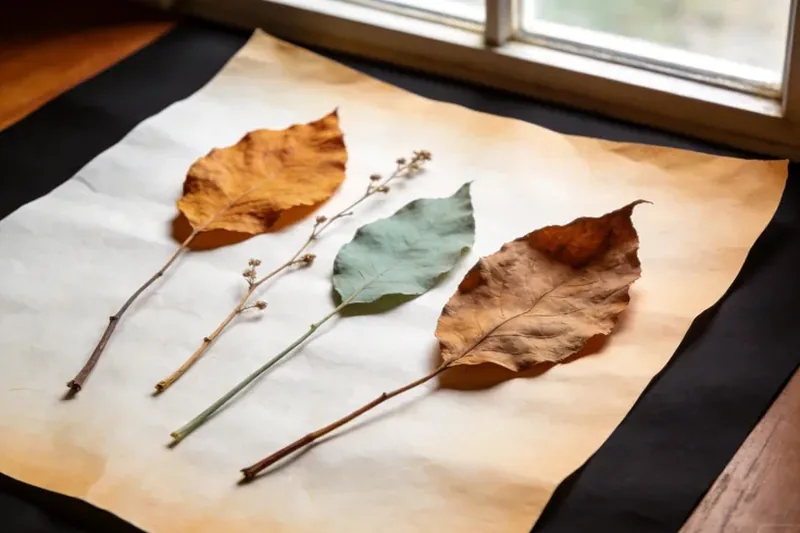
Direct answer: Linglingxiang (零陵香, línglíngxiāng) is a fragrant herb identified today as Lysimachia foenum-graecum, a moisture-loving plant of southern China whose dried herb smells sweet and hay-like. It is a classical Chinese incense herb, though its historical identity is tangled: the same name (and its alias 熏草) has been applied across several aromatic herbs over the centuries, a drift the Song Xiangpu itself acknowledges.
Key facts
| Chinese | 零陵香 (línglíngxiāng); classical aliases 熏草 / 蕙草 / 燕草 |
| Botanical source | Lysimachia foenum-graecum (family Primulaceae) — the dried herb |
| What it is | A dried aromatic herb, not a wood or resin |
| Aroma | Sweet, hay-like, herbaceous, with a coumarin note |
| Traditional role | 合香 (blended incense), scenting, classical materia medica |
Aroma profile
Direct answer: 零陵香 smells sweet and hay-like, with a coumarin note — closer to sweet grass or tonka than to a flower or a pungent herb. The species epithet foenum-graecum means “Greek hay,” a reference to the plant’s sweet-hay fragrance; Flora of China adds that it is “curry-scented when dry.” It reads as a soft, sweet-green note that blends smoothly rather than standing alone.
零陵香 smells sweet and hay-like, with a coumarin note — closer to sweet grass or tonka than to a flower or a pungent herb. The name is literal in a botanical sense: the species epithet foenum-graecum means “Greek hay,” a reference to the plant’s sweet-hay fragrance, and Flora of China describes the plant as “curry-scented when dry” — the same descriptor family as fenugreek (Trigonella foenum-graecum), which shares the epithet. It reads as a soft, sweet-green note that blends smoothly rather than standing alone, which is why it functions as a blender in 合香 rather than a lead.
Botanical identity
Direct answer: Lysimachia foenum-graecum is a perennial herb of the primrose family (Primulaceae). Flora of China describes a plant 20–60 cm tall, ascending from a creeping base, with broadly ovate to elliptic leaves 4–11 × 2–6 cm and yellow flowers, flowering in May in wet mountain forests of southern China.
Flora of China describes Lysimachia foenum-graecum precisely: a perennial herb 20–60 cm tall, curry-scented when dry, with stems ascending to erect from a creeping base; leaves alternate, broadly ovate to elliptic, 4–11 × 2–6 cm, obscurely undulate at the margin; flowers solitary and axillary, the corolla yellow, 1.2–1.7 cm; capsule subglobose, 6–7 mm; flowering in May. It grows in wet mixed forests and stream valleys on humus-rich soils at 800–1,700 m, in northern Guangdong, Guangxi, southwest Hunan, and southeast Yunnan. See Lysimachia foenum-graecum in Flora of China and Lysimachia foenum-graecum on GBIF.
Chinese name and terminology
Direct answer: The name 零陵香 is geographical — it names the herb after 零陵 (Lingling), the region of southern China where it grew — but it is really a name that has drifted across plants. The classical aliases 熏草, 蕙草, 燕草, and 黄零草 were applied to several aromatic herbs over the centuries, and the Song Xiangpu records the confusion directly.
The name 零陵香 is geographical: it names the herb after 零陵 (Lingling), the valley of southern China where the classical sources located it. The earliest references describe a plant called 熏草 (“fumigating herb”), said to have hemp-like leaves and a square stem, growing in the 零陵 valley — hence 零陵香. Over the centuries the same name, and its aliases (熏草, 蕙草, 燕草, 黄零草), were applied to several different aromatic herbs:
- 零陵香 (modern identification): Lysimachia foenum-graecum, the sweet-hay herb, a Primulaceae plant of wet southern-China habitats.
- 佩兰 / 都梁香 (historical conflation): Eupatorium fortunei (and related allies), a different aromatic herb that some classical sources treated as the same thing.
A name with a tangled history (香谱考据)
Direct answer: 零陵香 is the classic example of a name that has drifted across species. The Song Xiangpu (香譜) notes the confusion outright — “古今采用,自殊其类,各别” (“what was used then and now differ in kind”) — and the Ming Xiangcheng (香乘) records both the geographical origin and the practice of calling only the “广零陵香” (the Lingnan kind) the true 熏草.
The classical record is unusually explicit that this is a drifting name. The Song-dynasty Xiangpu (香譜) by Hong Chu (洪芻) records the herb under 零陵香, citing:
- 《南越志》 — “一名燕草,又名薰草,生零陵山谷,葉如羅勒” (also called yancao and xuncao, growing in the Lingling valley, leaves like basil).
- 《山海經》 — “薰草似麻葉,方莖,氣如蘼蕪,可以止癘” (xuncao has hemp-like leaves and a square stem, its scent like meiwu, and can stop pestilence). “即零陵香。”
The Xiangpu also records the aroma-medicinal formula language: “味苦無毒,主惡氣、注心腹痛,下氣、令體香,和諸香或作湯丸用,得酒良” — bitter, non-toxic, dispelling bad qi, and used to make the body fragrant and to blend with other aromatics. And it flags the identity problem directly: “古今采用,自殊其类,各别” — what was used in ancient and modern times differ in kind.
The Ming Xiangcheng (香乘) goes further, recording the geography and the naming practice: the herb grows “生零陵山谷,今湖岭诸州皆有之,多生下湿地,常以七月中旬开花至香”; the classical names “熏草、蕙草、香草、燕草、黄零草皆别名也”; and the key sourcing note that only the “广零陵香” (the Lingnan kind) is the true 熏草 — “今人呼为广零陵香者,乃真熏草也” — while other regions’ material is lesser (“不及岭南者芬熏耳”).
Where does linglingxiang come from?
Direct answer: The modern Lysimachia foenum-graecum grows in wet mountain forests of southern China — northern Guangdong, Guangxi, southwest Hunan, and southeast Yunnan — at 800–1,700 m. The classical record, however, locates 零陵香 more broadly in the 零陵 valley and notes that only the Lingnan (“广”) kind was considered the true 熏草.
The modern identification, Lysimachia foenum-graecum, is native to wet mixed forests and stream valleys of southern China — northern Guangdong, Guangxi, southwest Hunan, and southeast Yunnan, at 800–1,700 m. The classical record locates 零陵香 more broadly: the Xiangpu says it grows “生零陵山谷,” and the Xiangcheng adds that it grew across “湖岭诸州” (the Hunan–Lingnan region), in wet low-lying ground, flowering in mid-July, with the Lingnan material (“广零陵香”) held to be the true, more fragrant kind. The gap between the modern southern-China range and the classical valley location is itself part of the identity drift noted above.
Why is it used in incense?
Direct answer: 零陵香 is a classical sweet-herb ingredient in 合香 (blended incense), contributing a soft, hay-sweet note that blends smoothly with woods and resins. The classical record makes its role explicit — “和諸香” (blends with other aromatics) — and it appears alongside 甘松, 藿香, and 檀香 in standard formulas.
零陵香’s role in incense is as a sweet-herb blender: a soft, hay-sweet, coumarin-like note that blends smoothly with woods and resins rather than leading with a sharp or heavy character. The Xiangpu states the function directly — “和諸香” (blends with the various aromatics) — and the herb appears in classical 合香 formulas alongside 甘松 (spikenard), 藿香 (agastache), 檀香 (sandalwood), and 白芷 (angelica). It was also used for scenting clothes and as a fragrant herb in its own right, and the Xiangcheng records that “古者烧香草以降神” — ancients burned fragrant herbs to summon the spirits, hence the name 熏 (“fumigate”) and 蕙 (“harmonious”).
How is it processed?
Direct answer: 零陵香 is used as the dried herb, and the Xiangcheng records the classical processing: the Lingnan material was fire-dried to a yellow color (“以火炭焙干令黄色乃佳”). The sweet-hay note is volatile, so drying temperature and freshness are the practical concerns.
The Xiangcheng (香乘) records a specific classical processing standard: the Lingnan material was fire-dried over charcoal to a yellow color — “以火炭焙干令黄色乃佳” — a drying step that both preserved the herb and standardized its color. The sweet-hay, coumarin-like note is volatile, so drying temperature and freshness govern how much of the character survives; a faded or poorly dried batch reads flat. As with other leafy herbs, the whole dried herb is the traditional material of use, and processing is a drying question rather than a resin-tapping or distillation one.
What determines linglingxiang quality?
Direct answer: Quality turns on aroma — a sweet, hay-like, coumarin note from a clean, well-dried herb — plus species clarity. Because the name has drifted across plants, the single most important quality check is confirming which species the material actually is, since 零陵香 and its historical aliases have named more than one herb.
The quality factors, in rough order:
- Identity — Lysimachia foenum-graecum, not the historically conflated Eupatorium fortunei (佩兰) or another alias-carrier.
- Aroma — sweet, hay-like, with a coumarin note; a fresh, sweet-green scent beats a faded or musty one.
- Condition — clean, well-dried herb; the Xiangcheng records the classical yellow-dried standard (“以火炭焙干令黄色乃佳”).
- Freshness — the volatile sweet note fades with age and poor storage.
There is no standardized commercial grading ladder; identity and aroma are the practical signals.
Common forms
Direct answer: 零陵香 is sold as the dried herb — whole or cut — used for blending into 合香 and for scenting. There is no meaningful wood, resin, or distilled-oil form in classical practice; the dried whole herb is the traditional material.
| Form | Typical use |
|---|---|
| Dried whole herb | 合香 blending; scenting clothes |
| Cut / ground herb | Blended incense powders |
In Chinese tradition
- 合香 (blended incense) (Traditional Use): 零陵香 is a classical sweet-herb ingredient in blended incense, contributing a soft, hay-sweet note alongside 甘松, 藿香, 檀香, and 白芷.
- Scenting (Traditional Use): classical texts describe it for scenting clothes and as a fragrant herb in its own right.
- Historical Record (香谱/香乘): the Song Xiangpu (香譜) records 零陵香 under aliases 燕草/熏草 with the formula language “和諸香”; the Ming Xiangcheng (香乘) records the geography, the aliases 熏草/蕙草/香草/燕草/黄零草, the fire-drying standard, and the “广零陵香” naming practice.
- Materia medica (Traditional Use): 零陵香 appears in traditional Chinese medicine; the Xiangpu records “主惡氣……下氣、令體香.” This is traditional materia-medica language, not modern clinical evidence.
Traditional use vs modern evidence
Direct answer: The classical record is rich but botanical identity is genuinely uncertain across sources, and the medicinal descriptions are traditional, not established clinical fact. This page makes no medical claims. The well-documented facts are: 零陵香 is a sweet, hay-like aromatic herb used in classical Chinese incense, and its historical name has been applied to more than one plant.
- Traditional Use — 零陵香 as a 合香 blender, scenting herb, and traditional materia-medica item.
- Historical Record — the Song Xiangpu (香譜) and Ming Xiangcheng (香乘) records of 零陵香, including the acknowledged identity drift (“古今采用,自殊其类”).
- Scientific Evidence — the botanical identity of Lysimachia foenum-graecum (Primulaceae) and its aroma chemistry are documented; we present no clinical or medical efficacy claims.
The classical record is rich but botanical identity is genuinely uncertain across sources, and the medicinal descriptions are traditional, not established clinical fact.
What buyers should look for
Direct answer: Because the name has drifted, buyers should expect ambiguity and confirm species first: modern 零陵香 is Lysimachia foenum-graecum (灵香草), but the same name historically covered 佩兰 (Eupatorium fortunei) and the 都梁香 group. Then judge aroma — sweet, hay-like, coumarin — and condition, since the note is volatile.
For an incense maker or sourcing buyer:
- Species — confirm Lysimachia foenum-graecum; the name 零陵香 (and 熏草) has historically covered Eupatorium fortunei (佩兰) and others.
- Aroma — sweet, hay-like, with a coumarin note, on gentle warming.
- Condition — clean, well-dried herb; the classical standard was yellow-dried.
- Freshness — the sweet note is volatile and fades with age.
A label that says only “零陵香” or “熏草” may not specify the species, so the material’s actual identity is worth confirming.
Our Industry View
Direct answer: 零陵香 is a case where the name is the supply-chain risk. A sweet-hay blender whose historical name has covered multiple plants cannot be bought safely by label alone — the species must be confirmed, because “零陵香” names a historical role (a sweet blender in 合香) as much as it names a single plant.
From a manufacturing perspective, 零陵香 illustrates how a drifting name becomes a sourcing risk. Two points follow:
- The name names a role, not a plant. Classical sources used 零陵香 (and 熏草/蕙草) for a sweet, hay-like blending note, and applied the name across several herbs over the centuries — a drift the Song Xiangpu itself recorded (“古今采用,自殊其类”). A buyer who specifies only “零陵香” is specifying a role, not a species, and will receive whatever material the seller’s region happens to call by that name.
- Sweet-hay is a blending note, not an anchor. The value of 零陵香 is its coumarin-like sweetness and its smoothness in a blend, not its standalone strength. It should be specified and bought as a blender — confirming identity, then aroma and freshness — rather than as a lead 香材 with a fixed grade.
In our view, 零陵香 is a useful sweet-herb blender whose commercial risk lives entirely in the name — buy it by species name, confirm the sweet-hay aroma, and treat the historical alias drift as the reason the species, not the label, must carry the specification.
Summary
零陵香 (línglíngxiāng) is a sweet, hay-like, coumarin-noted aromatic herb identified today as Lysimachia foenum-graecum, a Primulaceae plant of southern China’s wet mountain forests. It is a classical 合香 blender recorded in the Song Xiangpu (香譜) and Ming Xiangcheng (香乘), but its name has drifted across plants — the Xiangpu itself notes that ancient and modern usage “differ in kind” — and the historical aliases (熏草, 蕙草, 燕草) have covered Eupatorium fortunei (佩兰) as well. Its medicinal uses are traditional language, not clinical evidence.
FAQ
What does 零陵香 smell like? 零陵香 smells sweet and hay-like, with a coumarin note — closer to sweet grass or tonka than to a flower or a pungent herb. The species name foenum-graecum literally means “Greek hay,” a nod to that sweet-hay fragrance, and Flora of China adds that the plant is “curry-scented when dry.” It is a soft, sweet-green note that blends smoothly in incense rather than leading with a sharp or heavy character.
Why is 零陵香’s identity confusing? Because the name has drifted across centuries. The earliest references describe 熏草 (“fumigating herb”), said to have hemp-like leaves and a square stem, growing in the 零陵 valley. Over time the name 零陵香 and its aliases (熏草, 蕙草, 燕草) were applied to several aromatic herbs — chiefly Lysimachia foenum-graecum (the modern identification) and Eupatorium fortunei (佩兰 / 都梁香). The Song-dynasty Xiangpu (香譜) itself notes the confusion: “古今采用,自殊其类,各别” (what was used then and now differ in kind).
Is 零陵香 the same as 佩兰? They are different plants that have been historically conflated. 零陵香 is identified today as Lysimachia foenum-graecum, a sweet-hay-scented Primulaceae herb; 佩兰 is Eupatorium fortunei, a different aromatic herb in the aster family. The name 零陵香 (and the alias 熏草) has covered both across different eras, which is why the two are often treated as the same in older texts.
How is 零陵香 used in incense? It is a classical sweet-herb ingredient in 合香 (blended incense), contributing a soft, hay-sweet note. The Xiangpu states its role as “和諸香” (blends with the various aromatics), and it appears in standard formulas alongside 甘松, 藿香, 檀香, and 白芷, and was also used for scenting clothes. It is a blender — its sweet-green character supports a formula rather than carrying one alone.
What part of the plant is used? The dried herb — the leafy aerial part of Lysimachia foenum-graecum — is the part used. The plant is moisture-loving, found in wet forests of southern China at 800–1,700 m, and the dried herb is what carries the sweet-hay fragrance. This distinguishes it from root materials (like 甘松 or 香附子) and from woods and resins.
What does the 香乘 say about processing 零陵香? The Ming Xiangcheng (香乘) records that the Lingnan material was fire-dried over charcoal to a yellow color — “以火炭焙干令黄色乃佳” — a drying standard that preserved the herb and standardized its color. It also records that only the “广零陵香” (the Lingnan kind) was held to be the true 熏草, while material from other regions was considered less fragrant.
See also: patchouli, agastache, paicao, eupatorium and the full scent guide.
Evidence & Sources
Botanical identity
Source: Lysimachia foenum-graecum in Flora of China · Lysimachia foenum-graecum on GBIF. Evidence type: Established (modern identification); historical identity is disputed across sources.
Traditional Chinese use
Source: the Song-dynasty Xiangpu (香譜) records 零陵香 citing 《南越志》 and 《山海經》 under aliases 熏草 / 燕草, with “和諸香” and the identity-drift note “古今采用,自殊其类”; the Ming Xiangcheng (香乘) records the aliases 熏草/蕙草/香草/燕草/黄零草, the geography, the fire-drying standard (“以火炭焙干令黄色乃佳”), and the “广零陵香” naming practice. Evidence type: Historically documented — traditional, not modern clinical evidence. Note: historical identity confusion with 佩兰 (Eupatorium fortunei) / 都梁香.
Authenticity / disambiguation
Source: the 零陵香 (Lysimachia foenum-graecum) vs 佩兰 (Eupatorium fortunei) vs 都梁香 historical conflation. Evidence type: Practical screening.
Safety
Source: incense combustion produces smoke and particulate matter; burn in a well-ventilated space. Evidence type: Established.
Evidence status
| Layer | Status |
|---|---|
| Botanical identity | Established (modern); disputed historically |
| Traditional use | Historically documented |
| Authenticity test | Practical screening |
| Health claims | Not established |
Sources
- Lysimachia foenum-graecum in Flora of China
- Lysimachia foenum-graecum on GBIF
- 香譜 on Wikisource
- 香乘 on Wikisource
Sources: botanical references on Lysimachia foenum-graecum and the Song-dynasty Xiangpu (香譜) / Ming Xiangcheng (香乘) records of 零陵香. The 零陵香 / 佩兰 / 都梁香 historical conflation is recorded as such. Medicinal uses are treated as traditional, not established clinical fact. This is editorial knowledge content, not medical advice.