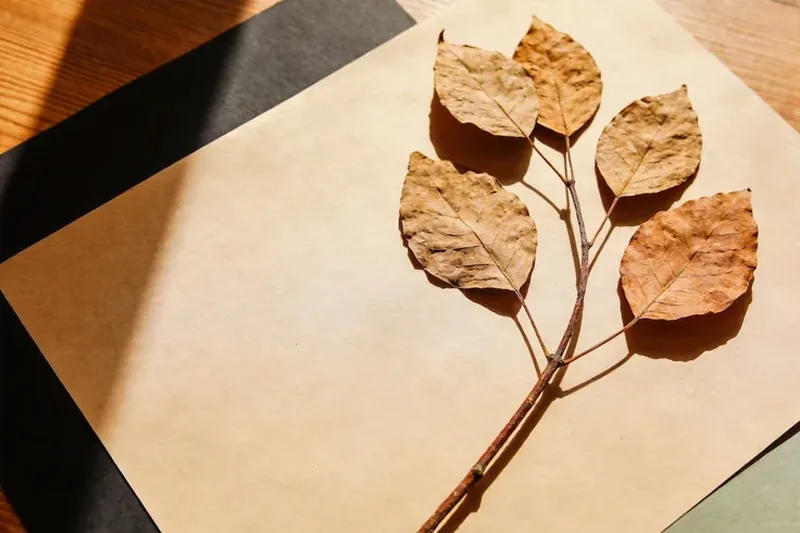
Direct answer: Paicao (排草, páicǎo) is the dried herb of Lysimachia capillipes, a small perennial of the primrose family (Primulaceae) native to southern China. It is an aromatic herb with a sweet, hay-like, faintly woody scent, used in Chinese incense as a supporting herbal note in 合香 (blended incense). It belongs to the same genus as linglingxiang (零陵香), Lysimachia foenum-graecum.
Key facts
| Chinese | 排草 (páicǎo), also 排香草; classical 排草香 |
| Botanical source | Lysimachia capillipes (family Primulaceae) — the dried whole herb |
| What it is | A dried aromatic herb, not a wood or resin |
| Aroma | Herbal, sweet, hay-like, faintly woody |
| Traditional role | 合香 supporting herb; scenting material |
Aroma profile
Direct answer: Paicao is herbal and sweet, with a hay-like, faintly woody character typical of the Lysimachia aromatic herbs — a fresh, green-sweet scent that recalls coumarin-tonka notes without being heavy. It is a supporting herb: it fills the herbal register of a blend, supporting and softening brighter or spicier ingredients rather than leading with its own strong note.
Paicao is herbal and sweet, with a hay-like, faintly woody character typical of the Lysimachia aromatic herbs — a fresh, green-sweet scent that recalls coumarin-tonka notes without being heavy. Flora of China records that the plant is “strongly curry-scented when dry”, the same descriptor family as its close relative 零陵香 (Lysimachia foenum-graecum). It is a supporting herb: it fills the herbal register of a blend, supporting and softening brighter or spicier ingredients, rather than leading with its own strong note.
Botanical identity
Direct answer: Lysimachia capillipes is a perennial herb of the primrose family (Primulaceae). Flora of China describes a plant 40–60 cm tall, strongly curry-scented when dry, with ovate to lanceolate leaves 1.5–7 cm and small yellow flowers, growing in mixed forests and on rocky limestone slopes across southern and eastern China.
Flora of China describes Lysimachia capillipes precisely: a perennial herb 40–60 cm tall, strongly curry-scented when dry, with stems two to many, erect, angular or winged, branched from the middle; leaves alternate, ovate to lanceolate, 1.5–7 × 1–3 cm, entire or obscurely undulate at the margin; flowers solitary and axillary, the corolla yellow, 6–8 mm; capsule globose, 3–4 mm. It grows in mixed forests, streamsides, on acidic soils and rocky limestone slopes at 300–2,000 m, distributed across Fujian, Guangdong, Guangxi, Guizhou, southern Henan, Hunan, Jiangxi, Sichuan, Taiwan, eastern Yunnan, and Zhejiang, and the Philippines. See Lysimachia capillipes in Flora of China and Lysimachia capillipes on GBIF.
Chinese name and terminology
Direct answer: The name 排草 (also 排香草, classical 排草香) names the herb, but the Xiangcheng (香乘) gives the key classical note: 排草 was described as a root — “白色状如细柳根” (white, like fine willow roots) — gathered from 交址 (Jiaozhi) and cultivated in 岭南 (Lingnan). The classical description of the part used (a root) is worth holding against the modern whole-herb identification.
The name 排草 (also written 排香草; the classical form is 排草香) names the herb, and the Ming Xiangcheng (香乘) gives the definitive classical description:
“排草出交址,今岭南亦或莳之,草根也,白色,状如细柳根,人多伪杂之。淮海志云:排草香状如白茅香,芬烈如茅香。白茅香、排草香、瓶香、耕香当是一类。”
— 排草 comes from 交址 (Jiaozhi, northern Vietnam), and is now also cultivated in 岭南 (Lingnan); it is a root, white, shaped like fine willow roots, and often adulterated (“人多伪杂之”). The Huaihai Zhi says 排草香 resembles 白茅香 and is as strongly fragrant as 茅香, and groups 白茅香, 排草香, 瓶香, and 耕香 as one class.
This is the important nuance: the classical 排草香 was described as a root (草根), whereas the modern botanical identification Lysimachia capillipes is used as the whole herb. The discrepancy is a provenance note, not a settled botanical conclusion — worth holding against any claim that a given “排草” is exactly the classical material.
Paicao vs linglingxiang (read this)
Direct answer: 排草 (Lysimachia capillipes) and 零陵香 (Lysimachia foenum-graecum) are closely related species of the same genus, both aromatic Lysimachia herbs with a sweet, hay-like, curry-scented-when-dry character — but they are distinct materials, and 零陵香 has its own entry. The shared profile reflects their common genus, not the same plant.
Two Lysimachia aromatic herbs share the same sweet, hay-like register, and their names are worth pinning down:
- 排草 (paicao) — Lysimachia capillipes; the classical 排草香 was described as a root from 交址. This entry.
- 零陵香 (linglingxiang) — Lysimachia foenum-graecum; a sweet-hay blender with a longer, more drifted classical name history (see linglingxiang).
Both are Primulaceae Lysimachia herbs that Flora of China describes as curry-scented when dry, so a buyer should not treat the shared profile as identity — the species (and for 排草, the part of the plant) must be specified.
Where does paicao come from?
Direct answer: The modern Lysimachia capillipes grows across southern and eastern China — from Fujian, Guangdong, and Guangxi through Guizhou, Hunan, Jiangxi, Sichuan, Taiwan, and Zhejiang, plus the Philippines. The classical record places 排草 in 交址 (northern Vietnam) and notes its later cultivation in 岭南 (Lingnan).
Lysimachia capillipes has a broad southern–eastern Chinese range: Flora of China records it in Fujian, Guangdong, Guangxi, Guizhou, southern Henan, Hunan, Jiangxi, Sichuan, Taiwan, eastern Yunnan, and Zhejiang, plus the Philippines, in mixed forests and on rocky limestone slopes at 300–2,000 m. The classical Xiangcheng (香乘) locates 排草 in 交址 (Jiaozhi, northern Vietnam), with later cultivation in 岭南 (Lingnan) — a record that situates the classical material a little south of the modern species’ Chinese core, consistent with the root-vs-whole-herb and identity nuances above.
Why is it used in incense?
Direct answer: 排草 is a supporting aromatic herb in classical 合香 formulas, contributing a sweet, hay-like body beneath woods and resins. The Xiangcheng records its use in formulas (“广排草须一两”), where it functions as a blender that fills the herbal register rather than leading.
排草’s role in incense is as a supporting herbal note: a sweet, hay-like body that fills the herbal register of a 合香 blend beneath woods and resins. The Xiangcheng (香乘) records it in actual formulas — for example “甲香制过一钱五分,广排草须一两,花露一两” (murex processed, one-and-a-half parts; Guangdong paicao, one part; flower dew, one part) — using the qualified name 广排草 (“Guangdong paicao”), which marks the material by its origin the way 广零陵香 marks the Lingnan 零陵香. It is a blender, not a lead; its sweet-green character supports a formula rather than carrying one.
How is it processed?
Direct answer: 排草 is handled as a dried herb. The Xiangcheng records one processing step in a formula — “排草酒浸半日,炒干” (paicao soaked in wine half a day, then dry-fried) — a classical treatment that both extracted and modified the herb before blending. Otherwise, processing is the usual drying question.
The Xiangcheng (香乘) records a specific classical processing step for 排草 in one formula: “排草酒浸半日,炒干” — the herb soaked in wine for half a day and then dry-fried — a treatment that extracted and modified the herb before it entered the blend. Outside that formula, 排草 is handled like other leafy aromatic herbs: gathered and dried to preserve its sweet, hay-like character. The note is volatile, so drying temperature and freshness govern how much of it survives; the whole dried herb (or, classically, the root) is the material of use.
What determines paicao quality?
Direct answer: Quality turns on aroma — a sweet, hay-like, faintly woody note from a clean, well-dried herb — plus species clarity and part-of-plant. The Xiangcheng adds a caution worth repeating: 排草 was “人多伪杂之” (often adulterated), so identity and purity are the first checks.
The quality factors, in rough order:
- Identity — Lysimachia capillipes, not its close relative 零陵香 (L. foenum-graecum).
- Aroma — sweet, hay-like, faintly woody on gentle warming; a fresh sweet-green scent beats a faded one.
- Condition and purity — clean, well-dried herb; the Xiangcheng records that 排草 was often adulterated (“人多伪杂之”).
- Part and origin — the classical 排草香 was a root from 交址; the modern whole-herb identification should be held against that provenance note.
There is no standardized commercial grading ladder; identity, aroma, and purity are the practical signals.
Common forms
Direct answer: 排草 is sold as the dried herb — whole or cut — for blending into 合香 and for scenting. The classical 排草香 was described as a root, so buyers may encounter root material labeled 排草 alongside the modern whole herb.
| Form | Typical use |
|---|---|
| Dried whole herb | 合香 blending; scenting (modern identification) |
| Dried root (排草香) | Classical material, described by the Xiangcheng |
In Chinese tradition
- 合香 (blended incense) (Traditional Use): 排草 is a supporting aromatic herb in classical 合香 formulas, contributing a sweet, hay-like body beneath woods and resins.
- Scenting herb (Traditional Use): the whole herb is used as a scenting material for garments and spaces, in the same tradition as other aromatic herbs.
- Historical Record (香乘): the Ming Xiangcheng (香乘) records 排草香 as a root (“白色状如细柳根”) from 交址, cultivated in 岭南, often adulterated (“人多伪杂之”), grouped with 白茅香/瓶香/耕香, and used in formulas (“广排草须一两”; “排草酒浸半日,炒干”).
- Materia medica (Traditional Use): 排草 is recorded in traditional Chinese medicine (本草綱目, 草部). This is traditional materia-medica language, not modern clinical evidence.
Traditional use vs modern evidence
Direct answer: The aromatic use is documented in classical records. Medicinal uses are traditional, not established clinical fact, and this page makes no medical claims. The documented facts are botanical identity, the Lysimachia genus placement, the Xiangcheng root-provenance record, and the sweet, hay-like aromatic use.
- Traditional Use — 排草 as a 合香 supporting herb, scenting material, and traditional materia-medica item.
- Historical Record — the Ming Xiangcheng (香乘) record of 排草香 (root, 交址 origin, “人多伪杂之”, formula uses).
- Scientific Evidence — the botanical identity of Lysimachia capillipes (Primulaceae) and its aroma chemistry are documented; we present no clinical or medical efficacy claims.
The aromatic use is documented in classical records. Medicinal uses are traditional, not established clinical fact, and we make no medical claims.
What buyers should look for
Direct answer: Buyers should confirm species and part — Lysimachia capillipes, and whether the material is the modern whole herb or the classical root — then judge aroma (sweet, hay-like) and purity. The Xiangcheng’s “人多伪杂之” warning makes identity and adulteration the first checks.
For an incense maker or sourcing buyer:
- Species — Lysimachia capillipes, distinct from 零陵香 (L. foenum-graecum).
- Part and origin — the classical 排草香 was a root from 交址; the modern identification is the whole herb. Confirm which is being offered.
- Aroma — sweet, hay-like, faintly woody, on gentle warming.
- Purity — the Xiangcheng records that 排草 was often adulterated (“人多伪杂之”), so cleanliness and freedom from foreign matter matter.
In incense, paicao is a supporting herb, usually blended, not burned alone.
Our Industry View
Direct answer: 排草 is a supporting herb whose commercial risk is twofold: it shares its sweet-hay profile with a close relative (零陵香), and the classical record describes a root while the modern identification is a whole herb. A buyer should treat “排草” as requiring both a species name and a part-of-plant statement.
From a manufacturing perspective, 排草 illustrates two overlapping sourcing risks. Two points follow:
- Shared profile is not shared identity. 排草 (Lysimachia capillipes) and 零陵香 (Lysimachia foenum-graecum) are the same genus, both curry-scented when dry, both sweet-hay blenders — but they are distinct materials with distinct entries. In a repeatable blend, “a Lysimachia sweet herb” is not a specification; the species must carry it. The two should not be substituted on the strength of a similar aroma.
- Part-of-plant has drifted too. The classical 排草香 was a root from 交址 (“草根也,白色,状如细柳根”); the modern botanical identification is the whole herb. Neither is “wrong,” but they are not necessarily the same commodity, and a buyer who assumes the label resolves the part is assuming more than the name guarantees. The Xiangcheng’s “人多伪杂之” is a standing warning that 排草 was adulterated even classically.
In our view, 排草 is a useful sweet-herb supporting note — buy it by species name, state the part (whole herb vs root), check purity against a documented history of adulteration, and treat it as a blender rather than a lead 香材.
Summary
排草 (páicǎo) is the dried herb of Lysimachia capillipes, a Primulaceae perennial of southern and eastern China whose sweet, hay-like, faintly woody scent makes it a supporting 合香 herb. It is a close relative of 零陵香 (L. foenum-graecum), sharing the same genus and the same curry-scented-when-dry profile. The Ming Xiangcheng (香乘) records the classical 排草香 as a root from 交址, often adulterated, used in formulas — a provenance note worth holding against the modern whole-herb identification. Its medicinal uses are traditional language, not clinical evidence.
FAQ
What is 排草 (paicao)? The dried herb of Lysimachia capillipes, a small perennial of the primrose family (Primulaceae) native to southern China. It is an aromatic herb with a sweet, hay-like, faintly woody scent, used in Chinese incense as a supporting herbal note in 合香 (blended incense). It is closely related to 零陵香 (Lysimachia foenum-graecum).
How does paicao relate to 零陵香 (linglingxiang)? They are closely related species of the same genus, Lysimachia — paicao is L. capillipes, and 零陵香 is L. foenum-graecum. Both are aromatic herbs with a sweet, hay-like character and are described by Flora of China as curry-scented when dry, reflecting their common genus, but they are distinct materials, and 零陵香 has its own entry in this encyclopedia.
What does the 香乘 say about 排草? The Ming Xiangcheng (香乘) records 排草香 as a root (“草根也,白色,状如细柳根” — white, like fine willow roots) from 交址 (Jiaozhi, northern Vietnam), now cultivated in 岭南 (Lingnan), and adds that it was often adulterated (“人多伪杂之”). It groups 排草香 with 白茅香, 瓶香, and 耕香 as one class, and records its use in formulas (“广排草须一两”; “排草酒浸半日,炒干”).
What does paicao smell like? Herbal and sweet, with a hay-like, faintly woody character — a fresh, green-sweet scent that recalls coumarin-tonka notes without being heavy. Flora of China describes the plant as strongly curry-scented when dry. It is a supporting herb that fills the herbal register of a blend, softening brighter or spicier ingredients rather than leading with its own strong note.
What part of the plant is used? The modern identification uses the dried whole herb — the aerial parts of Lysimachia capillipes. However, the classical Xiangcheng (香乘) describes 排草香 as a root (“草根也”). The discrepancy is a provenance note: buyers may encounter either the modern whole herb or the classical root, and the part of the plant is worth confirming.
Where does paicao come from? From Lysimachia capillipes, a small perennial herb of the primrose family native to southern and eastern China (Fujian, Guangdong, Guangxi, Guizhou, Hunan, Jiangxi, Sichuan, Taiwan, Yunnan, Zhejiang, and the Philippines). The classical record places 排草 in 交址 (northern Vietnam) with later cultivation in 岭南 (Lingnan), a little south of the modern species’ core range.
See also: linglingxiang, agastache-rugosa, and the full scent guide.
Evidence & Sources
Botanical identity
Source: Lysimachia capillipes in Flora of China · Lysimachia capillipes on GBIF. Evidence type: Established.
Traditional Chinese use
Source: 排草 as a 合香 supporting herb and scenting material, recorded in the 本草綱目 草部; the Ming Xiangcheng (香乘) records 排草香 as a root (“草根也,白色,状如细柳根”) from 交址, often adulterated (“人多伪杂之”), and used in formulas (“广排草须一两”; “排草酒浸半日,炒干”). Evidence type: Historically documented — aromatic use; medicinal uses are traditional, not modern clinical evidence.
Authenticity / disambiguation
Source: 排草 (Lysimachia capillipes) vs 零陵香 (Lysimachia foenum-graecum) — closely related but distinct Lysimachia herbs; and the classical root vs modern whole-herb part-of-plant note. Evidence type: Practical screening.
Safety
Source: incense combustion produces smoke and particulate matter; burn in a well-ventilated space. Evidence type: Established.
Evidence status
| Layer | Status |
|---|---|
| Botanical identity | Established |
| Traditional use | Historically documented |
| Authenticity test | Practical screening |
| Health claims | Not established |
Sources
Sources: botanical references on Lysimachia capillipes, the Ming Xiangcheng (香乘) record of 排草香, and the paicao-vs-linglingxiang distinction. Paicao is recorded as an aromatic herb; medicinal uses are treated as traditional, not established clinical fact. This is editorial knowledge content, not medical advice.