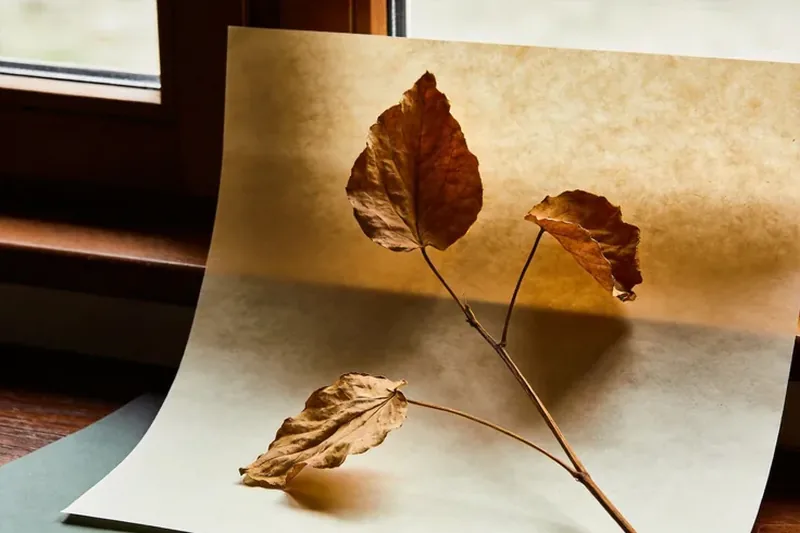
Technical answer: Eupatorium — pèilán (佩兰) in Chinese — is the aromatic aerial part of Eupatorium fortunei, a herbaceous plant of the daisy family (Asteraceae) native to East Asia. It is a classical Chinese “fragrant herb” (香草) whose name literally means “worn orchid” — 佩 (“to wear”) and 兰 (“orchid”) — because the fragrant herb was traditionally worn in sachets and used to scent clothing. It is a fresh, herbaceous, mildly sweet aromatic used in incense, sachets, and traditional practice.
Key facts
| Chinese | 佩兰 (pèilán), literally “worn orchid” |
| Botanical source | Eupatorium fortunei (family Asteraceae) — the aerial herb |
| What it is | A dried fragrant herb, not a wood or resin |
| Aroma | Herbal, aromatic, slightly sweet and fresh |
| Traditional role | Sachet and clothing scent (佩/香囊), materia medica |
What is eupatorium?
Direct answer: Eupatorium (佩兰, pèilán) is the dried aerial herb of Eupatorium fortunei, a daisy-family perennial native to East Asia. Its name — “worn orchid” — records its traditional job: the fragrant herb was carried in sachets and used to scent clothing rather than burned as a heavy incense. In a blend it reads as a light, fresh, green note.
Eupatorium is best understood through its cultural role rather than its chemistry. The plant is a medium-sized herbaceous perennial, and what is harvested and dried is the whole above-ground herb — leaves and stems — not a root, wood, seed, or resin. In the classical roster of Chinese scented herbs (香草), it sits alongside mugwort and agastache as a “green” aromatic: fresh, herbaceous, and mildly sweet, used to lift and brighten rather than to anchor.
Botanical identity
Direct answer: Eupatorium fortunei is a perennial herb of the Asteraceae (daisy) family. Flora of China records it at 40–100 cm tall, with procumbent reddish-brown rhizomes and stem leaves divided into three segments, topped by dense corymbs of small flower heads. The aromatic part used is the aerial herb.
Flora of China records Eupatorium fortunei as a perennial herb 40–100 cm tall, with procumbent, reddish-brown rhizomes and erect, green or reddish-purple stems. The median stem leaves are the distinctive feature: 3-sect or 3-partite, with a large terminal lobe 5–10 × 1.5–2.5 cm and coarsely or irregularly toothed margins. The small flower heads (capitula) are borne in numerous apical compound corymbs. See Eupatorium fortunei in Flora of China and Eupatorium fortunei on GBIF.
Chinese name and terminology
Direct answer: 佩兰 (pèilán) means “worn orchid” — 佩 “to wear” + 兰 “orchid” — recording the herb’s traditional use in sachets and clothing-scenting. The 兰 is cultural, not botanical: 佩兰 is a daisy-family herb, not an orchid, and it must be kept distinct from the same-genus 泽兰.
The name is a small etymology lesson that explains the herb’s whole role. 佩兰 combines 佩 (pèi, “to wear at the belt”) with 兰 (lán, “orchid”), and it belongs to a broad Chinese convention of calling many fragrant plants 兰 regardless of family. Two naming cautions follow:
- 佩兰 is not an orchid. Despite the 兰 in its name, it is an Asteraceae herb, in the same tradition where 兰 names fragrance rather than taxonomy.
- 佩兰 ≠ 泽兰. 泽兰 is the same-genus Eupatorium japonicum — a distinct species with a fresh, herbaceous scent, treated on its own page — and, in classical materia medica, 泽兰 often refers instead to the mint-family Lycopus lucidus. See 泽兰 (eupatorium-japonicum).
Where does eupatorium come from?
Direct answer: Eupatorium fortunei is native to China, Japan, and Korea, where it grows in moist places. It is a wild-collected and small-scale-cultivated herb whose supply follows herb-trade patterns rather than a dedicated aromatic plantation industry.
Eupatorium fortunei is a herbaceous perennial native to China, Japan, and Korea, growing in moist, open, and semi-shaded situations. Unlike the tropical woods and resins of the incense trade, it is a temperate herb whose aromatic supply sits within the broader herb and materia-medica trade. This has a practical consequence: eupatorium is rarely a headline ingredient in its own right, and lots are more often identified by their Chinese materia-medica name than by a dedicated “incense grade.”
Aroma profile
Direct answer: Eupatorium is fresh and herbaceous, with a gentle sweetness and a clean, lightly aromatic lift — a “green” note closer to a scented leaf than to a flower or wood. In traditional use it scents sachets and clothes, and in blends it reads as a light, fresh accent.
Eupatorium is fresh and herbaceous, with a gentle sweetness and a clean, slightly aromatic lift. It is a “green” note — closer to a scented-leaf character than to a flower or wood. Where mugwort reads camphoraceous and bitter, and agastache reads minty and sweet-anise, eupatorium reads clean, mild, and softly sweet — a note that brightens a blend rather than dominating it. In traditional use it scents sachets and clothes rather than being burned as a dominant incense note.
Why is it used in incense?
Direct answer: Eupatorium is used as a light, fresh “green” accent in incense blends, and — more centrally in Chinese tradition — as a sachet and clothing fragrance. Its job is to lift and freshen a formula rather than to carry it as a base or lead note.
Eupatorium occupies a modest but real niche in Chinese fragrance practice:
- Incense (香): as a fresh herbaceous accent, it lifts spice-forward and wood-forward blends with a clean, green brightness — a supporting note, never a base.
- Sachet and clothing scent (佩/香囊): its defining traditional role, and the origin of its name. The herb was worn and packed into sachets to scent garments, a non-burning aromatic use.
Because its scent is light, eupatorium is almost always blended, not burned alone; alone it offers a faint green note that is easily lost.
How is it processed?
Direct answer: Eupatorium is processed by harvesting the aerial herb and drying it — whole or cut. There is no extraction or distillation step in the herb form; for incense blending it is then ground to powder, with particle size and moisture depending on the formula.
The essential step is simple: the above-ground herb (leaves and stems) is harvested and dried to a stable, storable form. From there it branches by end use — whole or cut herb for sachets and traditional use, or ground powder for incense blending. For powder buyers, the same practical variables as any leafy herb apply: particle size and moisture affect how the material packs, burns, and releases aroma, and the right target depends on the formula — the binder, other ingredients, and the production line. The grinding and forming mechanics sit within the wider how incense is made process, and leafy-herb powder behavior is covered in incense powder & resin.
What determines eupatorium quality?
Direct answer: Quality turns on cleanliness, colour, and aroma — dried eupatorium should be clean and green with a fresh, herbaceous scent when rubbed. There is no standardized numerical grading; the buyer evaluates the physical condition of the lot.
The practical quality factors, in rough order:
- Cleanliness — freedom from stems, soil, and foreign herb material.
- Colour and freshness — clean green material, not browned, faded, or musty.
- Aroma — a fresh, herbaceous, mildly sweet scent when rubbed; stale material loses its lift.
- For powder — consistent particle size and moisture, judged against the specific formula.
Common forms
Direct answer: Eupatorium is sold as whole or cut dried herb and as ground powder. Whole and cut herb serve sachets and traditional use; powder serves incense blending — the same material in different physical forms, not a quality distinction.
| Form | Typical use |
|---|---|
| Whole / cut dried herb | Sachets, clothing scent, traditional use |
| Powder | Blended into incense sticks and cones |
The distinction is functional, not a quality statement. See incense powder & resin for how leafy-herb powder behaves in practice.
In Chinese tradition
- Scenting clothes and sachets: the name 佩兰 and the classical “fragrant herb” (香草) tradition point to wearing the herb in sachets and using it to scent garments — a documented, non-medical aromatic role. Historical Record — documented aromatic and cultural use.
- Fragrant-herb culture: eupatorium belongs to the classical roster of scented herbs (香草) celebrated in Chinese poetry and ritual, alongside plants like 兰 and 艾. Historical Record — documented cultural tradition.
- Materia medica: 佩兰 is recorded in traditional Chinese medicine as an aromatic herb. Traditional Use — traditional materia-medica language, not modern clinical evidence.
Traditional use vs modern evidence
The aromatic, sachet-and-clothing role is well documented. Medicinal uses are traditional, not established clinical fact, and we make no medical claims. The documented, non-medical facts are botanical identity and the plant’s long use as a fresh, herbaceous fragrance.
Eupatorium vs 泽兰 (related species)
Direct answer: 佩兰 (Eupatorium fortunei) and 泽兰 (Eupatorium japonicum) are closely related but distinct species of the same daisy-family genus. Both are fresh, herbaceous aromatics; 佩兰 is the classical “worn orchid” sachet herb, while 泽兰 is a separate species — and the name 泽兰 is itself contested with the mint-family Lycopus lucidus.
| Herb | Botanical source | Aroma |
|---|---|---|
| 佩兰 (pèilán) | Eupatorium fortunei, Asteraceae | Fresh, herbaceous, mildly sweet |
| 泽兰 (zélán) | Eupatorium japonicum, Asteraceae | Fresh, herbaceous, lightly aromatic |
The two are the same genus and both read as green, fresh herbs, but they are distinct species that must be kept separate in sourcing. See 泽兰 (eupatorium-japonicum) and the substitution cross-reference for the general disambiguation logic.
Adulteration & misidentification
Direct answer: Eupatorium is not a heavily faked aromatic in the way agarwood is; its risk is naming — confusion with the same-genus 泽兰 and with the classical 泽兰 of materia medica, which is a different, mint-family plant. The scientific name on the label resolves both.
Eupatorium is not an expensive, heavily faked material. Its risks are a naming and identification matter: 佩兰 (Eupatorium fortunei) must be distinguished from 泽兰 (Eupatorium japonicum), and both must be kept apart from the classical materia-medica 泽兰, which modern botanists identify as Lycopus lucidus, a mint-family herb. Specifying the scientific name — Eupatorium fortunei — is the practical fix.
What buyers should look for
Direct answer: Buyers should confirm the species (Eupatorium fortunei), the form, and the physical condition — clean, green, fresh-smelling herb with no mustiness or foreign material. For powder, test particle size and moisture against the formula.
For an incense maker or sourcing buyer:
- Species — confirm Eupatorium fortunei; a real seller can name it and distinguish 佩兰 from 泽兰.
- Form — whole/cut herb or powder; each behaves differently in a blend or sachet.
- Physical condition — clean, green, fresh-smelling herb with no mustiness or debris.
- Powder consistency — confirm particle size and moisture, and test a sample against your formula.
Safety
Incense combustion produces smoke and particulate matter. Burn in a well-ventilated space, avoid inhaling concentrated smoke, and keep away from children and pets. This is editorial knowledge content, not medical advice.
Our Industry View
Direct answer: In manufacturing, eupatorium is a light, fresh “green” accent, not a base. Its value is a clean herbal lift that brightens heavier blends — but because its scent is faint and easily lost, the dose and the blend context matter more than the nominal ingredient name.
From a manufacturing perspective, eupatorium’s defining trait is lightness. It supplies a clean, fresh green note that heavier woods and resins cannot, but it will not carry a formula the way sandalwood or agarwood can.
Two points follow:
- It is an accent, not a base. Eupatorium brightens a blend but cannot anchor it. A buyer who expects it to lead a fragrance will be disappointed, while one who doses it as a fresh top accent gets real value.
- Its faintness is the formulation variable. Because the scent is light, the practical questions are dose and blend context — which itself depends on formulation, so a figure that works in one factory does not transfer to another.
In our view, eupatorium’s commercial value lies in its role as a correctly identified, clean, fresh “green” accent used to lift heavier blends — a supporting herb whose real value is character, not intensity.
Summary
Eupatorium (佩兰, “worn orchid”) is the dried aerial herb of Eupatorium fortunei, an Asteraceae perennial Flora of China records at 40–100 cm with divided stem leaves and corymbs of small heads, valued in Chinese tradition primarily as a sachet and clothing fragrance and secondarily as a fresh “green” incense accent. Its main identification risk is naming — it must be kept distinct from the same-genus 泽兰 (Eupatorium japonicum) and from the mint-family 泽兰 (Lycopus lucidus). In incense it is a light, fresh supporting note, not a base; commercially, correct identification and clean, fresh condition outweigh intensity.
FAQ
What is 佩兰 (pèilán)? A classical Chinese fragrant herb — the dried aerial part of Eupatorium fortunei, a daisy-family plant native to East Asia. The name literally means “worn orchid” (佩 “wear,” 兰 “orchid”), reflecting its traditional role: the fragrant herb was worn in sachets and used to scent clothing. It is a fresh, herbaceous, mildly sweet aromatic, not an orchid and not a wood or resin.
Is 佩兰 an orchid? No. Despite the 兰 (“orchid”) in its name, 佩兰 is Eupatorium fortunei, a herb of the Asteraceae (daisy) family. Chinese uses 兰 to name many fragrant plants beyond true orchids, and 佩兰 belongs to the classical “fragrant herb” (香草) tradition rather than to the orchid family. It is also distinct from 泽兰 (Eupatorium japonicum), a different aromatic herb.
What does eupatorium smell like? Fresh and herbaceous, with a gentle sweetness and a clean, lightly aromatic lift — a “green” scent closer to a fragrant leaf than to a flower or wood. In traditional use it scents sachets and garments rather than burning as a dominant note, and in incense blends it reads as a light, fresh accent.
How was eupatorium traditionally used? Primarily as a fragrance — worn in sachets and used to scent clothing, which is exactly what the name 佩兰 (“worn orchid”) records. It is part of the classical roster of scented herbs celebrated in Chinese poetry and ritual. It also appears in traditional materia medica, but this page treats any medicinal use as traditional, not established clinical fact.
What part of the plant is used? The above-ground herb — the leaves and stems — harvested and dried. The aromatic character comes from the whole aerial herb rather than a root, wood, or seed. The dried material should be clean and green, with a fresh scent when rubbed, and is usually blended rather than burned alone.
What is the difference between 佩兰 and 泽兰? They are closely related but distinct species of the same daisy-family genus Eupatorium: 佩兰 is Eupatorium fortunei, the classical “worn orchid” sachet herb, while 泽兰 is Eupatorium japonicum. Both are fresh, herbaceous aromatics, but they are separate species — and the classical materia-medica 泽兰 often refers instead to the mint-family Lycopus lucidus.
See also: mugwort, agastache-rugosa, eupatorium-japonicum (泽兰), and the full scent guide.
Evidence & Sources
Botanical identity
Source: Eupatorium fortunei in Flora of China · Eupatorium fortunei on GBIF. Evidence type: Established.
Traditional Chinese use
Source: 佩兰 as a fragrant herb worn in sachets and used to scent clothing; the 香草 (“fragrant herb”) cultural tradition. Evidence type: Historically documented — aromatic and cultural use, not medical.
Authenticity / disambiguation
Source: 佩兰 (Eupatorium fortunei) vs 泽兰 (Eupatorium japonicum) — same genus, distinct species; vs the mint-family 泽兰 (Lycopus lucidus). Evidence type: Practical screening.
Safety
Source: incense combustion produces smoke and particulate matter; burn in a well-ventilated space. Evidence type: Established.
Evidence status
| Layer | Status |
|---|---|
| Botanical identity | Established |
| Traditional use | Historically documented |
| Authenticity test | Practical screening |
| Health claims | Not established |
Sources
Sources: botanical references on Eupatorium fortunei and the 佩兰/泽兰 distinction. Eupatorium is recorded as a fragrant herb worn in sachets and used to scent clothing; medicinal uses are treated as traditional, not established clinical fact. This is editorial knowledge content, not medical advice.