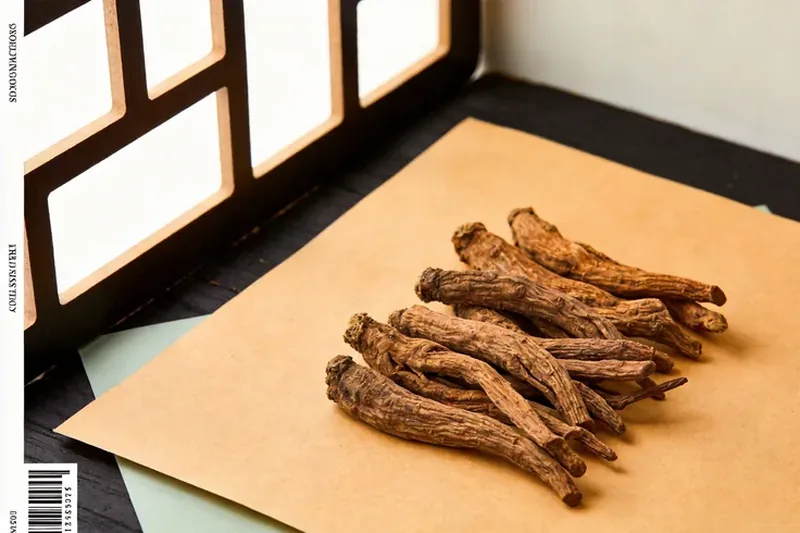
Technical answer: Orris root — yuānwěi gēn (鸢尾根) in Chinese — is the dried, aged rhizome of certain European irises, chiefly Iris germanica and Iris pallida. It is a foundational fixative in Western perfumery, valued for a soft, powdery, violet-like scent that emerges only after years of drying. It is not a classical Chinese huxiang (合香) material; its presence in Chinese incense is a modern crossover from Western perfumery. This page records that distinction.
Key facts
| Chinese | 鸢尾根 (yuānwěi gēn); “orris” has no direct classical Chinese incense equivalent |
| Botanical source | Iris germanica (× germanica), Iris pallida, Iris florentina — the dried rhizome |
| What it is | An aged root/rhizome, not a wood or resin |
| Aroma | Powdery, floral, violet-like, woody; develops only after long aging |
| Traditional role | Western perfumery fixative; modern crossover into incense |
What is orris root?
Direct answer: Orris root (鸢尾根, yuānwěi gēn) is the dried, aged rhizome of European irises — chiefly Iris germanica and Iris pallida. It is a Western perfumery fixative prized for a powdery, violet-like scent that emerges only after years of aging, and it is not a classical Chinese incense material.
Orris root is a processing product and a Western material. The fresh iris rhizome is almost odorless; the famous powdery, violet “iris” note develops only after the rhizomes are dried and aged for several years. It is a foundational fixative in Western perfumery, and its appearance in Chinese incense is a modern crossover from that tradition — the page records this distinction rather than implying an ancient Chinese pedigree. It is also easily confused with the native Chinese iris (鸢尾, Iris tectorum), which is not an orris source.
Botanical identity
Direct answer: Orris comes from European irises — Iris germanica, Iris pallida, and Iris florentina — of the iris family (Iridaceae), whose rhizomes are aged for the violet-powdery note. The Chinese 鸢尾 (Iris tectorum) is a different species of the same genus, an ornamental, and not an orris source.
The source species are European irises of the family Iridaceae — chiefly Iris germanica, Iris pallida, and Iris florentina — cultivated in the Mediterranean for their rhizomes. The same genus includes the native Chinese iris, Iris tectorum (鸢尾), which Flora of China records with creeping, thick rhizomes, broadly sword-shaped basal leaves 15–50 × 1.5–3.5 cm, and bluish-violet flowers about 10 cm in diameter; it flowers April–May. The Chinese iris is grown ornamentally and is not a source of orris — a shared genus, not a shared material. See Iris germanica on GBIF, Iris pallida on GBIF, and Iris tectorum in Flora of China.
Chinese name and terminology
Direct answer: 鸢尾根 (yuānwěi gēn) means “iris root,” but “iris” in Chinese usually means the native ornamental 鸢尾 (Iris tectorum), not the European orris species. A label that says only “iris” or “鸢尾” is underspecified.
The naming problem is botanical:
- 鸢尾 (yuānwěi) — in a Chinese context, usually the native ornamental iris, Iris tectorum.
- 鸢尾根 (yuānwěi gēn) — “iris root,” which for orris means the European species Iris germanica / I. pallida / I. florentina.
- Orris — the trade name for the aged rhizome of those European species; it has no direct classical Chinese incense equivalent.
Because “iris” covers both the native ornamental and the European orris species, a label that says only “iris” or “鸢尾” does not identify the material — and the Chinese iris is not an orris substitute.
Where does orris come from?
Direct answer: Orris is produced in the Mediterranean region — chiefly from Iris germanica, Iris pallida, and Iris florentina cultivated for their rhizomes — rather than in China. The Chinese iris (Iris tectorum) is ornamental and not an orris source.
Orris production is Mediterranean, not Chinese: the orris irises are cultivated in the Mediterranean region for their rhizomes, which are harvested, cleaned, dried, and aged. The native Chinese 鸢尾 (Iris tectorum), by contrast, is widely grown as an ornamental across China, and its rhizome is not used for the violet-powdery note. This geographic-and-species split is the core of the “which iris” question.
Aroma profile
Direct answer: Orris root smells powdery, dry, floral, and violet-like — the classic perfumery “iris” note. The distinctive point is that the scent develops only after the rhizomes are aged for several years; fresh iris rhizomes are almost odorless.
Orris root is unusual: fresh iris rhizomes have almost no scent. The characteristic powdery, violet-like aroma — what perfumers call the “iris” note — develops only after the rhizomes are dried and aged for several years. The scent is soft, dry, and floral, more “face powder and violet” than a bright flower. It is prized as a fixative that holds and smooths a perfume blend.
Why is it used in incense?
Direct answer: Orris is used in incense as a fixative and powdery-floral note in contemporary blends, as a modern crossover from Western perfumery. It does not appear in the classical Chinese fragrance manuals as a 合香 material.
Orris root’s role in Chinese incense is a modern crossover: as Western perfumery techniques entered contemporary practice, orris began to appear as a fixative and a soft, powdery violet note. It is absent from the classical manuals (香乘 / 香譜) as a 合香 material — the one classical mention of 鸢尾 is a passing botanical metaphor, not an incense use. In a blend it smooths and holds a composition rather than leading it.
The processing that creates the scent
The famous orris note is a product of processing, not of the living plant:
- Rhizomes are harvested, cleaned, and dried.
- They are then aged, typically for three to five years, during which compounds (iridals) break down into irones, the molecules responsible for the violet-powdery scent.
- The aged material is ground or distilled to yield orris root (butter, concrete, or powder).
This explains why “orris root” is not simply “dried iris” — the aging step is what turns a nearly odorless root into a perfumery staple.
What determines orris quality?
Direct answer: Because the scent depends on aging, orris quality turns on age and species. Fresh or poorly aged orris is nearly scentless; the material should smell powdery and violet-like. Iris germanica, I. pallida, and I. florentina are the standard species.
The quality factors:
- Age — the multi-year aging that produces the irone note; fresh or poorly aged material is nearly scentless.
- Species — Iris germanica, I. pallida, and I. florentina are standard; the Chinese 鸢尾 (Iris tectorum) is not an orris source.
- Aroma — powdery, dry, violet-like, with no off-notes.
There is no standardized grading system; age and the resulting aroma are the working checks.
Common forms
Direct answer: Orris is typically sold as ground root, orris butter (a concrete), or orris absolute — three forms that are not interchangeable in use. The powder, concrete, and absolute sit at different points in perfumery work.
| Form | Note |
|---|---|
| Ground root | The aged rhizome, ground |
| Orris butter (concrete) | A waxy extract of the aged rhizome |
| Orris absolute | A further-refined liquid extract |
These are different products with different uses, not the same material in three packages — the concrete and absolute are concentrates, while the powder is the whole aged root.
In Chinese tradition and modern use
- Classical incense: orris root does not appear in the classical Chinese fragrance manuals (香乘 / 香譜) as a huxiang material — the single classical reference to 鸢尾 is a passing botanical metaphor, not an incense use. Historical Record — documented absence.
- Modern incense and perfumery: as Western perfumery techniques entered modern Chinese incense practice, orris root began to appear as a fixative and powdery floral note in contemporary blends. Modern Industry Practice — documented crossover.
- Perfumery role: orris root’s fixing and softening qualities make it a workhorse in Western fragrance, where the “iris” note is ubiquitous. Modern Industry Practice — established perfumery use.
Traditional use vs modern evidence
There is no meaningful classical Chinese materia-medica role for orris root as an incense material; its reputation is Western perfumery, where its fixative and violet-powdery qualities are well established. We make no medical claims of any kind for orris root.
Orris root vs vetiver
Direct answer: Orris root and vetiver are both root materials used as fixatives and base notes, but they are different plants with different aromas. Orris is an iris rhizome with a powdery, violet-like note; vetiver is a grass root with a deep, earthy, woody note.
| Orris root (鸢尾根) | Vetiver (岩兰草) | |
|---|---|---|
| Plant | European iris (Iris spp., Iridaceae) | Tropical grass (Chrysopogon zizanioides, Poaceae) |
| Part | Aged rhizome | Steam-distilled root |
| Aroma | Powdery, floral, violet-like | Deep, earthy, woody, smoky |
| Role | Powdery fixative | Grounding base note |
They are complements in a modern blend — orris’s powdery violet smoothing the top of a composition, vetiver’s earthy depth anchoring the base — but they are unrelated plants. See vetiver.
A naming caution (two different “irises”)
“Iris” in a Chinese context usually means 鸢尾 (Iris tectorum), the native Chinese iris, grown ornamentally and not the source of orris. Orris root comes from European species — Iris germanica, I. pallida, and I. florentina — cultivated for their rhizomes in the Mediterranean region. A label that says only “iris” or “鸢尾” does not tell you which you are getting, and the Chinese iris is not an orris substitute.
Quality and sourcing notes
Because the scent depends on aging, “orris root” varies widely with age and species. Practical points for buyers:
- The material should smell powdery and violet-like; fresh or poorly aged orris is nearly scentless.
- Iris germanica, I. pallida, and I. florentina are the standard species; Chinese 鸢尾 (Iris tectorum) is not an orris source.
- Orris is typically sold as ground root, orris butter (concrete), or orris absolute; these are not interchangeable in use.
What buyers should look for
Direct answer: Buyers should confirm the species — Iris germanica / I. pallida / I. florentina, not Chinese 鸢尾 — and the form (root, butter, or absolute), and check for a powdery, violet-like aroma that indicates proper aging. Fresh or poorly aged orris is nearly scentless.
For a perfumery or incense buyer:
- Species — European orris species, not the Chinese ornamental 鸢尾 (Iris tectorum).
- Age — proper multi-year aging is what produces the scent; poorly aged material is nearly odorless.
- Aroma — powdery, dry, violet-like.
- Form — ground root, butter (concrete), or absolute; they are not interchangeable.
Safety
Incense combustion produces smoke and particulate matter. Burn in a well-ventilated space, avoid inhaling concentrated smoke, and keep away from children and pets. Orris root is a fragrance material, not a food or medicine. This is editorial knowledge content, not medical advice.
Our Industry View
Direct answer: In manufacturing, orris is a time-and-species product: its value rests on years of aging and on using the right European iris, not the Chinese 鸢尾. A repeatable powder-violet note needs a consistent, properly aged, species-confirmed supply.
From a manufacturing perspective, orris’s commercial logic is time-and-species:
- Age is the material. The irone note exists only after years of aging, so a poorly aged “orris root” is, in effect, a different material — nearly odorless. The buyer’s question is how well aged the material is, not just whether it is orris.
- Species is the identity. The Chinese 鸢尾 (Iris tectorum) is the wrong plant for the job; the powdery-violet note comes from the European species. A label that says only “iris” is a supply risk.
- It is a fixative, not a lead. Orris smooths and holds a blend at a supporting proportion; the right dose depends on formulation — what it is meant to fix — not on a universal figure.
In our view, the commercial sweet spot is a species-confirmed, properly aged supply with a stated form (root, butter, or absolute), used as a supporting fixative rather than a showcase note.
Summary
Orris root (鸢尾根, yuānwěi gēn) is the dried, aged rhizome of European irises — chiefly Iris germanica, Iris pallida, and Iris florentina (Iridaceae) — whose powdery, violet-like “iris” note develops only after several years of aging (iridals → irones). It is a foundational fixative in Western perfumery and a modern crossover into Chinese incense, absent from the classical 香乘 / 香譜 as a 合香 material. It is easily confused with the native Chinese iris 鸢尾 (Iris tectorum), which is ornamental and not an orris source. Age, species, and form (root, butter, or absolute) are the buyer’s key checks.
FAQ
What does orris root smell like? Orris root smells powdery, dry, floral, and violet-like — the classic perfumery “iris” note. The distinctive point is that this scent develops only after the rhizomes are dried and aged for several years: fresh iris rhizomes are almost odorless, and aging converts their compounds into irones, the molecules behind the violet-powdery aroma. The result is soft and dry, more “face powder and violet” than a bright flower, which is why it works as a fixative.
Is orris root a Chinese incense ingredient? Not classically. Orris root does not appear in the Song- and Ming-dynasty incense manuals (香譜 / 香乘) as a huxiang material — the one classical mention of 鸢尾 is a passing botanical metaphor. Its use in Chinese incense is a modern crossover from Western perfumery, where it is a foundational fixative. This page records that distinction rather than implying an ancient Chinese pedigree.
What is the difference between orris root and Chinese 鸢尾? Orris root comes from European irises — Iris germanica, Iris pallida, and Iris florentina — grown for their rhizomes in the Mediterranean. Chinese 鸢尾 is Iris tectorum, a native ornamental species that is not a source of orris. The shared word “iris” hides the difference, so a label that says only “iris” or “鸢尾” is underspecified, and the Chinese iris is not an orris substitute.
Why does orris root need to be aged? Because the scent is a product of time. Fresh iris rhizomes are nearly odorless; during three to five years of drying and aging, their compounds (iridals) degrade into irones, which are responsible for the violet-powdery aroma. Without the aging step, “orris root” is just dried iris with little fragrance. This is why age and species matter so much when buying orris.
How is orris root used? In perfumery, orris root is used as a fixative and for its powdery violet note, typically as ground root, orris butter (a concrete), or orris absolute. In modern incense it appears as a fixative and softening note in contemporary blends. Because the scent is subtle and developed by aging, it is usually blended to support and smooth a composition rather than burned alone.
See also: vetiver, sandalwood, lily of the valley, violet and the full scent guide.
Evidence & Sources
Botanical identity
Source: Iris germanica on GBIF · Iris pallida on GBIF · Iris tectorum (Chinese iris) in Flora of China. Evidence type: Established.
Traditional use / perfumery role
Source: orris root as a Western perfumery fixative (aged rhizome → irones → violet-powdery note); absent from the classical Chinese fragrance manuals 香乘 / 香譜. Evidence type: Industry practice — not a classical Chinese incense material.
Authenticity / disambiguation
Source: the orris species (Iris germanica / I. pallida / I. florentina) vs Chinese 鸢尾 (Iris tectorum) distinction; scent depends on multi-year aging. Evidence type: Practical screening.
Safety
Source: incense combustion produces smoke and particulate matter; burn in a well-ventilated space. Evidence type: Established.
Evidence status
| Layer | Status |
|---|---|
| Botanical identity | Established |
| Traditional use | Not a classical Chinese incense material (modern perfumery crossover) |
| Authenticity test | Practical screening |
| Health claims | Not established |
Sources
Sources: botanical references on Iris germanica, Iris pallida, and the native Chinese Iris tectorum, plus standard perfumery accounts of orris-root aging and the irone violet note. Orris root is recorded as a Western perfumery material, not a classical Chinese incense ingredient. This is editorial knowledge content, not medical advice.