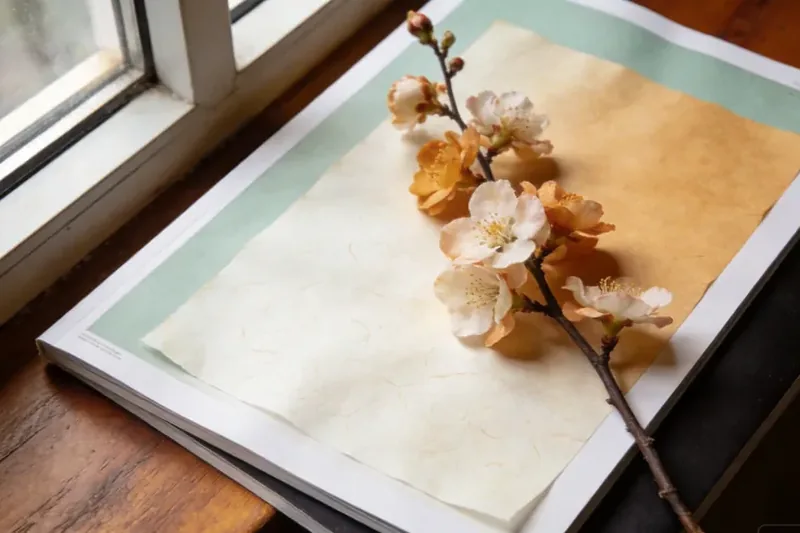
Direct answer: Daphne (瑞香, ruìxiāng) is the flower of Daphne odora, an evergreen shrub of the mezereum family (Thymelaeaceae) native to China, prized as a classical winter-blooming flower with a sweet, spicy, heady scent. Its name means “auspicious fragrance,” and it is a defining scent of the late-winter garden — one of the flowers the Ming Xiangcheng (香乘) lists in its flower-steaming techniques.
Key facts
| Chinese | 瑞香 (ruìxiāng) — “auspicious fragrance” |
| Botanical source | Daphne odora (family Thymelaeaceae) — the flower |
| What it is | A fragrant winter flower, not a wood or resin |
| Aroma | Sweet, floral, spicy, green |
| Traditional role | Winter flower; flower-scenting (花熏香); garden fragrance |
Aroma profile
Direct answer: 瑞香 is sweet and heady-floral with a spicy, green edge — a rich winter fragrance that is stronger than its small clustered flowers suggest. It sits between a sweet white-floral and a warm spice note, and its scent carries well in cool air, which is why it is valued as a garden and cut flower and as a flower-scenting reference.
瑞香 is sweet and heady-floral with a spicy, green edge — a rich winter fragrance that is stronger than its small clustered flowers suggest. It sits between a sweet white-floral and a warm spice note, and its scent carries well in the cool air of late winter, which is why it is valued as a garden and cut flower. In incense it appears as a flower-scenting reference rather than a burned material in its own right. The winter-blooming timing is the key to its value: 瑞香 scents the garden when almost nothing else is in flower, which is what made it culturally prized.
Botanical source and origin
Direct answer: Daphne odora is an evergreen shrub of the mezereum family (Thymelaeaceae), native to China and long cultivated for its fragrant winter flowers. The genus Daphne is named for the mythological nymph, and Daphne odora is the classical Chinese 瑞香. The part valued is the flower, which blooms in late winter; the bark and other parts contain irritant compounds and are not used for fragrance.
Daphne odora is an evergreen shrub of the mezereum family (Thymelaeaceae), native to China and long cultivated for its fragrant winter flowers. The genus Daphne is named for the mythological nymph, and several species bear fragrant flowers, but Daphne odora is the classical Chinese 瑞香. The part valued is the flower, which blooms in late winter when few other fragrant plants are in flower. Note that the bark and other parts of Daphne contain irritant compounds and are not used for fragrance — a safety boundary that matters as much as the aroma.
Where does 瑞香 come from?
Direct answer: Daphne odora is native to China, where it has long been cultivated as a fragrant winter-flowering shrub. It is a garden and cultivated plant, not a scarce wild harvest, and its value lies in its sweet, spicy winter bloom rather than in any rarity or regulatory status.
The plant is a Chinese native, long grown as a garden shrub for its winter flowers. It is cultivated rather than wild-harvested, and its supply is ordinary — its value lies entirely in the fragrance of its late-winter bloom, a season when the garden offers little else. This seasonal scarcity of fragrance (not of the plant itself) is what historically made 瑞香 prized: it is a garden delight of the dormant months, not a rare or regulated material.
In Chinese tradition
Direct answer: 瑞香 is a defining scent of the late-winter garden, prized for blooming when the garden is otherwise dormant, and the Ming Xiangcheng (香乘) lists it among the fragrant southern blossoms and includes it in the flower-steaming technique — steaming flowers like plum blossom and 瑞香 to capture their scent into incense.
- Winter flower: 瑞香 is a defining scent of the late-winter garden, prized for blooming and scenting the air when the garden is otherwise dormant.
- Named in 香乘: the Ming-dynasty Xiangcheng (香乘) lists 瑞香 among the fragrant blossoms of the south (闡香瑞香稱勝士) and includes it in the flower-steaming technique, where flowers “such as plum blossom, 瑞香, … osmanthus … can all be steamed” (如梅花瑞香酴醿梔子茉莉木犀及橙橘花之類皆可蒸) to capture their scent.
- Garden and cut flower: 瑞香 is grown and displayed for its fragrance and auspicious name, a sensory and symbolic plant rather than a burned incense material.
Traditional use vs modern evidence
Direct answer: The garden, cut-flower, and flower-steaming use is well documented in the classical record, and the botanical identity is established. The flower-steaming technique is a documented classical method for capturing the flower’s scent into incense — not a burned flower material — and this page makes no medical claims.
- Traditional Use — 瑞香 as a winter garden and cut flower for its sweet, spicy, heady scent. This is aromatic and cultural use, not medical.
- Historical Record — the Ming Xiangcheng (香乘) lists 瑞香 among the fragrant southern blossoms and includes it in the flower-steaming (花熏香) technique, a documented classical method; this is a documented record.
- Scientific Evidence — botanical identity (Thymelaeaceae, Daphne odora) is established, including the fact that parts other than the flower contain irritant compounds; no medical claims are made.
How is 瑞香 used in flower-scenting?
Direct answer: 瑞香’s classical incense role is flower-scenting (花熏香), not burning: the Xiangcheng includes it among flowers that can be steamed — along with plum blossom, jasmine, and osmanthus — to transfer their scent onto incense material. This is a steam-transfer technique, distinct from burning the flower itself.
瑞香’s classical incense role is a transfer technique, not a burned material. The Xiangcheng (香乘) includes 瑞香 in its flower-steaming method (花熏香), where delicate fragrant flowers — plum blossom, 瑞香, jasmine, osmanthus, and others — are steamed so their scent transfers onto an incense base. This is a technique for capturing a heat-fragile flower’s scent indirectly, rather than burning the flower itself. It is the classical answer to the same material-science problem tuberose poses in the West: how to preserve a delicate floral scent that combustion would destroy. The flower’s sweet, spicy character is transferred, not combusted.
What buyers should look for
Direct answer: A buyer should recognize 瑞香 as the flower of Daphne odora, a winter-blooming shrub, with a sweet, spicy, heady scent strongest in the fresh flower. Its role is garden fragrance and flower-scenting (花熏香), not a burned incense material, and parts other than the flower contain irritant compounds and are not used.
For a sourcing buyer, the checks are:
- Species — confirm Daphne odora, the winter daphne; it is the classical Chinese 瑞香.
- Part — only the fragrant flower is the valued part; the bark and other parts contain irritant compounds and are neither used for fragrance nor to be ingested.
- Aroma — expect a sweet, spicy, heady scent, strongest in the fresh flower, strongest in the cool air of late winter.
- Role — its incense role is flower-scenting (花熏香), not burning; treat it as a garden and scenting reference rather than a burned 香材.
Our Industry View
Direct answer: 瑞香’s lesson is the classical flower-scenting technique: when a flower’s scent is too delicate to survive burning, the classical tradition did not burn it — it steamed the flower to transfer the scent onto incense. This is the same material-science boundary as Western enfleurage, reached independently, and it is a reminder that “using a flower in incense” can mean capturing its scent, not combusting the blossom.
瑞香 is the entry where the classical technique of flower-scenting is most clearly on display, and it carries a real lesson for anyone working with delicate florals:
- Capture, don’t combust. The Xiangcheng’s flower-steaming method (花熏香) is a recognition that a delicate flower’s scent is destroyed by direct burning, so it is transferred by steam onto an incense base instead. This is the same material-science boundary Western perfumery solved with enfleurage — reached independently in the classical Chinese record. It is a sophisticated, technically sound insight, not a decorative flourish.
- The winter flower is a seasonal asset. 瑞香’s value is amplified by its timing: it blooms when the garden is dormant. In incense terms, that is a reminder that a material’s cultural and sensory value can be seasonal and contextual, not just chemical.
- The safety boundary is part of the identity. Daphne bark and other parts are irritant, and only the flower is used. This is the rare case where the “which part” question is a genuine safety matter, not just a quality matter — and it belongs on the record plainly.
In our view, 瑞香 is best understood as a winter garden flower whose classical incense role is steam-scenting rather than burning — a documented technique that shows the classical tradition solving the delicate-floral problem with the same insight, and the same part-safety discipline, as the Western perfumery tradition.
Summary
瑞香 (Daphne odora, “auspicious fragrance”) is a Thymelaeaceae winter-flowering shrub of China, prized for a sweet, spicy, heady scent that carries in the cool air of late winter. The Ming Xiangcheng (香乘) lists it among the fragrant southern blossoms and includes it in the flower-steaming technique (花熏香) — capturing the flower’s scent onto incense rather than burning it — a classical answer to the same delicate-floral problem Western perfumery solved with enfleurage. Only the fragrant flower is used; other parts contain irritant compounds, a safety boundary that is part of the plant’s identity.
FAQ
What is 瑞香 (daphne)? The flower of Daphne odora, an evergreen shrub of the mezereum family (Thymelaeaceae) native to China, prized as a classical winter-blooming flower with a sweet, spicy, heady scent. Its name means “auspicious fragrance,” and it is a defining scent of the late-winter garden in Chinese culture.
What does 瑞香 smell like? Sweet and heady-floral with a spicy, green edge — a rich winter fragrance stronger than its small clustered flowers suggest. It sits between a sweet white-floral and a warm spice note, and its scent carries well in cool air, which is why it is valued as a winter garden and cut flower.
Is 瑞香 burned as incense? Not as a primary material. 瑞香 appears in the classical record as a flower-scenting reference — the Ming-dynasty Xiangcheng (香乘) includes it in the flower-steaming (花熏香) technique — rather than as a material burned in its own right. Its role is garden and cut-flower fragrance.
Why is it called “auspicious fragrance”? The name 瑞香 means “auspicious fragrance” (瑞 = auspicious, 香 = fragrance), reflecting its value as a pleasant winter flower whose rich scent and early bloom were culturally welcomed. The 香乘 lists it among the fragrant blossoms of the south (瑞香称胜士).
Is the daphne plant safe? Only the fragrant flower is the valued part. Other parts of Daphne contain irritant compounds and are not used for fragrance, nor should they be ingested. The flower is a fragrance reference — displayed, cut, or steam-scented — not a material to consume.
What is the flower-steaming (花熏香) technique? A classical method recorded in the Ming Xiangcheng (香乘) for capturing a delicate flower’s scent onto incense: flowers such as plum blossom, 瑞香, jasmine, and osmanthus are steamed so their fragrance transfers onto an incense base. It is a steam-transfer method — a classical answer to the problem that delicate floral scents do not survive direct burning.
See also: wintersweet, plum-blossom, osmanthus, and the full scent guide.
Evidence & Sources
Botanical identity
Source: Daphne odora in Flora of China · Daphne odora on GBIF. Evidence type: Established.
Traditional Chinese use
Source: the Ming-dynasty Xiangcheng (香乘) lists 瑞香 among the fragrant southern blossoms (闡香瑞香稱勝士) and includes it in the flower-steaming technique (如梅花瑞香…皆可蒸). Evidence type: Historically documented — aromatic and cultural use, not medical.
Authenticity / disambiguation
Source: 瑞香 (Daphne odora, Thymelaeaceae) as a winter flower vs other winter flowers (蜡梅 wintersweet, 梅花 plum blossom). Evidence type: Practical screening.
Safety
Source: incense combustion produces smoke and particulate matter; Daphne parts other than the flower contain irritant compounds. Evidence type: Established.
Evidence status
| Layer | Status |
|---|---|
| Botanical identity | Established |
| Traditional use | Historically documented |
| Authenticity test | Practical screening |
| Health claims | Not established |
Sources
Sources: botanical references on Daphne odora and the Ming-dynasty Xiangcheng (香乘) record of 瑞香 among the fragrant winter blossoms. 瑞香’s garden and flower-scenting use is documented; no medical claims are made. This is editorial knowledge content, not medical advice.