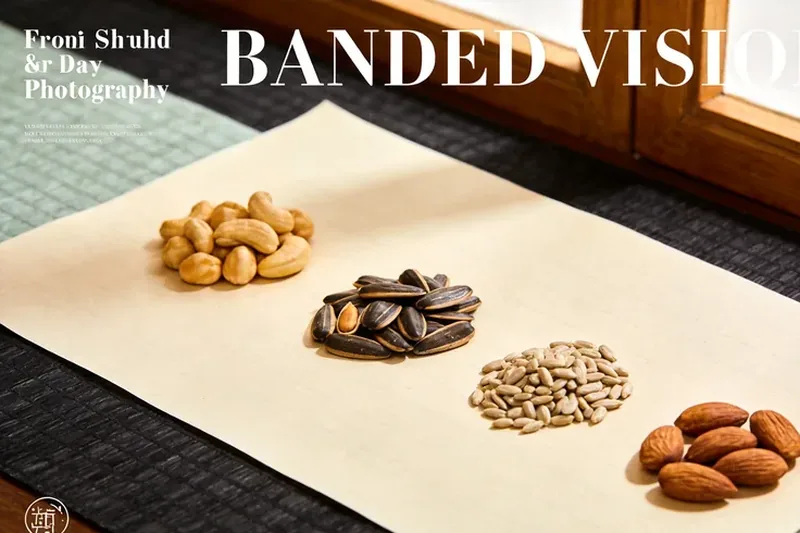
Technical answer: Cypress seed — bǎizǐ (柏子) in Chinese — is the seed of the oriental arborvitae, Platycladus orientalis (侧柏), a cypress-family tree native to China and Korea. It is the single humble material of 柏子香 (bǎizǐ xiāng), the classical “cypress-seed incense” — the scholar’s simple, deliberately inexpensive incense, made by scalding the green seeds, soaking them in wine and honey, and drying them. It is the tradition’s everyman counterpoint to costly agarwood-and-musk court blends.
Key facts
| Chinese | 柏子 (bǎizǐ), also 柏子仁; tree = 侧柏 (cèbǎi) |
| Botanical source | Platycladus orientalis (family Cupressaceae) — the seed |
| What it is | A seed, not a wood or resin |
| Aroma | Roasted, nutty, woody, softly resinous |
| Traditional role | Single-material 柏子香; scholar’s incense; materia medica |
What is cypress seed?
Direct answer: Cypress seed (柏子, bǎizǐ) is the seed of the oriental arborvitae, Platycladus orientalis (侧柏), a cypress-family tree native to China and Korea. It is the single humble material of 柏子香 (bǎizǐ xiāng), the classical scholar’s incense — cheap, simple, and deliberately unmeasured.
Cypress seed is the everyman’s incense material: a common tree seed, not a rare wood or resin, and deliberately so. Its classical role is 柏子香 — the “cypress-seed incense” made by scalding the green seeds, soaking them in wine, sealing with honey, and drying — recorded in the Xiangcheng (香乘) with no fixed quantity. The poet Su Shi paired it with a humble meal, making it the tradition’s reminder that incense was a practice, not a luxury. It is the seed of the oriental arborvitae, distinct from the tree’s leafy branchlets (侧柏叶).
Botanical identity
Direct answer: Cypress seed comes from Platycladus orientalis, the oriental arborvitae, a cypress-family (Cupressaceae) evergreen. Flora of China records it as a tree to more than 20 m tall whose ripe seed cones are reddish brown and whose seeds are grayish or purplish brown, ovoid, 5–7 × 3–4 mm.
Platycladus orientalis, the oriental arborvitae, is a cypress-family (Cupressaceae) evergreen native to China and Korea, widely planted for ornament, timber, and its aromatic parts. Flora of China records it as a tree to more than 20 m tall, with a trunk to 1 m (or more) in diameter, bark reddish brown flaking in long strips, and leaves 1–3 mm. The ripe seed cones are reddish brown, subovoid, 1.5–2(–2.5) × 1–1.8 cm, and the seeds are grayish brown or purplish brown, ovoid or subellipsoid, 5–7 × 3–4 mm, slightly ridged, maturing in October. See Platycladus orientalis in Flora of China and Platycladus orientalis on GBIF.
Chinese name and terminology
Direct answer: 柏子 (bǎizǐ) is the seed; 柏子仁 (bǎizǐ rén) is the shelled kernel; the tree is 侧柏 (cèbǎi). A naming caution: 柏子 is the oriental arborvitae seed, Platycladus orientalis, not the Mediterranean “cypress” of the genus Cupressus.
The Chinese terms:
- 柏子 (bǎizǐ) — the seed, the incense material.
- 柏子仁 (bǎizǐ rén) — the shelled kernel, used in materia medica.
- 侧柏 (cèbǎi) — the tree, the oriental arborvitae.
The English name “cypress” is the trap: it covers both the oriental arborvitae (Platycladus orientalis) and the Mediterranean cypresses (Cupressus). The Chinese incense material is the oriental arborvitae seed, not a Mediterranean cypress seed.
Where does cypress seed come from?
Direct answer: The oriental arborvitae, Platycladus orientalis, is native to China and Korea and widely planted. Flora of China records its native range in southern Gansu, Hebei, Henan, Shaanxi, and Shanxi, with extensive cultivation making natural occurrences hard to distinguish.
Platycladus orientalis is native to China and Korea. Flora of China records its native range as southern Gansu, Hebei, Henan, Shaanxi, and Shanxi, at elevations of 300–3300 m, while noting that natural occurrences are difficult to distinguish from introductions owing to extensive past cultivation and planting. The tree is now widely planted across China for ornament, timber, and its aromatic parts — which is exactly why its seed is an accessible, “everyman” incense material rather than a rare one.
Aroma profile
Direct answer: Cypress seed has a roasted, nutty, woody character with a soft resinous undertone — a gentle, comforting scent that the honey-and-wine soak of the classical recipe further softens and sweetens. It is a quiet note, deliberately the opposite of a precious aroma.
Cypress seed has a roasted, nutty, woody character with a soft resinous undertone — a gentle, comforting scent that the honey-and-wine soak of the classical recipe further softens and sweetens. It is a quiet note, the opposite of a heavy or precious aroma, which is exactly the point: 柏子香 is praised for its simplicity, not its intensity.
Why is it used in incense?
Direct answer: Cypress seed is used as the single humble material of 柏子香, the classical scholar’s incense — a deliberately simple, inexpensive material whose value is its accessibility and humility, not its rarity. It is the tradition’s everyman counterpoint to courtly agarwood-and-musk blends.
Cypress seed’s role is cultural, not olfactory prestige: it is the material of 柏子香, the scholar’s incense, chosen precisely because it is common, cheap, and easy. The recipe is deliberately unmeasured — “however many” seeds — and the point is that incense was a daily practice available to anyone with a tree and a stove, not a luxury reserved for the court. Its gentle roasted-nutty scent suits quiet, personal burning rather than grand display.
How is cypress seed processed?
Direct answer: The classical 柏子香 recipe scalds the green, unopened seeds in boiling water, soaks them in wine, seals them with honey for about seven days, then dries them in the shade. The Xiangcheng records it with no fixed quantity.
The classical processing, from the Xiangcheng (香乘):
- Scald — the green, unopened seeds are scalded in boiling water.
- Soak — they are soaked in wine.
- Seal with honey — the seeds are sealed with honey for about seven days.
- Dry — finally, they are dried in the shade.
The recipe is recorded with no fixed quantity (“however many”), a deliberate unmeasured-ness that marks 柏子香 as the anti-formula — the opposite of a measured court blend.
What determines cypress seed quality?
Direct answer: The classical material is green, unopened seeds; the finished incense material is the roasted, honey-wine-treated seed. Quality is a matter of clean, sound seeds and correct processing rather than a graded standard — there is no standardized grading for 柏子香.
The practical points:
- Seed condition — green, unopened seeds are the classical material.
- Processing — the scald-soak-honey-dry steps produce the finished incense character.
- Cleanliness — clean, sound seeds without damage or mustiness.
There is no standardized grading system for 柏子香; the material is judged by seed condition and the finished roasted, softened aroma.
Common forms
Direct answer: Cypress seed appears as the loose roasted-seed material of 柏子香 — burned on charcoal or an electric heater — and as the shelled kernel 柏子仁 used in materia medica. It is a loose material, not a pressed stick.
| Form | Note |
|---|---|
| Roasted seed (柏子香 material) | Loose, honey-wine-treated, burned on charcoal/heater |
| Shelled kernel (柏子仁) | The seed kernel, a materia-medica part |
柏子香 is a loose roasted-seed material, not a pressed stick — a point that distinguishes it from modern stick incense.
In Chinese tradition
- 柏子香 (cypress-seed incense): 柏子 is the single humble material of the classical recipe — scald the green, unopened seeds in boiling water, soak in wine, seal with honey for about seven days, then dry in the shade. The Xiang Cheng (香乘) records it with no fixed quantity (“however many”), a recipe that is deliberately unmeasured. Historical Record — documented formula use.
- Scholar’s incense: the poet Su Shi is recorded pairing 柏子香 with a humble meal — “铜炉烧柏子,石鼎煮山药” (a bronze burner of cypress seed, a stone pot of yam) — the tradition’s reminder that incense was a practice, not a luxury. Historical Record — documented cultural association.
- Materia medica: 柏子仁 (the shelled seed) is recorded in traditional Chinese medicine. This is traditional materia-medica language, not modern clinical evidence. Traditional Use — not clinical evidence.
Traditional use vs modern evidence
The incense use is documented in the classical recipe record. Medicinal uses are traditional, not established clinical fact, and we make no medical claims. The documented, non-medical facts are botanical identity and the seed’s role as the material of 柏子香.
Cypress seed vs arborvitae leaves
Direct answer: Cypress seed (柏子) and arborvitae leaves (侧柏叶) come from the same tree, Platycladus orientalis, but are different parts with different uses. The seed is roasted, nutty, and is the incense material of 柏子香; the leaf is fresh, green, woody, and is chiefly a materia-medica part.
| Cypress seed (柏子) | Arborvitae leaves (侧柏叶) | |
|---|---|---|
| Part | The seed (柏子仁 for the kernel) | The leafy branchlets |
| Aroma | Roasted, nutty, softly resinous | Fresh, green, woody, slightly resinous |
| Role | The incense material of 柏子香 | A materia-medica leaf |
They are the same tree, different parts: the seed carries the classical incense fame, while the leaf is chiefly a materia-medica material. See arborvitae leaves (侧柏叶).
Quality and sourcing notes
Practical points for buyers:
- The classical material is green, unopened seeds; the roasted, honey-wine-treated seed is the finished incense material.
- Distinguish 柏子 (the seed) from 侧柏叶 (the leafy branchlets) — different parts with different uses.
- 柏子香 is a loose roasted-seed material burned on charcoal or an electric heater, not a pressed stick.
What buyers should look for
Direct answer: Buyers should distinguish the seed (柏子, the incense material) from the leafy branchlets (侧柏叶), expect clean, green, unopened seeds for the classical recipe, and understand that 柏子香 is a loose roasted-seed material, not a stick.
For a sourcing or incense buyer:
- Part — confirm 柏子 (the seed), not 侧柏叶 (the leafy branchlets).
- Seed condition — clean, green, unopened seeds for the classical recipe.
- Form — 柏子香 is a loose material burned on charcoal or a heater, not a pressed stick.
Safety
Incense combustion produces smoke and particulate matter. Burn in a well-ventilated space, avoid inhaling concentrated smoke, and keep away from children and pets. This is editorial knowledge content, not medical advice.
Our Industry View
Direct answer: In manufacturing, cypress seed’s value is cultural, not material — it is the accessible everyman ingredient, and its appeal is its humility and simplicity. As a commercial product it is a niche, single-material loose incense, not a scalable lead note.
From a manufacturing perspective, cypress seed’s commercial logic is cultural, not scalable:
- Its value is the story, not the material. 柏子香 is prized for being cheap and simple — the anti-luxury. That is a positioning asset for a heritage or “scholar’s” product line, but it does not translate into a premium lead note.
- It is a single-material loose incense. The finished product is roasted seed burned on a heater or charcoal, not a blended stick; the processing (scald, wine, honey, dry) is simple and the result is deliberately unmeasured, so the right treatment depends on the maker’s intent rather than a fixed specification.
In our view, the commercial sweet spot is a heritage-positioned, clearly labeled 柏子香 that sells the scholar’s story — accessibility, simplicity, humility — rather than a commodity seed sold on aroma intensity.
Summary
Cypress seed (柏子, bǎizǐ) is the seed of the oriental arborvitae, Platycladus orientalis (侧柏, Cupressaceae), a cypress-family tree native to China and Korea. It is the single humble material of 柏子香, the classical scholar’s incense — scald, wine-soak, honey-seal, dry, with no fixed quantity — a deliberately simple, inexpensive everyman counterpoint to courtly agarwood-and-musk blends. It is the seed of the tree, distinct from the leafy branchlets 侧柏叶, and its value is cultural accessibility rather than aromatic rarity.
FAQ
What is 柏子 (bǎizǐ)? The seed of the oriental arborvitae, Platycladus orientalis (侧柏), a cypress-family tree native to China and Korea. It is the single humble material of 柏子香, the classical “cypress-seed incense.” The seed is called 柏子, or 柏子仁 for the shelled kernel, and it is distinct from the tree’s leafy branchlets (侧柏叶).
What is 柏子香 (cypress-seed incense)? The classical scholar’s incense, made from green, unopened arborvitae seeds scalded in boiling water, soaked in wine, sealed with honey for about seven days, then dried in the shade. The Xiang Cheng (香乘) records it with no fixed quantity — “however many” seeds — a recipe that is deliberately unmeasured. It is the tradition’s everyman counterpoint to costly agarwood-and-musk blends. See our page on the cypress-seed incense recipe.
What does cypress seed smell like? Roasted, nutty, and woody, with a soft resinous undertone — a gentle, comforting scent that the honey-and-wine soak of the classical recipe further softens and sweetens. It is a quiet, humble note, deliberately the opposite of a heavy or precious aroma. The simplicity of the scent is the point.
Why is cypress seed called the scholar’s incense? Because it is cheap, simple, and made from a common tree seed rather than rare wood or resin. The poet Su Shi is recorded pairing it with a humble meal — “铜炉烧柏子,石鼎煮山药” (a bronze burner of cypress seed, a stone pot of yam) — making 柏子香 the tradition’s reminder that incense was a daily practice, not a luxury reserved for the court.
How is cypress seed incense burned? As a loose roasted-seed material, not a pressed stick. The classical 柏子香 is burned on charcoal or an electric heater after the seeds have been scalded, wine-soaked, honey-sealed, and dried. This distinguishes it from modern stick incense, and the source gives no fixed quantity, treating the proportions as flexible by design.
See also: pine-resin, cedar, arborvitae leaves (侧柏叶), the cypress-seed incense recipe, ginkgo nut and the full scent guide.
Evidence & Sources
Botanical identity
Source: Platycladus orientalis in Flora of China · Platycladus orientalis on GBIF. Evidence type: Established.
Traditional Chinese use
Source: the 柏子香 recipe in the Xiang Cheng (香乘) — scald, wine-soak, honey-seal, dry; and the Su Shi line “铜炉烧柏子.” Evidence type: Historically documented — incense use; medicinal uses are traditional, not modern clinical evidence.
Authenticity / disambiguation
Source: 柏子 (seed) vs 侧柏叶 (leafy branchlets); oriental arborvitae (Platycladus orientalis) vs Mediterranean cypress (Cupressus). Evidence type: Practical screening.
Safety
Source: incense combustion produces smoke and particulate matter; burn in a well-ventilated space. Evidence type: Established.
Evidence status
| Layer | Status |
|---|---|
| Botanical identity | Established |
| Traditional use | Historically documented |
| Authenticity test | Practical screening |
| Health claims | Not established |
Sources
Sources: botanical references on Platycladus orientalis and the 柏子香 recipe in the Xiang Cheng (香乘). Cypress seed’s incense role is documented; medicinal uses are treated as traditional, not established clinical fact. This is editorial knowledge content, not medical advice.