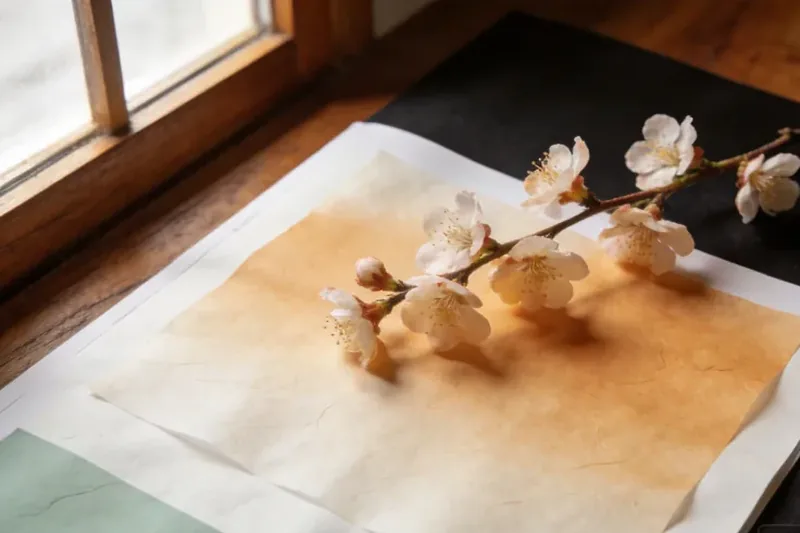
At a glance: Chrysanthemum — júhuā (菊花) in Chinese — is the flower of Chrysanthemum morifolium, widely drunk as an herbal tea and used in traditional materia medica. It has a light floral-herbal aroma with a bittersweet edge.
Key facts
| Chinese | 菊花 (júhuā) |
| Botanical source | Chrysanthemum morifolium (Asteraceae) |
| What it is | A dried flower |
| Aroma | Floral, herbal, bittersweet |
| Traditional role | Tea, food, materia medica |
Aroma profile
Direct answer: Chrysanthemum is a delicate, floral-herbal scent with a slightly bitter, “green” edge — less sweet than jasmine or rose, and closer to a dried meadow herb than to a lush perfume flower. It reads cool and dry, a light airy note with a faint bitter-herbal finish.
Chrysanthemum has a delicate floral-herbal scent, less sweet than jasmine or rose, with a slightly bitter, “green” quality. It is most familiar as a tea aroma (菊花茶).
The scent is closer to a dried meadow herb than to a lush perfume flower. Where jasmine is heady and rose is sweet, chrysanthemum is cool and dry — a light, airy note with a faint bitter-herbal finish. In incense it reads as a subtle, “cooling” herbal floral, quite different from the warm woods and resins of the classical canon.
Botanical identity
Direct answer: The cultivated chrysanthemum is Chrysanthemum morifolium, an Asteraceae (daisy-family) plant; its wild relative Chrysanthemum indicum (野菊) is the perennial herb from which the cultivated forms descend. The part used in tea, food, and incense is the dried flower head, not a wood or resin.
Chrysanthemum belongs to the daisy family, Asteraceae. Two names carry the botanical story:
- Chrysanthemum morifolium — the cultivated chrysanthemum, an ancient horticultural complex of countless named forms bred for flower size, color, and bloom season. This is the source of the tea flower and the garden chrysanthemum.
- Chrysanthemum indicum — the wild chrysanthemum, 野菊 (yějú, “wild chrysanthemum”), a perennial herb recorded by Flora of China at roughly 0.25–1 m tall with procumbent rhizomes. It is the wild progenitor stock behind the cultivated forms.
In incense and tea the material of value is the dried flower head, not a root, wood, or resin. This matters for a buyer: chrysanthemum is a light floral material, structurally different from the woody and resinous aromatics it is often blended with. See Chrysanthemum indicum in Flora of China.
Chinese name and terminology
Direct answer: 菊花 (júhuā) is the standard Chinese name; 野菊 (yějú) specifically denotes the wild Chrysanthemum indicum. The name carries no single species precision — 菊花 covers many cultivated forms of C. morifolium, and the regional variety names signal grade and intended use more than a distinct aroma.
The name 菊花 is broad, not a species label. Two terms a buyer should distinguish:
- 菊花 (júhuā) — the general name for chrysanthemum, covering the many cultivated forms of C. morifolium.
- 野菊 (yějú) — the wild chrysanthemum, C. indicum, a related but distinct wild plant.
This looseness is typical of Chinese herbal naming: the name points to a class of flower, and the precise material must be pinned down through the variety name and the intended use (tea, food, or incense).
Where does chrysanthemum come from?
Direct answer: Chrysanthemum is a cultivated crop across China; the wild C. indicum is a widespread East Asian perennial recorded by Flora of China across many provinces. Modern production of the tea flower is dominated by named regional varieties such as 杭白菊 (Hangzhou) and 贡菊 (Huangshan).
Chrysanthemum is grown throughout China as a garden and crop plant. The wild C. indicum is a widespread perennial herb of East Asia, recorded by Flora of China across a broad range of provinces. The cultivated tea flower is identified not by a single origin but by its regional variety name — 杭白菊 (Hangzhou), 贡菊 (Huangshan), and others — which is also how the trade grades it (see Varieties below).
Varieties (a buyer’s note)
“菊花” covers many cultivated forms of C. morifolium, and the named varieties differ:
- 杭白菊 (Hangzhou white) — the classic pale “chrysanthemum tea” flower.
- 贡菊 (tribute chrysanthemum) — a tight, small flower from Huangshan, also drunk as tea.
- 亳菊 / 滁菊 — medicinal-grade varieties named for their producing regions (Bozhou, Chuzhou).
The aroma differences are subtle; the regional names mainly signal grade and intended use (tea vs materia medica) rather than a dramatic change in scent.
Why is it used in incense?
Direct answer: Chrysanthemum is used in incense as a light, “cooling” herbal-floral note — a supporting accent that adds an airy, non-sweet floral element to a blend. It is not a classical lead 香材 like agarwood or sandalwood, but a subtle modifier that lightens heavier formulas.
Chrysanthemum is a supporting ingredient, not a solo statement. Its cool, dry, bitter-herbal character makes it useful in two ways in a blend: it lightens heavier woods and resins, and it supplies a non-sweet floral note where jasmine or rose would be too sweet or heady. It is far less common than the woods and resins of the classical canon, but its delicate floral-herbal character fits formulas that call for a lighter, airier floral element — especially those built around a “cooling” or herbal theme rather than a rich, sweet one.
How is it processed?
Direct answer: Chrysanthemum flowers are harvested and dried; the whole dried flower head is the commercial form. The exact drying method (sun, air, or low-temperature drying) and the resulting moisture and color depend on the producer and grade, so no single processing specification applies across the trade.
The essential step is simple: the opened flower heads are harvested and dried to a stable, storable form. From there the material branches by end use — whole dried flowers for tea and display, or ground powder for blending into incense. For powder buyers, the same practical variables as any floral powder apply: particle size and moisture affect how the material packs, burns, and releases aroma, and the right target depends on the formula — the binder, the other ingredients, and the production line (see Our Industry View below). The drying and grinding mechanics sit within the wider how incense is made process.
What determines chrysanthemum quality?
Direct answer: Quality turns on the flower’s completeness, color, aroma, and freedom from broken or discolored material — a clean, intact, fragrant flower head beats a crumbled or faded one. The named variety (杭白菊 vs 贡菊 vs 亳菊/滁菊) signals grade and intended use rather than a formal quality ladder.
The practical quality factors:
- Flower completeness — intact, well-formed heads over broken or crushed material.
- Color — the pale, even color expected of the named variety, without browning or mold.
- Aroma — a clean floral-herbal scent, not musty or stale.
- Freedom from foreign matter — clean separation from stems, leaves, and debris.
- For powder — consistent particle size and moisture, judged against the specific formula.
There is no standardized numerical grading system; the regional variety names carry the grade signal, and the buyer evaluates the physical condition of the lot.
Common forms
Direct answer: Chrysanthemum is sold as whole dried flowers (for tea and display) and as ground powder (for incense blending). The two are the same flower in different physical forms, not a quality distinction.
| Form | Typical use |
|---|---|
| Whole dried flowers | Herbal tea, food, display |
| Powder | Blended into incense sticks and cones |
The distinction is functional, not a quality statement. See incense powder & resin for how floral powder behaves in practice.
In Chinese tradition
- Tea (菊花茶): dried chrysanthemum is a classic herbal tisane, enjoyed for its light, cooling character.
- Materia medica: in traditional Chinese medicine, chrysanthemum is described for the eyes and liver and for “dispersing wind-heat” — traditional language, not modern clinical fact.
- Culture: chrysanthemum is one of the “Four Gentlemen” (四君子) of Chinese art, alongside plum, orchid, and bamboo — and is central to the Double Ninth Festival (重阳节), where it symbolizes longevity and the autumn season.
The Double Ninth association is worth knowing: chrysanthemum’s cultural weight in China is tied to autumn and longevity, which is why it appears in poetry, painting, and festival ritual far beyond its role as a tea.
Traditional use vs modern evidence
Chrysanthemum has a long record of use as a tea and food; modern research on its phytochemicals (flavonoids like luteolin, chlorogenic acid) exists but is largely preclinical (cell and animal studies). We describe its tea and cultural use; we do not make medical claims (e.g. “cures colds,” “lowers blood pressure,” “protects eyesight”).
Chrysanthemum vs related flowers
Direct answer: Chrysanthemum is a cool, dry, bitter-herbal floral — distinct from chamomile (a different genus, Matricaria/Chamaemelum), from jasmine (heady and sweet), and from rose (rich and sweet). The three floral notes sit at different weights and suit different blend roles.
| Flower | Character |
|---|---|
| Chrysanthemum | Cool, dry, herbal, bittersweet — a light “cooling” floral |
| Chamomile | A different Asteraceae genus (Matricaria/Chamaemelum); a mild, apple-like calming herbal note |
| Jasmine | Heady, sweet, indolic — a rich floral |
| Rose | Sweet, deep, classic — a lush floral |
Chrysanthemum and chamomile are different plants in the same family — a standing confusion worth keeping straight. See chamomile, jasmine, and rose.
Adulteration & misidentification
Direct answer: The main risk is misidentification, not adulteration: chrysanthemum (Chrysanthemum) is sometimes confused with chamomile (Matricaria/Chamaemelum), a different genus in the same family. The two should not be sold under one name; the botanical name on the label resolves the matter.
Chrysanthemum is not an expensive, heavily faked aromatic in the way agarwood is; its risk is a naming and identification matter. The principal confusion is with chamomile, which shares the Asteraceae family and a loose floral-herbal resemblance but is a different genus with a different aroma and use. A label that names the genus resolves it. See the incense substitution cross-reference for the general screening logic.
Modern commercial applications
Direct answer: Chrysanthemum reaches the market mainly as tea and food, with a secondary role as a light herbal-floral incense material. The tea channel dominates its commercial weight; incense use is a smaller, supporting application.
Chrysanthemum’s commercial life is led by tea and food — the whole dried flower is a staple tisane across China and East Asia. Its incense role is secondary: a light, cooling herbal-floral accent in blends, useful where a non-sweet floral is wanted. For a sourcing buyer, this split matters because the tea-grade and incense-grade markets value the flower differently — tea buyers prize intact, uniformly colored flowers for steeping, while incense buyers care more about aroma on gentle heat and how the powder behaves in a formula.
What buyers should look for
Direct answer: Buyers should confirm the botanical source (C. morifolium vs C. indicum), the named variety, and the form — then judge physical condition: intact flowers, even color, clean aroma, and freedom from debris. For powder, test particle size and moisture against the formula rather than accepting a nominal grade.
For an incense maker or sourcing buyer:
- Species and variety — confirm Chrysanthemum morifolium and the named variety (杭白菊, 贡菊, etc.); a real seller can state it.
- Form — whole flowers or powder; each behaves differently in a blend.
- Physical condition — intact, evenly colored flowers with a clean floral-herbal scent and no debris or mold.
- Powder consistency — confirm particle size and moisture, and test a sample against your formula.
Safety
Chrysanthemum is food-grade and widely drunk as tea; however, incense combustion produces smoke and particulate matter — burn in a well-ventilated space. People with ragweed-family (Asteraceae) allergies may wish to be cautious with chrysanthemum, though this is more relevant to tea than to incense.
Our Industry View
Direct answer: In manufacturing, chrysanthemum is a precision modifier, not a base. Its value is that it supplies a cool, non-sweet floral without adding the sugar-weight of jasmine or rose — but the same lightness means it can vanish under heavier woods, so dosage, particle size, and batch consistency matter more than the variety name.
From a manufacturing perspective, chrysanthemum’s defining trait is lightness — which is both its value and its constraint. It adds an airy, cooling floral lift that heavier flowers cannot, but that very lightness means it is easily buried beneath woods and resins, so it must be dosed and blended deliberately rather than dropped in as an afterthought.
Two points follow:
- It is a modifier, not a base. Chrysanthemum will not carry a formula the way sandalwood or agarwood can. Its role is to adjust the top of a blend — to lighten and cool it. A buyer who expects it to anchor a formula will be disappointed; a buyer who uses it to tune a blend gets real value.
- Particle size and moisture affect behavior, not just aroma. As a light floral powder, chrysanthemum is sensitive to the same grinding and drying variables as any powder; the right target depends on formulation — the binder, the other ingredients, and the production line — so a figure that works in one factory does not transfer to another.
In our view, the commercial sweet spot is a clean, consistently dried, named-variety flower used as a measured accent — not a rare or expensive ingredient, but one that rewards precision over quantity.
Summary
Chrysanthemum (菊花) is the dried flower of Chrysanthemum morifolium (with wild C. indicum as its progenitor), valued as a cool, dry, bittersweet herbal-floral — familiar as tea and cultural symbol, and useful in incense as a light, non-sweet supporting note. Its quality rests on flower completeness, color, aroma, and cleanliness rather than a formal grade, and its naming risk is confusion with chamomile, a different Asteraceae genus. In incense it is a precision modifier, not a base; commercially, consistency and correct dosing outweigh the variety name.
FAQ
Is chrysanthemum tea a medicine? Chrysanthemum tea is a traditional tisane and food, not a medicine in the modern clinical sense. In traditional Chinese medicine, chrysanthemum is described for the eyes and liver and for “dispersing wind-heat,” but this is traditional language rather than modern clinical evidence. Modern research on its phytochemicals, such as the flavonoids luteolin and chlorogenic acid, is largely preclinical — based on cell and animal studies. We describe chrysanthemum’s tea and cultural use and make no claim that it treats or cures any condition.
Is chrysanthemum the same as chamomile? No. Chrysanthemum is Chrysanthemum morifolium (family Asteraceae), while chamomile is a different genus — Matricaria or Chamaemelum, also in the Asteraceae family. They share a loose floral-herbal family resemblance, but they are different plants with different aromas, appearances, and uses. Chrysanthemum is a staple of Chinese tea culture and materia medica, whereas chamomile is a European herb most familiar as a calming tisane. The two names should not be used interchangeably.
What does chrysanthemum smell like? Chrysanthemum has a delicate, floral-herbal, slightly bittersweet scent, less sweet than jasmine or rose, with a faint “green” quality. It is most familiar as the aroma of chrysanthemum tea (菊花茶), and it reads closer to a dried meadow herb than to a lush perfume flower. Where jasmine is heady and rose is sweet, chrysanthemum is cool and dry — a light, airy note with a faint bitter-herbal finish that sets it apart from warm woods and resins.
Is chrysanthemum used in incense? Yes, chrysanthemum appears as a herbal-floral incense material, though it is usually blended rather than burned alone. Its scent is light, cool, and subtly herbal rather than sweet, so it works as a supporting note that adds an airy, “cooling” quality. It is less common than the woods and resins of the classical canon, but its delicate floral-herbal character makes it useful in formulas that call for a lighter, non-sweet floral element.
What are the “Four Gentlemen” (四君子)? The Four Gentlemen (四君子) are the four plants canonized in Chinese art and culture: plum, orchid, bamboo, and chrysanthemum. Each represents a virtue and a season, and together they are a recurring subject in Chinese painting, poetry, and literati tradition. Chrysanthemum’s inclusion reflects its cultural standing far beyond its role as a tea — it symbolizes autumn and longevity. The concept is a cultural and artistic convention rather than a botanical grouping.
Is chrysanthemum incense safe? Like all burning plant material, chrysanthemum produces smoke and particulate matter, so burn it in a well-ventilated space and avoid inhaling concentrated smoke. This is general safety guidance that applies to every incense material, not a claim about chrysanthemum specifically. Separately, people with ragweed-family (Asteraceae) allergies may wish to be cautious with chrysanthemum, though that concern is more relevant to drinking the tea than to burning the flower as incense.
What is the difference between 菊花 and 野菊? 菊花 (júhuā) is the general name for the cultivated chrysanthemum, Chrysanthemum morifolium; 野菊 (yějú) is the wild chrysanthemum, Chrysanthemum indicum, the perennial wild herb from which the cultivated forms descend. The tea flower and the incense material are the cultivated 菊花; 野菊 names the wild relative. The two are related but distinct plants, and a label should specify which is meant.
See also: mugwort, another herbal (non-sweet) Chinese incense material; chamomile for the Asteraceae distinction; jasmine and rose for the floral comparison;, orchid and the full scent guide.
Evidence & Sources
Botanical identity
Source: Chrysanthemum indicum in Flora of China · Chrysanthemum morifolium on GBIF. Evidence type: Established.
Traditional Chinese use
Source: this page records chrysanthemum described for the eyes and liver and “dispersing wind-heat,” and its place among the Four Gentlemen (四君子) and the Double Ninth Festival (重阳节). Evidence type: Historically documented — traditional materia-medica language, not modern clinical evidence.
Commercial grading
Source: the named varieties (杭白菊 / 贡菊 / 亳菊 / 滁菊) signal grade and intended use. Evidence type: Trade terminology.
Safety
Source: chrysanthemum is food-grade, but incense combustion produces smoke and particulate matter; ragweed-family (Asteraceae) allergy caution. Evidence type: Established.
Evidence status
| Layer | Status |
|---|---|
| Botanical identity | Established |
| Traditional use | Historically documented |
| Commercial grading | Trade terminology |
| Laboratory confirmation | Requires analytical testing |
| Health claims | Not established |
Sources
Sources: botanical references on Chrysanthemum morifolium and TCM accounts of 菊花 (varieties, festival association). Medicinal claims are treated as traditional. This is editorial knowledge content, not medical advice.