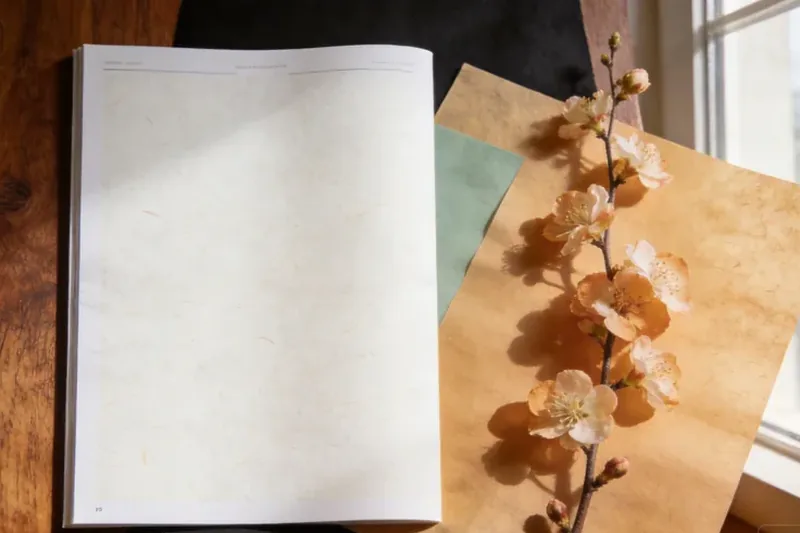
Technical answer: Champaca — báilánhuā (白兰花) in Chinese — is the intensely fragrant white flower of Michelia alba (now often placed as Magnolia × alba), a magnolia-family tree cultivated across southern China and Southeast Asia. It is a heady, sweet, slightly fruity white-floral, widely used to scent tea, sachets, and floral incense. The flower is also one of the defining scents of southern-Chinese fragrance culture, worn as a fresh blossom in daily life.
Key facts
| Chinese | 白兰花 (báilánhuā), “white orchid flower”; also 白玉兰/白兰 |
| Botanical source | Michelia alba (syn. Magnolia × alba, family Magnoliaceae) — the flower |
| What it is | A fragrant white flower, not a wood or resin |
| Aroma | Sweet, heady, white-floral, slightly fruity |
| Traditional role | Tea scenting, sachets, floral incense, worn blossom |
Aroma profile
Direct answer: Champaca is sweet, heady, and white-floral, with a slightly fruity, almost tropical lift that distinguishes it from the creamier gardenia or the sharper jasmine. It is a rich, enveloping floral note, strongest in the fresh blossom.
Champaca is sweet, heady, and white-floral, with a slightly fruity, almost tropical lift that distinguishes it from the creamier gardenia or the sharper jasmine. It is a rich, enveloping floral note, strongest in the fresh blossom. The fresh flower is worn and used to scent tea; in incense the dried or oil form is used as a delicate floral accent. Where gardenia is creamy and jasmine is indolic, champaca is sweeter and rounder — a tropical white-floral rather than a dense or sharp one.
Botanical identity
Direct answer: Champaca is the flower of Michelia alba (now often Magnolia × alba), an evergreen tree of the magnolia family (Magnoliaceae). Despite the 兰 in its name, it is not an orchid — it belongs to the magnolia tradition, and the flower is the part used.
Michelia alba is a magnolia-family tree, an evergreen cultivated for its fragrant white blossoms. Taxonomically it has moved between Michelia and Magnolia; the currently accepted name is Magnolia × alba, with Michelia alba widely used as a synonym. The flower is the part used.
A naming caution: 白兰花 (Michelia alba, white champaca) is not an orchid despite the 兰 in its name. It belongs to the magnolia family. It is also distinct from the pale-flowered 玉兰 (yulan, Magnolia denudata), a different magnolia.
See Magnolia × alba (syn. Michelia alba) on GBIF and Michelia alba on GBIF.
Chinese name and terminology
Direct answer: 白兰花 (báilánhuā, “white orchid flower”) is the standard name, also written 白玉兰 / 白兰. The 兰 in the name does not make it an orchid — it is a magnolia-family tree — and the name must be kept separate from 玉兰 (yulan, Magnolia denudata), a different magnolia.
The name carries a standing confusion worth unpacking:
- 白兰花 (báilánhuā) / 白玉兰 / 白兰 — Michelia alba, white champaca, the magnolia-family tree this page describes.
- 玉兰 (yùlán) — Magnolia denudata, the yulan magnolia, a different white magnolia.
- 兰 (lán, “orchid”) — a word Chinese uses to name many fragrant plants, so 白兰花 is a magnolia, not a true orchid.
The 兰 in the name is a fragrance honorific, not a botanical family statement.
Where does champaca come from?
Direct answer: Michelia alba is a magnolia-family tree native to Southeast Asia, long cultivated in southern China and across the tropics for its fragrant white blossoms. It is a cultivated aromatic tree rather than a wild-harvested or plantation wood crop.
Michelia alba is a magnolia-family tree native to Southeast Asia and long cultivated in southern China, where it is grown for its fragrant white blossoms. As a cultivated flowering tree, its supply follows horticulture — the tree is grown for its flowers, not harvested for wood — which distinguishes it from the resin and heartwood aromatics of the incense canon.
Why is it used in incense?
Direct answer: Champaca is used in incense as a heady, sweet white-floral accent, and its fresh blossom is worn and used to scent tea and sachets. Because the fresh flower is far more fragrant than the dried, in incense champaca is usually a delicate accent or a themed note rather than a dominant burned material.
Champaca’s incense role follows from its aroma behavior: its rich, sweet white-floral is strongest in the fresh blossom, and drying mutes it. So in incense it is usually a delicate floral accent or a themed note, while its primary cultural life is as a fresh, worn blossom and a tea-scenting flower. Its place in southern-Chinese fragrance culture — worn daily, scenting tea and sachets — matters as much as its role in a burnable blend. See michelia-figo and yulan magnolia, its magnolia-family relatives.
How is it processed?
Direct answer: Champaca flowers are harvested and used fresh (worn or for scenting) or dried, and can be distilled to an oil. For incense, the dried flowers are ground to powder, with particle size and moisture affecting how the material packs, burns, and releases aroma.
The flower is the part used, and it branches by end use:
- Fresh — worn as a personal fragrance, or used to scent tea and sachets.
- Dried — the stable form for storage and grinding into floral-incense powder.
- Oil — champaca absolute/attar, a separate perfumery product from the flower itself.
For powder buyers, the same practical variables as any floral powder apply: particle size and moisture affect how the material packs, burns, and releases aroma, and the right target depends on the formula (see Our Industry View below). The drying and grinding mechanics sit within the wider how incense is made process.
What determines champaca quality?
Direct answer: Quality turns on the flower’s freshness, whiteness, and strength of fragrance — a clean, intact, fragrant white blossom beats a browned or crumbled one. The first check is confirming the species, since 白兰花 (Michelia alba) is distinct from 玉兰 (Magnolia denudata).
The practical quality factors:
- Species — confirm Michelia alba (white champaca) rather than Magnolia denudata (yulan).
- Freshness and color — intact, white, fragrant blossoms over browned or crushed material.
- Fragrance — a clean, sweet, heady scent; the fresh flower is the aromatic benchmark, the dried far subtler.
- Freedom from foreign matter — clean separation from leaves, stems, and debris.
- For powder — consistent particle size and moisture, judged against the specific formula.
There is no standardized numerical grading system; the buyer evaluates the physical condition of the lot.
Common forms
Direct answer: Champaca is sold as fresh flowers, dried flowers, ground powder, and as a distilled oil or absolute. Fresh and dried serve personal fragrance and tea scenting; powder serves incense blending; the oil is a separate perfumery product, not ground flower.
| Form | Typical use |
|---|---|
| Fresh flowers | Worn blossom, tea scenting, sachets |
| Dried flowers | Storage, floral incense |
| Powder | Blended into incense sticks and cones |
| Oil / absolute | Perfumery and scented products |
The distinction is functional, not a quality statement. See incense powder & resin for how floral powder behaves in practice.
In Chinese tradition
- Tea scenting: 白兰花 is used to scent tea, one of the classical aromatic techniques of southern China, alongside jasmine and osmanthus. Historical Record — documented tea-scenting practice.
- Worn blossom: the fresh flower is famously worn in daily life in southern China for its scent — a living, personal fragrance rather than a burned material. Historical Record — documented cultural practice.
- Floral incense and sachets: the flower’s heady scent is referenced in floral incense and sachet blends. Historical Record — documented aromatic use.
- Materia medica: 白兰花 has traditional aromatic uses. Traditional Use — this is traditional materia-medica language, not modern clinical evidence.
Traditional use vs modern evidence
The fragrance and tea-scenting roles are well documented. Any medicinal use is traditional, not established clinical fact, and we make no medical claims. The documented, non-medical facts are botanical identity and the flower’s long use as a fresh, heady white-floral.
Champaca vs related magnolias
Direct answer: Champaca (白兰花, Michelia alba) is distinct from two magnolia-family relatives that share its white-floral, fragrant character: 含笑花 (Michelia figo, banana shrub) and 玉兰 (Magnolia denudata, yulan magnolia). All three are magnolia-family flowers, but they are different species with different aromas.
| Flower | Plant | Character |
|---|---|---|
| Champaca (白兰花) | Michelia alba (syn. Magnolia × alba) | Sweet, heady, slightly fruity |
| Banana shrub (含笑花) | Michelia figo (syn. Magnolia figo) | A smaller, banana-scented relative |
| Yulan magnolia (玉兰) | Magnolia denudata | A pale, lemony white magnolia |
All three belong to the magnolia tradition and all are sometimes loosely called “white-flowered magnolias,” but they are distinct species. See michelia-figo and yulan magnolia.
Adulteration & misidentification
Direct answer: The main risk is misidentification, not adulteration: 白兰花 (Michelia alba) is confused with other magnolia-family flowers — especially 玉兰 (Magnolia denudata) — and the 兰 in its name leads some to mistake it for an orchid. The botanical name on the label resolves the matter.
Champaca is not an expensive, heavily faked aromatic; its risk is a naming matter. The principal confusions are between Michelia alba and Magnolia denudata (both white magnolias) and between the “兰” name and true orchids. A label that names the species resolves it. See the substitution cross-reference for the general screening logic.
Modern commercial applications
Direct answer: Champaca reaches the market through three channels — a tea-scenting and worn blossom, a perfumery oil/absolute, and a delicate floral-incense accent. The perfumery and tea channels dominate its commercial weight; incense use is a smaller, supporting application.
Champaca’s commercial life is led by perfumery — champaca absolute is a valued white-floral ingredient — and by tea scenting and the fresh-blossom trade of southern China. Its incense role is smaller: a sweet, heady floral accent or a themed note. For a sourcing buyer, this split matters because the perfumery, tea, and incense markets value the flower differently — perfumers prize the oil’s round, sweet character, tea scenters prize fresh fragrant blossoms, and incense buyers care about how the dried powder behaves in a formula.
What buyers should look for
Direct answer: Buyers should confirm the species (Michelia alba vs Magnolia denudata), the form, and the physical condition — clean, white, fragrant blossoms with no browning or debris. For powder, test particle size and moisture against the formula.
For an incense maker or sourcing buyer:
- Species — confirm Michelia alba (white champaca); a real seller can state it and distinguish it from 玉兰 (Magnolia denudata).
- Form — fresh, dried, powder, or oil; each behaves differently in a blend.
- Physical condition — intact, white, fragrant blossoms with no browning, mold, or debris.
- Powder consistency — confirm particle size and moisture, and test a sample against your formula.
Safety
Incense combustion produces smoke and particulate matter. Burn in a well-ventilated space, avoid inhaling concentrated smoke, and keep away from children and pets. This is editorial knowledge content, not medical advice.
Our Industry View
Direct answer: In manufacturing, champaca is a signature floral, not a durable base. Its value is a sweet, heady white-floral that is strongest fresh — so a champaca-named product is often as much about the theme or the oil as the dried flower, and consistency matters more than the variety name.
From a manufacturing perspective, champaca’s defining trait is the gap between its fresh and dried fragrance, amplified by the fact that its commercial value concentrates in the oil and the fresh blossom rather than the dried flower. That split shapes how champaca is actually used.
Two points follow:
- It is often a theme or an oil, not a dried-flower base. Because drying mutes the scent and the perfumery value sits in the absolute, many “champaca” incense products lean on a champaca-named character or a touch of oil rather than a heavy dose of dried flower. A buyer should understand whether a “champaca” product is built on the flower, on the oil, or on a theme.
- Particle size and moisture affect behavior, not just aroma. As a floral powder, champaca is sensitive to the same grinding and drying variables as any powder; the right target depends on formulation — the binder, the other ingredients, and the production line — so a figure that works in one factory does not transfer to another.
In our view, the commercial sweet spot is a clean, correctly identified champaca flower (or a documented oil) used as a measured white-floral accent — a material whose value lies in its sweet signature and its consistency rather than in rarity or volume.
Summary
Champaca (白兰花) is the fragrant white flower of Michelia alba (syn. Magnolia × alba), an evergreen magnolia-family tree cultivated across southern China and Southeast Asia, valued as a sweet, heady, slightly fruity white-floral — worn fresh, used to scent tea and sachets, and distilled to a perfumery absolute. Its main identification risks are confusion with the yulan magnolia (Magnolia denudata) and the misleading “兰” (orchid) name. In incense it is a delicate floral accent and a theme, not a durable base; commercially, species confirmation and consistency outweigh the variety name.
FAQ
What is champaca? The intensely fragrant white flower of Michelia alba (now Magnolia × alba), a magnolia-family tree cultivated across southern China and Southeast Asia. It is a heady, sweet, slightly fruity white-floral, used to scent tea and sachets, referenced in floral incense, and worn as a fresh blossom in daily life in southern China.
Is 白兰花 an orchid? No. Despite the 兰 in its name, 白兰花 (Michelia alba) is a magnolia-family tree, not an orchid. Chinese uses 兰 to name many fragrant plants, and 白兰花 belongs to the magnolia tradition. It is also distinct from the yulan magnolia (玉兰, Magnolia denudata), another white magnolia with a different identity.
What does champaca smell like? Sweet, heady, and white-floral, with a slightly fruity, almost tropical lift. It is a rich, enveloping floral note that sits between the creamier gardenia and the sharper jasmine. The scent is strongest in the fresh blossom, which is why the flower is worn fresh and used to scent tea rather than dried and burned heavily.
How is champaca used in Chinese culture? Three main ways: the fresh flower is worn for its scent in daily life, especially in southern China; the flowers scent tea in the classical aromatic technique; and the heady floral note is referenced in floral incense and sachets. It is primarily a living, personal fragrance and a tea-scenting flower, not a heavy burned material.
What is the botanical name for champaca? Michelia alba, now often treated as Magnolia × alba in the magnolia family (Magnoliaceae). Taxonomy has moved the species between the genera Michelia and Magnolia, so both names appear. The flower is the part used for its fragrance.
What is the difference between champaca and yulan magnolia? Both are white-flowered magnolia-family trees, but they are different species. Champaca is Michelia alba (syn. Magnolia × alba), with a sweet, heady, slightly fruity white-floral; yulan magnolia is Magnolia denudata, a pale-flowered magnolia with a different character. The two names should not be used interchangeably.
See also: michelia-figo, yulan magnolia, jasmine, gardenia, aglaia and the full scent guide.
Evidence & Sources
Botanical identity
Source: Magnolia × alba (syn. Michelia alba) on GBIF · Michelia alba on GBIF. Evidence type: Established.
Traditional Chinese use
Source: 白兰花 as a tea-scenting flower, worn blossom, and floral-incense reference. Evidence type: Historically documented — aromatic and cultural use, not medical.
Authenticity / disambiguation
Source: 白兰花 (Michelia alba) vs 玉兰 (Magnolia denudata) — distinct magnolias; the 兰-in-name vs orchid distinction. Evidence type: Practical screening.
Safety
Source: incense combustion produces smoke and particulate matter; burn in a well-ventilated space. Evidence type: Established.
Evidence status
| Layer | Status |
|---|---|
| Botanical identity | Established |
| Traditional use | Historically documented |
| Authenticity test | Practical screening |
| Health claims | Not established |
Sources
Sources: botanical references on Michelia alba (syn. Magnolia × alba) and the 白兰花/玉兰 distinction. Champaca’s fragrance and tea-scenting roles are documented; any medicinal use is treated as traditional, not established clinical fact. This is editorial knowledge content, not medical advice.