Direct answer: Sophora flower (槐花, huáihuā) is the blossom of the pagoda tree, Styphnolobium japonicum (formerly Sophora japonica), a large legume tree (Fabaceae) cultivated throughout China. Its flowers carry a light, sweet, honey-like floral scent and are used in traditional materia medica and, to a lesser extent, as a fragrant flower. The Bencao Gangmu records the tree under 槐, folding in 槐花 (the flower).
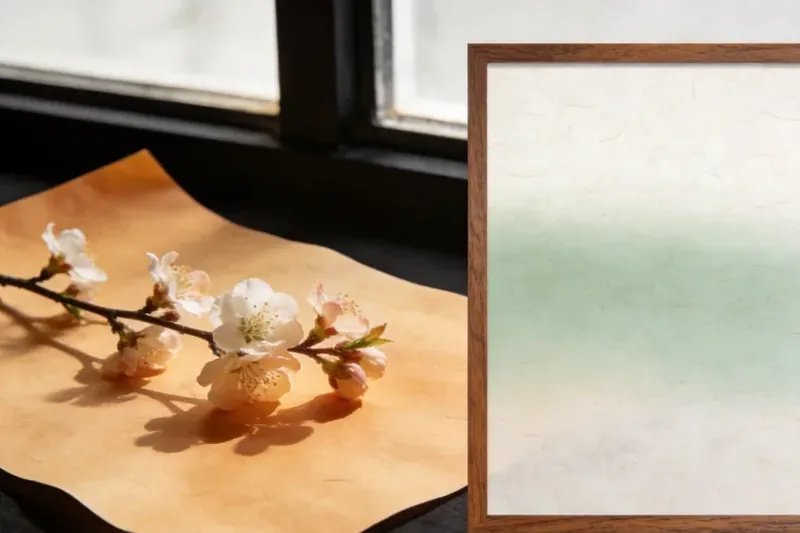
Key facts
| Chinese | 槐花 (huáihuā); tree = 槐 (huái) |
| Botanical source | Styphnolobium japonicum (syn. Sophora japonica), family Fabaceae — the flower |
| What it is | The blossom of the pagoda tree |
| Aroma | Sweet, floral, delicate, honey-like |
| Traditional role | Materia medica; a light fragrant flower |
Aroma profile
Direct answer: 槐花 has a light, sweet, delicate floral scent with a honey-like, slightly green edge — a soft, pollen-like sweetness rather than the heady richness of jasmine or rose. It reads as a gentle garden flower, pleasant and mild, and it lends a quiet floral accent rather than a dominant note.
槐花 has a light, sweet, delicate floral scent with a honey-like, slightly green edge — a soft, pollen-like sweetness rather than the heady richness of jasmine or rose. It reads as a gentle garden flower, pleasant and mild, and it lends a quiet floral accent rather than a dominant note. Its aromatic value is modest; the tree’s fame rests more on its cultural symbolism (the officialdom association below) and its materia-medica record than on any strong fragrance.
Botanical identity
Direct answer: Styphnolobium japonicum (the pagoda tree, long recorded as Sophora japonica) is a large legume tree (Fabaceae). Flora of China describes a tree to 25 m tall, with 15–25 cm leaves bearing 9–15 leaflets, terminal panicles to 30 cm of white or creamy-yellow (rarely purple-red) flowers in July–August, and characteristic moniliform (bead-like, constricted) legumes. Flora of China records it as cultivated throughout China, with a native range given as Japan and Korea.
Styphnolobium japonicum, the pagoda tree, is a large legume tree (Fabaceae). Flora of China describes it precisely: trees to 25 m with gray-brown, longitudinally striate bark; leaves 15–25 cm with 9–15 leaflets, ovate-lanceolate to ovate-oblong, 2.5–6 × 1.5–3 cm; terminal panicles to 30 cm; corolla white or creamy yellow (rarely purple-red); legumes green, moniliform (constricted between the seeds), 2.5–5 × ca. 1 cm, indehiscent; seeds 1–6; flowering July–August, fruiting August–October. Flora of China records the species as cultivated throughout China, with the native range given as Japan and Korea, and widely cultivated elsewhere — a useful nuance, since the tree’s deep Chinese cultural associations (below) have often led to it being described as native Chinese. See Styphnolobium japonicum in Flora of China and Styphnolobium japonicum on GBIF.
Chinese name and terminology
Direct answer: The name 槐 (huái) names the tree, and 槐花 (huáihuā) is the flower — one part of a tree whose parts are recorded separately. The Bencao Gangmu (本草纲目), 木之二, records the tree under 槐, folding in the flower (槐花) and the fruit (槐实 / 槐角) among its parts, so the name needs a part qualifier.
The terminology needs a part qualifier:
- 槐 (huái) — the pagoda tree.
- 槐花 (huáihuā) — the flower. This entry.
- 槐实 (huáishí) / 槐角 (huáijiǎo) — the fruit, a distinct part with distinct uses.
The Bencao Gangmu (本草纲目), tree section (木之二), records the tree under 槐 and folds in the flower (槐花) among its parts. Because the flower and fruit are different materials from the same tree, a buyer should pin down which part is meant — 槐花 (flower) vs 槐实 (fruit) — rather than reading “槐” as one material.
The flower / fruit distinction (read this)
Direct answer: 槐花 is the flower of the pagoda tree; 槐实 (also 槐角) is the fruit. The Bencao Gangmu records both under the tree 槐, but they are distinct parts with distinct uses — the flower is a light, honey-sweet blossom, while the fruit is the moniliform legume. “槐” alone does not specify the part.
The distinction is a plant-part question:
- 槐花 (flower) — the light, honey-sweet blossom; the fragrant, delicate part. This entry.
- 槐实 / 槐角 (fruit) — the bead-like, moniliform legume, a distinct part with distinct traditional uses.
The Bencao Gangmu (本草纲目) records both under the tree 槐, which is exactly why the part must be specified. A label that says only “槐” or “sophora” does not identify whether the flower or the fruit is meant, and the two are not interchangeable.
The officialdom symbolism (read this)
Direct answer: The pagoda tree carried a specific classical association with officialdom: the Bencao Gangmu records “面三槐,三公位焉” — the three pagoda trees marked the seats of the three highest ministers. This is a cultural-symbolic meaning, not a fragrance claim, and it explains the tree’s prominence in Chinese culture despite its modest scent.
The pagoda tree’s cultural weight comes from officialdom, not fragrance. The Bencao Gangmu (本草纲目), 木之二, records the tree under 槐 and its association with high office:
“面三槐,三公位焉” — facing the three pagoda trees, the three highest ministers (三公) took their seats.
The three 槐 trees marked the seats of the three highest ministers of state, so the tree became a symbol of official standing and courtly rank. This is a cultural-symbolic meaning — a matter of status and setting, not of scent — and it explains why the tree is so prominent in the classical record while its flower’s fragrance remains modest.
Where does sophora flower come from?
Direct answer: The pagoda tree is cultivated throughout China, with Flora of China giving the native range as Japan and Korea. It has been planted as a shade and ornamental tree across East Asia for centuries, and its yellow-white flower clusters appear in summer (July–August).
Styphnolobium japonicum is cultivated throughout China, with Flora of China giving the native range as Japan and Korea, and it has been planted as a shade and ornamental tree across East Asia for centuries. Its yellow-white flower clusters open in summer (July–August). The nuance — cultivated across China rather than native there — is worth noting precisely because the tree’s classical Chinese associations (the “三槐” officialdom symbol) are so deep that the tree is often assumed to be Chinese-native. The flower (槐花) is gathered from these cultivated trees.
Why is it used in incense and fragrance?
Direct answer: 槐花’s traditional role is chiefly in materia medica, with a light fragrant-flower use. It can lend a soft, sweet floral accent, but it does not carry the intensity of the classical floral 香材 like jasmine or osmanthus, so it is a gentle supporting flower, not a lead incense material.
槐花’s role is chiefly in materia medica, with a light fragrant-flower use. It can lend a soft, sweet, honey-like floral accent to a blend, but it does not carry the intensity of the classical floral 香材 like jasmine or osmanthus. It is therefore a gentle supporting flower — pleasant and mild — rather than a lead incense material. Its cultural fame (the officialdom symbolism) is separate from its modest aromatic value, and this page records both without conflating them.
How is it processed?
Direct answer: 槐花 is a flower, handled by gentle drying to preserve its light, honey-sweet note. The flower is delicate and the scent is modest, so drying is about preservation rather than concentration; there is no classical tapping or distillation tradition attached to it as a strong incense material.
As a delicate flower, 槐花 is handled by gentle drying to preserve its light, honey-sweet, slightly green note. The flower is delicate and its scent modest, so processing is a preservation question — clean, gentle, low-temperature drying — rather than a concentration or extraction one. The dried flower, whole or lightly broken, is the form encountered; the fruit (槐实) is a separate harvest, gathered when the legumes mature.
What determines sophora flower quality?
Direct answer: Quality turns on freshness and gentleness of drying — a clean, well-dried flower that retains its light, honey-like sweetness. Because the scent is modest to begin with, a faded or musty batch has little aromatic value, and the flower should be judged as a gentle floral, not as a strong 香材.
The quality factors, in rough order:
- Aroma — light, sweet, honey-like, with a slightly green edge; a clean, fresh note beats a faded one.
- Condition — clean, well-dried flower, free of mold and damage.
- Freshness — the delicate note fades with age.
- Part clarity — the flower (槐花), not the fruit (槐实).
There is no standardized commercial grading ladder for 槐花; aroma and condition are the practical signals, with the caveat that the scent is gentle by design.
Common forms
Direct answer: 槐花 is sold as the dried flower, whole or lightly broken. The fruit (槐实 / 槐角) is a separate material from the same tree. There is no meaningful wood, resin, or distilled-oil form of the flower in classical practice.
| Form | Typical use |
|---|---|
| Dried flower | Gentle floral accent; materia medica |
| Dried fruit (槐实) | Separate material, distinct uses |
In Chinese tradition
- Materia medica (Traditional Use): 槐花 appears in traditional Chinese materia medica. This is traditional materia-medica language, not modern clinical evidence.
- Naming (Historical Record): the Bencao Gangmu (本草纲目), 木之二, records the tree under 槐, folding in 槐花 (the flower) among its parts.
- Symbolism (Historical Record): the 槐 tree carried classical associations with officialdom — “面三槐,三公位焉” (the three pagoda trees marked the seats of the three highest ministers).
Traditional use vs modern evidence
Direct answer: The materia-medica record is traditional, not established clinical fact, and this page makes no medical claims. The documented facts are botanical identity, the Fabaceae placement, the flower’s light fragrant role, and the cultural officialdom symbolism.
- Traditional Use — 槐花 as a materia-medica item and a light fragrant flower.
- Historical Record — the Bencao Gangmu (本草纲目), 木之二, records 槐 with the flower (槐花) and fruit (槐实), and the “面三槐,三公位焉” officialdom symbolism.
- Scientific Evidence — the botanical identity of Styphnolobium japonicum (Fabaceae) and its chemistry are documented; we present no clinical or medical efficacy claims.
The materia-medica record is traditional, not established clinical fact, and we make no medical claims.
What buyers should look for
Direct answer: Buyers should confirm the part — 槐花 is the flower of Styphnolobium japonicum, distinct from the fruit 槐实 — and judge freshness: a light, sweet, honey-like note from a clean, well-dried flower. It is a gentle floral accent, not a lead incense material, so expectation-setting matters.
For an incense maker or sourcing buyer:
- Part — the flower (槐花), not the fruit (槐实 / 槐角); different parts of the same tree with different uses.
- Aroma — light, sweet, honey-like, with a slightly green edge.
- Condition — clean, well-dried flower.
- Expectation — a gentle floral accent, not a lead 香材.
Our Industry View
Direct answer: 槐花’s commercial lesson is plant-part and expectation honesty. The pagoda tree is famous for officialdom symbolism and carries a materia-medica record, but its flower’s scent is modest; and the flower and fruit are different materials. A buyer should specify the part and expect a gentle floral, not a strong note.
From a manufacturing perspective, 槐花 makes two points:
- Part matters within one tree. The pagoda tree yields two distinct materials — the flower (槐花) and the fruit (槐实) — recorded separately under 槐 in the Bencao Gangmu. A bare “槐” or “sophora” label does not specify the part, and the flower and fruit are not interchangeable. Part-of-plant is the specification, as it is for the magnolia flower/bud pair.
- Fame is not fragrance. The pagoda tree’s cultural prominence rests on officialdom (“面三槐,三公位焉”) and its materia-medica record, not on a strong scent. Its flower’s fragrance is light and honey-sweet. A buyer who reads the tree’s fame as a promise of intensity is reading the wrong signal; 槐花 is a gentle floral, and it should be bought and sold as that.
In our view, 槐花 is a light, honey-sweet floral accent with a culturally weighty tree behind it — specify the flower (not the fruit), judge it by freshness, and position it as a gentle supporting note rather than a lead 香材.
Summary
槐花 (huáihuā) is the blossom of the pagoda tree, Styphnolobium japonicum (formerly Sophora japonica), a legume tree (Fabaceae) cultivated throughout China with a native range given by Flora of China as Japan and Korea. Its light, honey-sweet flower is a gentle floral accent, recorded in the Bencao Gangmu (本草纲目) under 槐 alongside the fruit (槐实), and the tree carried classical officialdom symbolism (“面三槐,三公位焉”). Its materia-medica uses are traditional language, not clinical evidence.
FAQ
What is 槐花 (sophora flower)? The blossom of the pagoda tree, Styphnolobium japonicum (formerly Sophora japonica), a large legume tree (Fabaceae) cultivated throughout China, with a native range given by Flora of China as Japan and Korea. Its flowers have a light, sweet, honey-like floral scent and are used in traditional materia medica and as a fragrant flower.
What tree does 槐花 come from? The pagoda tree (槐, Styphnolobium japonicum), long recorded as Sophora japonica. Flora of China describes a tree to 25 m tall with 9–15 leaflets per leaf and terminal panicles to 30 cm of white or creamy-yellow flowers. The Bencao Gangmu (本草纲目) records the tree under 槐 in its tree section (木之二), folding in the flower (槐花) among its parts.
What does 槐花 smell like? Light, sweet, and delicate, with a honey-like, slightly green edge — a soft, pollen-like sweetness rather than the heady richness of jasmine or rose. It reads as a gentle garden flower and lends a quiet floral accent.
Is sophora flower an incense ingredient? Not a lead one. Its traditional role is chiefly in materia medica, with a light fragrant-flower use. It can lend a soft, sweet floral accent, but it does not carry the intensity of the classical floral 香材 like jasmine or osmanthus.
Is 槐花 the same as the 槐 fruit? No — different parts of the same tree. 槐花 is the flower; 槐实 (or 槐角) is the fruit. The Bencao Gangmu (本草纲目) records both under the tree 槐, but they are distinct parts with distinct uses.
Why is the pagoda tree culturally significant? Because of its association with officialdom: the Bencao Gangmu records “面三槐,三公位焉” — the three pagoda trees marked the seats of the three highest ministers of state. This made the tree a symbol of high office and courtly rank, a cultural meaning separate from its flower’s modest fragrance.
See also: honeysuckle, chrysanthemum, mulberry-leaf (桑叶), and the full scent guide.
Evidence & Sources
Botanical identity
Source: Styphnolobium japonicum in Flora of China · Styphnolobium japonicum on GBIF. Evidence type: Established.
Traditional Chinese use
Source: the Bencao Gangmu (本草纲目), 木之二, records 槐, folding in 槐花 (the flower) among its parts, and records the “面三槐,三公位焉” officialdom symbolism. Evidence type: Historically documented — materia medica and cultural; medicinal uses are traditional, not modern clinical evidence.
Authenticity / disambiguation
Source: 槐花 (flower) vs 槐实 (fruit) — different parts of Styphnolobium japonicum. Evidence type: Practical screening.
Safety
Source: incense combustion produces smoke and particulate matter; burn in a well-ventilated space. Evidence type: Established.
Evidence status
| Layer | Status |
|---|---|
| Botanical identity | Established |
| Traditional use | Historically documented (materia medica, cultural) |
| Authenticity test | Practical screening |
| Health claims | Not established |
Sources
Sources: botanical references on Styphnolobium japonicum and the Bencao Gangmu (本草纲目) 木之二 record of 槐/槐花. 槐花 is documented as the pagoda-tree flower; medicinal uses are treated as traditional, not established clinical fact. This is editorial knowledge content, not medical advice.