Direct answer: Chenpi (陈皮, literally “aged peel”) is the sun-dried, aged peel of the mandarin/tangerine (Citrus reticulata), most prized from the Xinhui (新会) district of Guangdong. It is used in cooking, tea, and traditional materia medica for a bittersweet citrus aroma that mellows with age.
Key facts
| Chinese | 陈皮 (chénpí) — “aged peel”; also 橘皮 (júpí) |
| Botanical source | Citrus reticulata (mandarin/tangerine) peel |
| What it is | Dried, aged citrus peel (not a wood) |
| Aroma | Citrus, bittersweet, woody-mellow with age |
| Traditional role | Cooking, tea, fragrance |
What is chenpi?
Direct answer: Chenpi (陈皮, “aged peel”) is the sun-dried, deliberately aged peel of the mandarin/tangerine, Citrus reticulata. It is the aged form of citrus peel — not fresh zest — valued for a bittersweet, woody-mellow aroma that deepens with years, and it is most prized from Xinhui (新会), Guangdong.
Chenpi is best understood as a transformation product, not a raw ingredient. Fresh mandarin peel is a bright, zesty citrus top note; chenpi is that same peel deliberately dried and aged — commonly 1 to 30+ years — until the brightness is traded for a warm, sweet-spicy, almost tea-like depth. It is a staple of Cantonese cooking and a citrus-woody note in some incense blends, and it sits in a small family of Chinese citrus-peel materials alongside pomelo peel (柚皮) and the fresh-fruit context of litchi husk (荔枝壳).
Botanical identity
Direct answer: Chenpi comes from Citrus reticulata, the mandarin/tangerine, a member of the rue family (Rutaceae). Flora of China records it as a small tree whose fruit is orange or red with a thin-to-thick, easily removed pericarp — the peel that becomes chenpi — flowering April–May and fruiting October–December.
Citrus reticulata (mandarin/tangerine) is a small tree of the rue family (Rutaceae). Flora of China records the leaves as one-foliolate, lanceolate to broadly ovate; the flowers with petals usually 1.5 cm or less and 20–25 stamens; and the fruit pale yellow, orange, red, or carmine, oblate to subglobose, with a pericarp thin to thick and easily removed — the peel that, when dried and aged, becomes chenpi. It flowers April–May and fruits October–December, and is extensively cultivated in China south of the Qin Ling. See Citrus reticulata in Flora of China and Citrus reticulata on GBIF.
Chinese name and terminology
Direct answer: 陈皮 (chénpí) means “aged peel,” from 陈 “aged/matured” + 皮 “peel”; the un-aged name is 橘皮 (júpí, “tangerine peel”). The name itself records the key fact: chenpi is defined by aging, not by the fruit alone.
The Chinese terms sort by age:
- 橘皮 (júpí) — “tangerine/mandarin peel,” the fresh or un-aged peel.
- 陈皮 (chénpí) — “aged peel,” the matured, darkened product that commands the higher value.
The name 陈皮 is a definition: 陈 means “aged, matured,” and it is precisely the aging that converts a common citrus peel into the prized chenpi. This is why “orange peel” and “chenpi” are not interchangeable — chenpi is a specific, deliberately aged product.
Where does chenpi come from?
Direct answer: Chenpi is made across southern China from mandarin/tangerine peel, but the benchmark origin is Xinhui (新会), Guangdong, which holds geographical-indication status for its peel. Origin is usually the first thing a buyer checks.
Citrus reticulata is extensively cultivated in southern China, and chenpi is produced wherever mandarins are grown. The benchmark, however, is Xinhui (新会) in Guangdong, whose peel carries geographical-indication status and is credited with a deep, complex bittersweet-citrus character from the region’s soil, climate, and local mandarin variety. Peel from elsewhere is generally considered lower grade. In practice, a chenpi label leads with two facts — origin and stated age — because those two drive almost all of the value.
Aroma profile
Direct answer: Fresh mandarin peel is bright and zesty; chenpi is the aged form, darker and softer, with a warm, sweet-spicy, almost tea-like depth. The prized Xinhui peel is known for a deep, complex bittersweet-citrus character.
Fresh orange peel is bright and citrus; chenpi is the aged form, which becomes darker, softer, and more mellow-woody over years. The prized Xinhui (新会) peel is known for a deep, complex bittersweet-citrus character.
The key word is transformation: fresh peel is a sharp, zesty top note, while aged chenpi trades that brightness for a warm, sweet-spicy, almost tea-like depth. In a blend, chenpi reads as a “mellow citrus” — the brightness of orange rounded by age, closer to dried-fruit-and-spice than to a fresh zest.
Why is it used in incense?
Direct answer: Chenpi is used in incense as a citrus-woody note that reads as softened, dried-fruit-and-spice citrus rather than sharp fresh zest. It is far better known for cooking and tea, so in incense it appears as a supporting note in warm spice-and-wood blends, not a lead material.
Chenpi’s incense role is a niche extension of its culinary fame. Its aged, mellow character suits warm spice-and-wood blends, where it adds a softened, dried-fruit-and-spice citrus that rounds out heavier woods without the sharpness of fresh zest. It is a supporting note, usually blended rather than burned alone, and it shows up less often than wood, resin, and floral materials. See the citrus incense guide for how 陈皮 connects to citrus incense.
How is chenpi processed?
Direct answer: Chenpi is made by peeling the mandarin, then sun-drying and aging the peel — commonly 1 to 30+ years — during which it darkens and its aroma mellows. The processing is drying and time, not distillation or extraction.
The processing of chenpi is fundamentally drying and time:
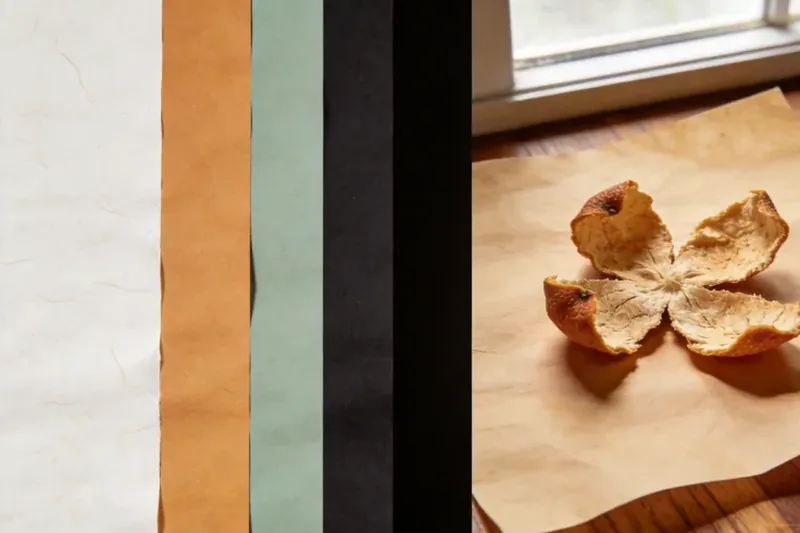
- Peeling — the mandarin is peeled, usually keeping the peel in clean pieces (often a three-part “clover” cut).
- Sun-drying — the peel is dried, traditionally in the sun.
- Aging — the dried peel is stored and aged, commonly 1 to 30+ years, during which it darkens, thins in aroma, and develops the warm, tea-like depth.
There is no distillation or extraction — chenpi is the whole aged peel, and the aging step is the value. Exact aging practices vary by producer, so a stated age is a rough guide rather than a fixed standard.
What determines chenpi quality?
Direct answer: Two variables drive chenpi quality and value: origin and age. Xinhui (新会) peel is the benchmark; within that, older peel — darker, thinner-skinned in aroma, more expensive — is considered better in traditional framing.
The quality factors, in rough order:
- Origin — Xinhui (新会) peel is the benchmark; other-region peel is generally lower grade.
- Age — older peel (commonly labeled by year or bracket, e.g. “three-year,” “ten-year”) is darker and more expensive; in traditional framing, older is better.
- Aroma — a deep, complex bittersweet-citrus character without mustiness or off-notes.
- Physical condition — clean, intact peel pieces.
There is no single standardized numerical grading system; age brackets and origin are the market’s working vocabulary.
Grades and age brackets
Direct answer: Chenpi is commonly sold by stated age bracket — “three-year,” “ten-year,” and so on — with older peel darker, thinner-skinned in aroma, and more expensive. These are market age labels, not a fixed regulatory standard.
Chenpi’s “grading” is really an age ladder, not a quality standard in the regulatory sense:
- Younger peel (a few years) — brighter, lighter, less expensive.
- Older peel (10+ years) — darker, more mellow and tea-like, more expensive.
Because aging practices vary by producer, the stated age is a rough guide — a buyer verifies the peel by aroma and appearance rather than trusting the label alone.
Common forms
Direct answer: Chenpi is sold as whole dried peel pieces and, less commonly, as broken pieces or powder. Whole pieces are the standard cooking-and-tea form; the material is not typically distilled or extracted.
| Form | Typical use |
|---|---|
| Whole dried peel | Cooking, tea, and display; the standard form |
| Broken pieces / powder | Blends and convenience use |
The whole piece is the reference form — its appearance (darkness, intactness) is part of what a buyer inspects — and chenpi is used whole or in pieces, not as an essential oil.
In Chinese tradition
- Cooking: chenpi is a staple of Cantonese cooking — in soups, braises, and congee — where it adds a warm, mellow citrus note. Traditional Use — documented culinary practice.
- Tea: brewed as an ingredient in herbal tisanes, often with pu-erh or other teas. Traditional Use — documented.
- Materia medica: in traditional Chinese medicine, chenpi is commonly described for digestive support and “regulating qi” — traditional language, not modern clinical evidence. Traditional Use — not clinical evidence.
- Incense/fragrance: chenpi can appear as a citrus-woody note in blends, though it is far better known for cooking and tea. Traditional Use — niche aromatic use.
Traditional use vs modern evidence
Chenpi is a staple of traditional Chinese cooking and materia medica. The peel contains flavonoids (hesperidin, nobiletin) that are the subject of preclinical research.
Important: most of this research is animal/cell-based; human clinical proof is limited. We describe chenpi’s culinary and cultural use; we do not make medical claims.
Chenpi vs other citrus peels
Direct answer: Chenpi (陈皮) is the aged mandarin peel, Citrus reticulata; pomelo peel (柚皮) is the pomelo peel, Citrus maxima; and litchi husk (荔枝壳) is a fruit pericarp, Litchi chinensis, from a different plant family. They are all citrus-peel-adjacent materials but different species with different aromas.
| Material | Botanical source | Character |
|---|---|---|
| Chenpi (陈皮) | Citrus reticulata, aged peel | Warm, mellow, tea-like, bittersweet-citrus |
| Pomelo peel (柚皮) | Citrus maxima peel | Bittersweet, floral-woody, thick pith |
| Litchi husk (荔枝壳) | Litchi chinensis pericarp | Sweet, fruity, faintly floral |
Chenpi and pomelo peel are different peels from different citrus species; litchi husk is a fruit pericarp from the soapberry family (Sapindaceae), a fruit-peel incense in the classical 香谱 but botanically distinct. They are not interchangeable. See pomelo peel and litchi husk.
Adulteration & misidentification
Direct answer: The main risks are origin and age mislabeling — non-Xinhui peel sold as Xinhui, or young peel sold as older — and the confusion between chenpi (aged peel) and fresh zest. Both are label risks, not safety risks.
- Origin mislabeling — non-Xinhui peel passed off as Xinhui, the benchmark origin.
- Age mislabeling — young peel sold as older (and pricier) material; aging is hard to verify from appearance alone.
- Fresh zest vs chenpi — chenpi is a distinct, aged product, not dried-out supermarket orange peel.
These are commercial-integrity risks, verified by aroma, appearance, and a trustworthy supplier rather than by a label.
The aging story (buyer intelligence)
Chenpi is aged — commonly 1–30+ years — and older peel commands higher prices (in TCM framing, older is considered better). The key regional marker is Xinhui in Guangdong, which has geographical-indication status for its peel.
A few practical points:
- Origin matters: Xinhui peel (新会陈皮) is the benchmark; peel from elsewhere is generally considered lower grade.
- Age is the value driver: peel is often labeled by year or age bracket (e.g. “three-year,” “ten-year”); older peel is darker, thinner-skinned in aroma, and more expensive.
- Not the same as fresh zest: the “chenpi” you buy for cooking or tea is a distinct, aged product, not dried-out supermarket orange peel.
What buyers should look for
Direct answer: Buyers should confirm origin (Xinhui vs elsewhere) and stated age, then verify by appearance and aroma — darker, intact pieces with a warm, complex bittersweet-citrus character. A trustworthy supplier matters more than the label, because age and origin are easy to mislabel.
For a cooking, tea, or blending buyer:
- Origin — Xinhui (新会) peel is the benchmark; ask where the peel is from.
- Age — stated age is a rough guide; verify by darkness, aroma depth, and supplier reputation.
- Aroma — a warm, mellow, bittersweet-citrus character with no mustiness.
- Form and condition — clean, intact whole pieces for cooking and tea.
Safety
Chenpi is food-grade and widely used in cooking/tea; however, incense combustion produces smoke and particulate matter — burn in a well-ventilated space.
Our Industry View
Direct answer: From a manufacturing and sourcing perspective, chenpi is an origin-and-age product, not a fungible commodity. A repeatable supply of a stated origin and age matters more than the word “chenpi,” because those two variables drive almost all of the value and are also the easiest to mislabel.
From a manufacturing and sourcing perspective, chenpi’s commercial logic is origin-and-age, not commodity:
- Origin and age are the value, and also the risk. The entire price spread comes from where the peel grew and how long it aged — and both are the variables most often mislabeled. A buyer’s real job is verifying them, not accepting a nominal “chenpi” label.
- It is a supporting note, not a lead. In incense, chenpi is a softened, dried-fruit-and-spice citrus accent; the right dose depends on formulation — what it is meant to round out — not on a universal figure.
In our view, the commercial sweet spot is a documented origin with a verifiable age bracket, bought from a supplier who can name both, rather than a vague “aged peel” whose provenance cannot be confirmed.
Summary
Chenpi (陈皮, “aged peel”) is the sun-dried, deliberately aged peel of the mandarin/tangerine, Citrus reticulata (Rutaceae), most prized from Xinhui (新会), Guangdong, which holds geographical-indication status. Its value rests on two variables — origin and age — with older, Xinhui peel commanding the higher price. Aroma-wise it is the transformation of bright citrus zest into a warm, sweet-spicy, tea-like depth. It is a staple of Cantonese cooking and tea, a niche citrus-woody note in incense, and it sits in a family of citrus-peel-adjacent materials alongside pomelo peel (柚皮) and litchi husk (荔枝壳), all distinct species not interchangeable.
FAQ
What is the difference between orange peel and chenpi? Chenpi is aged mandarin peel (陈皮 = “aged peel”), traditionally from the Xinhui region of Guangdong; “orange peel” is the fresh or generic form. Aging changes the aroma and value. Fresh peel is bright and zesty, while aged chenpi darkens, softens, and develops a warm, mellow-woody, almost tea-like depth over the years. The two are not interchangeable in cooking or tea: chenpi is a distinct, deliberately aged product that is often labeled by year or age bracket, whereas fresh orange peel is just the zest you would grate from a fruit.
Is chenpi used in incense? It can appear as a citrus-woody note in blends, though it is far better known for cooking and tea. Its aged, mellow character suits warm spice-and-wood blends, where it reads as a softened, dried-fruit-and-spice citrus rather than a sharp fresh zest. The practice is relatively niche compared with its staple role in Cantonese soups, braises, and tisanes, so it shows up less often than wood, resin, and floral materials, and buyers are more likely to encounter it in a blend than as a named single note.
What does chenpi smell like? Fresh orange peel is bright and citrus; aged chenpi becomes darker, softer, and more mellow-woody over years, with a deep bittersweet-citrus character. The transformation is the key point: the sharp, zesty top note of fresh peel gives way to a warm, sweet-spicy, almost tea-like depth as the peel ages. This shift from bright zest to rounded, dried-fruit-and-spice is why aged chenpi is prized for cooking and tea, and why it reads as a mellow citrus rather than a fresh one.
How long is chenpi aged? Commonly 1 to 30+ years, and older peel commands higher prices — in traditional framing, older is considered better. The age is often stated by year or bracket, such as “three-year” or “ten-year” chenpi, and it is a primary driver of value. Over those years the peel darkens and its aroma moves from bright citrus to a deeper, woodier, more tea-like sweetness. Exact aging practices vary by producer, so the stated age is a rough guide rather than a fixed standard.
Where does the best chenpi come from? The Xinhui (新会) district of Guangdong is the prized origin, with geographical-indication status for its mandarin peel. Xinhui chenpi is the benchmark against which other peel is judged, and peel from elsewhere is generally considered lower grade. The region’s soil, climate, and local mandarin variety are credited for the peel’s deep, complex bittersweet-citrus character, so origin is usually the first thing a buyer checks on a label before looking at the stated age.
What is chenpi used for in cooking? In Cantonese cuisine, chenpi is added to soups, braises, and congee for a warm, mellow citrus note — quite different from the sharpness of fresh orange zest. It lends a deep, bittersweet-citrus warmth that rounds out savory dishes, and it is usually added in small pieces because its flavor is concentrated and can dominate if overused. A small piece is enough to perfume a whole pot, so cooks add it sparingly and often remove it before serving.
See also: pomelo peel, litchi husk, the citrus incense guide, and the full scent guide.
Evidence & Sources
Botanical identity
Source: Citrus reticulata in Flora of China · Citrus reticulata on GBIF. Evidence type: Established.
Traditional Chinese use
Source: this page records chenpi (陈皮) described for digestive support and “regulating qi” (理气) in traditional Chinese medicine. Evidence type: Historically documented — traditional materia-medica language, not modern clinical evidence.
Commercial grading
Source: the aging story (commonly 1–30+ years; older commands higher prices) and the Xinhui (新会) geographical-indication benchmark. Evidence type: Trade terminology.
Authenticity / adulteration
Source: origin matters (Xinhui vs elsewhere) and chenpi is not the same as fresh zest. Evidence type: Practical screening.
Safety
Source: chenpi is food-grade, but incense combustion produces smoke and particulate matter; burn in a well-ventilated space. Evidence type: Established.
Evidence status
| Layer | Status |
|---|---|
| Botanical identity | Established |
| Traditional use | Historically documented |
| Commercial grading | Trade terminology |
| Authenticity test | Practical screening |
| Laboratory confirmation | Requires analytical testing |
| Health claims | Not established |
Sources
Sources: references on Chenpi (Citrus reticulata peel, Xinhui GI, aging grades) and its traditional use. Medicinal claims are treated as traditional/preclinical. This is editorial knowledge content, not medical advice.