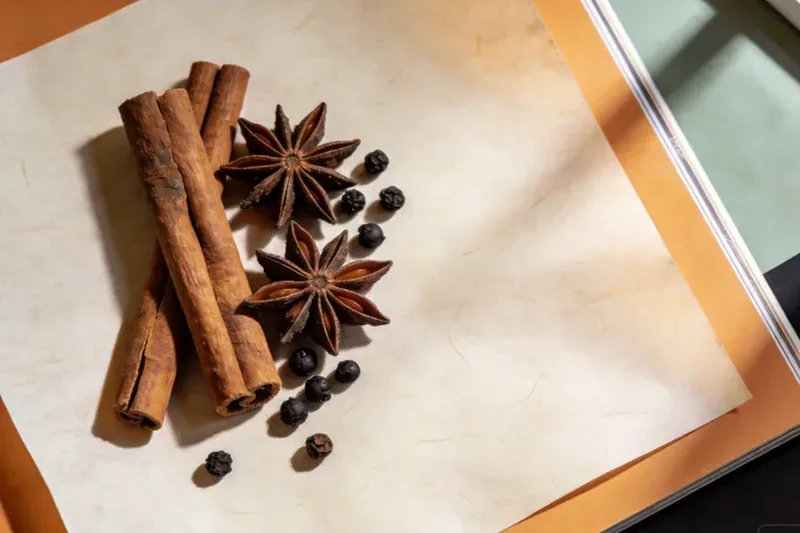
Direct answer: Amomum villosum (砂仁, shārén) is the dried fruit and seeds of Amomum villosum (recently reclassified as Wurfbainia villosa), a ginger-family herb (Zingiberaceae) native to southern China. It is a spicy, camphoraceous, warm aromatic used in Chinese incense as a 香药 (aromatic-medicine) spice accent, recorded in the classical compendium 香乘.
Key facts
| Chinese | 砂仁 (shārén) |
| Botanical source | Amomum villosum (family Zingiberaceae; syn. Wurfbainia villosa) — the fruit |
| What it is | A dried aromatic fruit, not a wood or resin |
| Aroma | Spicy, camphoraceous, warm, slightly bitter |
| Traditional role | 香药 spice accent; incense-recipe ingredient |
Aroma profile
砂仁 is spicy and camphoraceous, with a warm, slightly bitter depth that recalls cardamom but with a more medicinal, eucalyptus-like edge. It is a warming spice rather than a sweet one — closer to white cardamom or a sharp galangal note than to cinnamon’s sweetness. In a blend it adds a camphoraceous warmth and a subtle bitterness beneath brighter spices, and it is more often part of a mixed 合香 recipe than burned alone.
Botanical source and origin
Amomum villosum is a ginger-family (Zingiberaceae) herb native to southern China (Guangdong, Guangxi, Yunnan) and neighbouring parts of Southeast Asia. The part used is the dried, spiny-shelled fruit, whose aromatic seeds are the source of the spice. Flora of China records it as Amomum villosum; GBIF has recently transferred the name to Wurfbainia villosa — a reclassification worth noting, since older and Chinese materia-medica sources retain Amomum villosum. The ginger family also includes 白豆蔻 (Amomum kravanh), 草果 (Amomum tsao-ko), and 高良姜 (galangal).
In Chinese tradition
- 香药 (aromatic medicine): 砂仁 is a classic 香药, an aromatic used both as a spice and in traditional medicine, and it appears in incense recipes.
- Incense recipes: 砂仁 is recorded in 香乘 as an ingredient in blended incense (for example, in the 南阳公主熏衣香 recipe).
- Materia medica: 砂仁 is recorded in traditional Chinese medicine. This is traditional materia-medica language, not modern clinical evidence.
Traditional use vs modern evidence
The 香药 and incense-recipe use is documented in the classical record (香乘). Medicinal uses are traditional, not established clinical fact, and we make no medical claims. The documented, non-medical facts are botanical identity, the Zingiberaceae placement, and the spicy camphoraceous aromatic use.
Quality and sourcing notes
Practical points for buyers:
- 砂仁 is the fruit of Amomum villosum; the aromatic value is in the seeds, so intact, well-filled fruits are preferred.
- Expect a warm, camphoraceous, slightly bitter spice — distinct from the sweeter 白豆蔻 (cardamom) and the smokier 草果 (tsaoko).
- In incense, 砂仁 is a blending spice accent, usually part of a mixed recipe rather than a solo note.
Safety
Incense combustion produces smoke and particulate matter. Burn in a well-ventilated space, avoid inhaling concentrated smoke, and keep away from children and pets. This is editorial knowledge content, not medical advice.
FAQ
What is 砂仁 (sharen)? The dried fruit and seeds of Amomum villosum (recently reclassified as Wurfbainia villosa in some databases), a ginger-family herb (Zingiberaceae) native to southern China. It is a spicy, camphoraceous, warm aromatic used in Chinese incense as a 香药 spice accent, and it is recorded in the classical compendium 香乘 as an incense-recipe ingredient.
What is the difference between 砂仁 and cardamom (白豆蔻)? Both are ginger-family Amomum fruits, but distinct species with different characters. 砂仁 is Amomum villosum — warm, camphoraceous, and slightly bitter. 白豆蔻 (cardamom) is Amomum kravanh — sweeter, more eucalyptus-bright. They are separate 香药 ingredients, each with its own entry.
What does 砂仁 smell like? Spicy and camphoraceous, with a warm, slightly bitter depth that recalls cardamom but with a more medicinal, eucalyptus-like edge. It is a warming spice rather than a sweet one. In a blend it adds camphoraceous warmth and subtle bitterness, and it is usually part of a mixed 合香 recipe rather than burned alone.
Is 砂仁 in the classical incense record? Yes — it is recorded in 香乘 as an ingredient in blended incense recipes (for example, 南阳公主熏衣香). As a 香药 it served both as a spice and an aromatic medicine, and its incense use is documented in the classical record rather than being a modern invention.
Is 砂仁 a medicine? It is recorded in traditional Chinese medicine as a 香药 (aromatic medicine). That is traditional materia-medica language, not modern clinical evidence, and this encyclopedia makes no medical claims. Its documented non-medical uses are the spicy aromatic and incense-recipe roles described here.
See also: cardamom, tsao-ko, galangal, schisandra and the full scent guide.
Evidence & Sources
Botanical identity
Source: Amomum villosum in Flora of China · Wurfbainia villosa on GBIF. Evidence type: Established.
Traditional Chinese use
Source: 砂仁 as a 香药 and incense-recipe ingredient in 香乘 (南阳公主熏衣香). Evidence type: Historically documented — traditional materia-medica language, not modern clinical evidence.
Authenticity / disambiguation
Source: 砂仁 (Amomum villosum / Wurfbainia villosa) vs 白豆蔻 (Amomum kravanh) vs 草果 (Amomum tsao-ko). Evidence type: Practical screening.
Safety
Source: incense combustion produces smoke and particulate matter; burn in a well-ventilated space. Evidence type: Established.
Evidence status
| Layer | Status |
|---|---|
| Botanical identity | Established |
| Traditional use | Historically documented |
| Authenticity test | Practical screening |
| Health claims | Not established |
Sources
Sources: botanical references on Amomum villosum (Wurfbainia villosa) and the sharen-vs-cardamom-vs-tsaoko distinction. 砂仁 is recorded as a 香药 and incense ingredient in 香乘; medicinal uses are treated as traditional, not established clinical fact. This is editorial knowledge content, not medical advice.