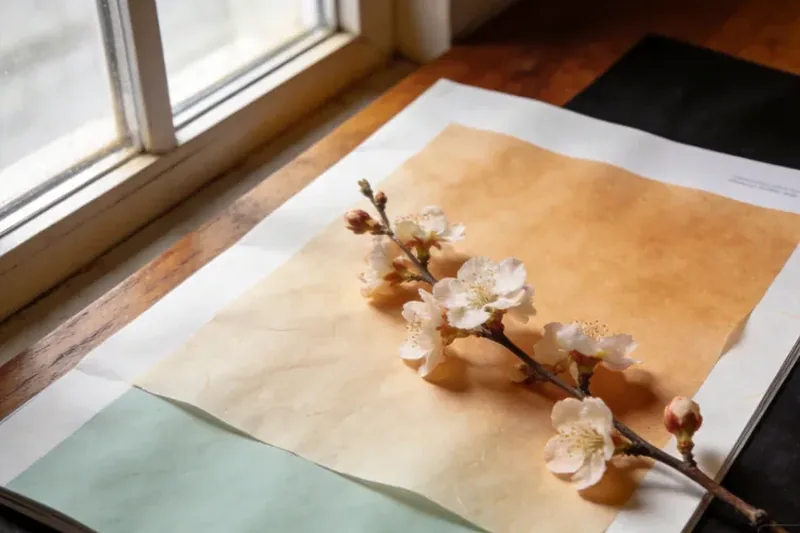
Direct answer: Neroli (橙花, chénghuā) is the blossom of the bitter orange, Citrus aurantium, a citrus tree (Rutaceae). Its flowers yield neroli essential oil, with a delicate, sweet, citrus-floral, green scent prized in modern perfumery. It is a modern fragrance material, not a classical Chinese incense ingredient — the blossom of a citrus whose peel and fruit have separate entries (orange peel / 陈皮).
Key facts
| Chinese | 橙花 (chénghuā) — orange blossom, neroli |
| Botanical source | Citrus aurantium (family Rutaceae) — the flower |
| What it is | The blossom of the bitter orange, source of neroli oil |
| Aroma | Floral, citrus, sweet, green |
| Traditional role | None in classical Chinese incense; modern perfumery |
Aroma profile
Direct answer: 橙花 (neroli) has a delicate, sweet, citrus-floral scent with a clean, green, slightly honeyed edge — the soft, luminous blossom note that sits between bright citrus and white florals like jasmine. It is lighter and more ethereal than the orange fruit or peel, and it is a classic heart note in modern fine perfumery.
橙花 (neroli) has a delicate, sweet, citrus-floral scent with a clean, green, slightly honeyed edge — the soft, luminous blossom note that sits between bright citrus and white florals like jasmine. It is lighter and more ethereal than the orange fruit or peel, and it is a classic heart note in modern fine perfumery. The key to neroli’s character is that it carries both sides of its parent tree at once: a floral sweetness from the blossom and a bright, bitter-orange freshness that keeps it from turning cloying.
A provenance note (read this)
Direct answer: 橙花 (neroli) is a modern fragrance material, not a classical Chinese 香材. Neroli oil is distilled from bitter-orange flowers, a practice developed in European perfumery and named for the Princess of Nerola. Chinese tradition uses the bitter orange’s peel and fruit, not the flower, so no classical Chinese origin is claimed.
橙花 (neroli) is a modern fragrance material, not a classical Chinese 香材:
- The bitter orange, Citrus aurantium, is a cultivated citrus; neroli essential oil is distilled from its flowers, a practice developed in European perfumery and named for the Princess of Nerola (Italy).
- Chinese tradition uses the bitter orange’s peel (橙皮/陈皮) and fruit, not the flower, as its fragrant part; the blossom as an essential-oil material is a modern perfumery crossover.
- It is not a classical 香材, and no classical Chinese incense origin is claimed.
This page records it honestly as a modern fragrance material — no classical Chinese origin is claimed, and none is fabricated.
The bitter orange — one tree, three products
Direct answer: The bitter orange (Citrus aurantium) yields three distinct fragrant products from different parts: neroli (from the flowers), petitgrain (from the leaves and twigs), and bitter-orange oil (from the peel). Neroli is the flower product; the Chinese fragrant citrus part is the separate mandarin peel 陈皮 (Citrus reticulata).
The bitter orange is unusually productive as a fragrance source, giving three named products from three parts of the same tree:
- Neroli — the flower oil, delicate and floral-citrus. This entry.
- Petitgrain — the leaf-and-twig oil, greener and woodier.
- Bitter-orange oil — the peel oil, sharp and citrus.
The point for this encyclopedia is the clean separation of parts: neroli is specifically the flower, which is why it is a modern perfumery material, whereas the Chinese fragrant citrus tradition uses the peel — the dried mandarin peel 陈皮 (Citrus reticulata), which has its own classical identity distinct from the bitter orange.
Botanical source and origin
Direct answer: Citrus aurantium, the bitter (sour) orange, is a cultivated citrus tree (Rutaceae), the parent of several cultivated citruses. Its flowers are steam-distilled to produce neroli oil, and its peel yields bitter-orange oil. Flora of China does not treat Citrus aurantium as a native species; the classical Chinese citruses are the sweet orange and the mandarin (the source of 陈皮).
Citrus aurantium, the bitter (sour) orange, is a citrus tree (Rutaceae), the parent of several cultivated citruses. Its flowers are steam-distilled to produce neroli oil, and its peel yields bitter-orange oil. Flora of China does not treat Citrus aurantium as a native species; the classical Chinese citrus is the sweet orange (橙, Citrus × aurantium / C. sinensis) and the mandarin (橘, Citrus reticulata) — the source of 陈皮 (orange peel). The bitter orange is a cultivated, largely European-managed citrus, which is why its flower oil carries a modern perfumery identity rather than a classical Chinese one.
Where does neroli come from?
Direct answer: Neroli comes from the blossoms of the cultivated bitter orange, Citrus aurantium, grown across the Mediterranean and other citrus regions for its flowers. The oil is produced by steam-distilling the freshly picked blossoms, a modern perfumery practice centered historically in southern France, Italy, and neighboring regions.
Neroli is a cultivated-flower product of the bitter orange, a tree grown across the Mediterranean and in other citrus-growing regions specifically for its fragrant blossoms. The oil is steam-distilled from freshly picked flowers, and its name commemorates the Princess of Nerola, who popularized the scent. This is a modern, European-centered perfumery supply chain — a contrast to the classical Chinese citrus materials (橙皮/陈皮), which come from the peel of the mandarin rather than the blossom of the bitter orange.
In modern use
Direct answer: Neroli is a classic white-floral/citrus heart note in colognes and fine fragrance, and neroli oil is used in modern aromatherapy and skincare fragrance. It is not part of the classical 香材 canon; the Chinese fragrant citrus part is the peel (陈皮).
- Perfumery: neroli is a classic white-floral/citrus heart note, in colognes and fine fragrance.
- Aromatherapy: neroli oil is used in modern aromatherapy and skincare fragrance.
- Not classical Chinese incense: the flower is not part of the classical 香材 canon; the Chinese fragrant citrus part is the peel (陈皮).
Traditional use vs modern evidence
Direct answer: There is no classical Chinese incense record for 橙花 (neroli); its position is entirely modern. The documented facts are botanical identity, the Rutaceae placement, and the modern perfumery role of the flower oil — distinct from the classical Chinese peel material 陈皮.
- Traditional Use — none in classical Chinese incense; the flower (neroli) has no traditional 香材 role, and the Chinese fragrant citrus tradition uses the peel, not the blossom.
- Historical Record — neroli oil as a European perfumery development, named for the Princess of Nerola, is documented modern history; the botanical record places Citrus aurantium as a cultivated bitter orange, not a native Chinese species.
- Scientific Evidence — botanical identity (Rutaceae, Citrus aurantium) is established; the flower-vs-peel distinction (neroli vs 陈皮) is a botanical fact. No medical claims are made.
There is no classical Chinese incense record for 橙花 (neroli); its position is entirely modern. We make no medical claims. The documented facts are botanical identity, the Rutaceae placement, and its modern perfumery role.
How is neroli used in incense?
Direct answer: Neroli is not a classical incense material, so in incense it appears only as a modern fragrance note — usually a neroli essential oil or absolute, or a synthetic accord — lending a soft, luminous citrus-floral lift. It is a modern perfumery addition rather than a burned botanical material.
Because neroli has no classical Chinese incense role, its incense use is entirely modern and borrowed from perfumery. Where it appears, it is as a soft, luminous citrus-floral note, delivered as neroli essential oil or absolute, or as a synthetic accord, rather than as a burned flower. Its character makes it a bridge between citrus and white-floral families — bright enough to lift, floral enough to soften — and it is typically blended rather than used alone. The practical point is that “橙花” in an incense formula almost always means the oil or accord, not a dried blossom to be burned.
What buyers should look for
Direct answer: A buyer should distinguish the flower (neroli, from Citrus aurantium) from the peel (陈皮, from Citrus reticulata), which are different parts of different citruses with different uses. For fragrance, expect a neroli essential oil, absolute, or accord — not a classical 香材 or a burned blossom.
For a formulator or sourcing buyer, the checks are:
- Part — neroli is the flower of the bitter orange; 陈皮 is the peel of the mandarin. They are different parts of different citruses and are not interchangeable.
- Species — neroli comes from Citrus aurantium (bitter orange); the classical Chinese peel comes from Citrus reticulata (mandarin).
- Format — for fragrance, expect an essential oil, absolute, or synthetic accord; a dried blossom is not an incense material.
- Aroma — the tell is a delicate, sweet, citrus-floral note with a green, honeyed edge — light and ethereal, not sharp like the peel.
Our Industry View
Direct answer: Neroli’s lesson is about parts and provenance: one citrus tree yields three different fragrance products (neroli, petitgrain, bitter-orange oil), and a buyer who does not name the part has not specified the material. The flower is a modern perfumery crossover with no classical Chinese pedigree, while the Chinese tradition’s citrus material is the peel — a clean separation that protects both identities.
Neroli is the clearest case in this encyclopedia of a part-level distinction driving commercial identity:
- The part is the product. The bitter orange alone yields neroli (flower), petitgrain (leaf), and bitter-orange oil (peel) — three named materials from one tree. A buyer who says “bitter orange” without the part has not ordered anything specific. The discipline of naming the part — flower, leaf, or peel — is the whole game.
- Provenance separates two citrus traditions. Chinese classical fragrance uses the peel (陈皮, from the mandarin Citrus reticulata), while the flower (neroli, from the bitter orange Citrus aurantium) is a modern European perfumery material. Keeping these apart protects both the classical Chinese identity of 陈皮 and the honest modern identity of neroli.
- A modern crossover should say so. Neroli earns its place here as a modern perfumery note with no classical Chinese incense record, stated plainly rather than borrowed. That honesty is the editorial position, and it is cheaper and more durable than inventing a pedigree.
In our view, the commercial sweet spot for neroli is a well-specified flower oil or accord — named by part (flower) and species (bitter orange), and kept clearly separate from the peel material that is the actual Chinese classical citrus fragrant.
Summary
Neroli (橙花) is the blossom of the bitter orange Citrus aurantium, a cultivated citrus whose flowers yield a delicate, sweet, citrus-floral essential oil — a classic modern perfumery heart note named for the Princess of Nerola. It is a modern fragrance crossover with no classical Chinese incense record, distinct from the classical Chinese citrus material 陈皮, which comes from the peel of the mandarin (Citrus reticulata). The bitter orange’s productivity — flower, leaf, and peel each giving a named product — makes “part” the buyer’s essential specification, and the flower-vs-peel distinction is what keeps neroli and 陈皮 cleanly separate.
FAQ
What is 橙花 (neroli)? The blossom of the bitter orange, Citrus aurantium, whose flowers are distilled into neroli essential oil. It has a delicate, sweet, citrus-floral, green scent and is a classic heart note in modern perfumery, named for the Princess of Nerola.
Is 橙花 a classical Chinese incense ingredient? No. Chinese tradition uses the bitter orange’s peel (橙皮/陈皮) and fruit, not the flower; neroli as an essential-oil material is a modern European-perfumery development. It has no place in the classical 香材 canon, and no classical origin is claimed.
What is the difference between neroli and orange peel? Different parts, different citruses. Neroli (橙花) is the flower of the bitter orange (Citrus aurantium), used as a modern essential oil; orange peel (陈皮) is the dried peel of the mandarin orange (Citrus reticulata), a classical Chinese fragrant and materia-medica part. The flower is a modern perfumery note; the peel is a classical material.
What does neroli smell like? Delicate, sweet, and citrus-floral, with a clean, green, slightly honeyed edge — the soft, luminous blossom note between bright citrus and white florals like jasmine. It is lighter and more ethereal than the orange fruit or peel.
How is neroli used in incense and fragrance? As a white-floral/citrus heart note, usually from neroli essential oil or absolute. It is a modern perfumery and aromatherapy material, not a classical 香材, and it lends a soft, luminous citrus-floral lift to modern blends.
What other products come from the bitter orange tree? Three named fragrance products: neroli (from the flowers), petitgrain (from the leaves and twigs, greener and woodier), and bitter-orange oil (from the peel, sharp and citrus). The part of the tree determines the product, which is why naming the part is essential when sourcing any bitter-orange material.
See also: bergamot (佛手柑), orange-peel (陈皮), jasmine, ylang-ylang and the full scent guide.
Evidence & Sources
Botanical identity
Source: Citrus aurantium on GBIF. Evidence type: Established.
Modern use
Source: neroli essential oil as a perfumery heart note, named for the Princess of Nerola; a modern crossover with no classical Chinese incense record. Evidence type: Modern perfumery — no classical Chinese record; none claimed.
Authenticity / provenance
Source: 橙花 (flower, Citrus aurantium) vs 陈皮 (peel, Citrus reticulata) — different parts, different citrus. Evidence type: Practical screening.
Safety
Source: incense combustion produces smoke and particulate matter; burn in a well-ventilated space. Evidence type: Established.
Evidence status
| Layer | Status |
|---|---|
| Botanical identity | Established |
| Traditional use | None (modern perfumery) |
| Authenticity test | Practical screening |
| Health claims | Not established |
Sources
Sources: botanical references on Citrus aurantium. 橙花 (neroli) is a modern fragrance material with no classical Chinese incense record; no such origin is claimed. This is editorial knowledge content, not medical advice.