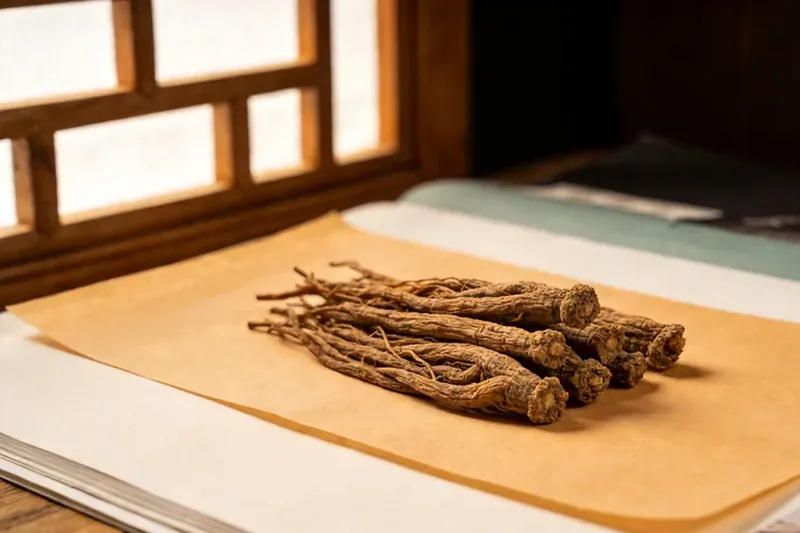
Direct answer: Chuanxiong (川芎, chuānxiōng) is the aromatic rhizome of Ligusticum chuanxiong, an herb of the carrot family (Apiaceae) cultivated in Sichuan. It has a strong, herbal, spicy, slightly bitter aromatic-root character and is one of the best-known aromatic roots of Chinese materia medica. It is a different species from, and must be distinguished from, 藁本 (Ligusticum sinense).
Key facts
| Chinese | 川芎 (chuānxiōng); classical name 芎藭 (xiōngqióng) |
| Botanical source | Ligusticum chuanxiong (family Apiaceae); syn. Conioselinum anthriscoides — the rhizome |
| What it is | An aromatic root, a Sichuan cultivar of the lovage group |
| Aroma | Herbal, aromatic, spicy, slightly bitter |
| Traditional role | Materia medica; distinguished from 藁本 (Ligusticum sinense) |
Aroma profile
川芎 has a strong, penetrating, herbal-spicy root aroma with a slightly bitter, warm edge — the pungent-sweet smell characteristic of the lovage/carrot-family roots. It is more medicinal and sharp than the softer sweet-herbal notes of angelica (当归), and it anchors a blend with an earthy, aromatic middle rather than a floral or resinous top.
The 川芎 / 藁本 distinction (read this)
川芎 and 藁本 are closely related but distinct roots in the same genus:
- 川芎 (chuanxiong) — the rhizome of Ligusticum chuanxiong, the Sichuan lovage. This entry.
- 藁本 (gaoben) — the root of Ligusticum sinense, the Chinese lovage. Its own entry.
The Bencao Gangmu (本草纲目), 草之三, records them as separate adjacent entries — 芎藭 (with 川芎 as its Sichuan name: “出蜀中者,為川芎”) and 藁本 (the next item). The two are easily confused because modern taxonomy has shifted both toward Conioselinum anthriscoides, but Chinese materia medica keeps them distinct. This page describes 川芎 = Ligusticum chuanxiong, not 藁本.
Botanical source and origin
Ligusticum chuanxiong is an aromatic perennial of the carrot family (Apiaceae), cultivated in Sichuan as the source of 川芎. Modern botanical databases treat the name as a synonym of Conioselinum anthriscoides; Flora of China records the lovage group under Ligusticum, where 藁本 (L. sinense) sits alongside other species. The Sichuan name 川芎 (“Sichuan lovage”) reflects its place of cultivation.
In Chinese tradition
- Materia medica: 川芎 is a major aromatic root in traditional Chinese materia medica. This is traditional materia-medica language, not modern clinical evidence.
- Naming: the Bencao Gangmu (本草纲目) explains the name 川芎 by origin: “出蜀中者,為川芎” — the one from Sichuan (蜀) is called 川芎.
- Incense: it is primarily a materia-medica root; its aromatic role in incense is secondary.
Traditional use vs modern evidence
The materia-medica record is traditional, not established clinical fact, and we make no medical claims. The documented facts are botanical identity, the Apiaceae placement, and its distinction from 藁本.
Quality and sourcing notes
Practical points for buyers:
- 川芎 is the rhizome of Ligusticum chuanxiong (syn. Conioselinum anthriscoides); expect a strong, herbal, spicy, slightly bitter aromatic-root scent.
- Distinguish it from 藁本 (Ligusticum sinense) — a closely related root in the same lovage group, with its own entry and use.
- Both have been reclassified toward Conioselinum anthriscoides in modern taxonomy; specify the Chinese drug name (川芎 vs 藁本) when sourcing.
Safety
Incense combustion produces smoke and particulate matter. Burn in a well-ventilated space, avoid inhaling concentrated smoke, and keep away from children and pets. This is editorial knowledge content, not medical advice.
FAQ
What is 川芎 (chuanxiong)? The aromatic rhizome of Ligusticum chuanxiong (syn. Conioselinum anthriscoides), an herb of the carrot family (Apiaceae) cultivated in Sichuan. It has a strong, herbal, spicy, slightly bitter root aroma and is a major aromatic root in Chinese materia medica.
Is 川芎 the same as 藁本 (gaoben)? No — closely related but distinct roots in the same lovage group. 川芎 is Ligusticum chuanxiong (Sichuan lovage); 藁本 is Ligusticum sinense (Chinese lovage). The Bencao Gangmu (本草纲目) lists them as separate adjacent entries, and Chinese materia medica keeps them distinct even though modern taxonomy shifts both toward Conioselinum anthriscoides.
Why is it called 川芎 (Sichuan lovage)? The Bencao Gangmu (本草纲目) explains: “出蜀中者,為川芎” — the one produced in Sichuan (蜀) is called 川芎. The name records its place of cultivation, distinguishing the Sichuan root from lovage grown elsewhere.
What does 川芎 smell like? Strong, penetrating, herbal-spicy, and slightly bitter, with a warm edge — the pungent-sweet character of the lovage/carrot-family roots. It is more medicinal and sharp than the softer, sweeter angelica (当归) note, and it anchors a blend with an earthy, aromatic middle.
Is chuanxiong an incense ingredient? Primarily a materia-medica root. Its strong aromatic character can lend an earthy, herbal middle to a blend, but its classical role is in materia medica rather than as a lead 香材. It is documented separately from the related 藁本, which has its own incense formula appearances.
See also: ligusticum (藁本), angelica-sinensis (当归), angelica, and the full scent guide.
Evidence & Sources
Botanical identity
Source: Ligusticum (genus) in Flora of China · Ligusticum chuanxiong on GBIF. Evidence type: Established (the GBIF record treats L. chuanxiong as a synonym of Conioselinum anthriscoides).
Traditional Chinese use
Source: the Bencao Gangmu (本草纲目), 草之三, records 芎藭 with 川芎 as its Sichuan name (“出蜀中者,為川芎”). Evidence type: Historically documented — materia medica; medicinal uses are traditional, not modern clinical evidence.
Authenticity / disambiguation
Source: 川芎 (Ligusticum chuanxiong) vs 藁本 (Ligusticum sinense) — related but distinct roots in the same genus. Evidence type: Practical screening.
Safety
Source: incense combustion produces smoke and particulate matter; burn in a well-ventilated space. Evidence type: Established.
Evidence status
| Layer | Status |
|---|---|
| Botanical identity | Established |
| Traditional use | Historically documented (materia medica) |
| Authenticity test | Practical screening |
| Health claims | Not established |
Sources
Sources: botanical references on Ligusticum and the Bencao Gangmu (本草纲目) 草之三 record of 芎藭/川芎. 川芎 is documented as the Sichuan lovage rhizome, distinct from 藁本; medicinal uses are treated as traditional, not established clinical fact. This is editorial knowledge content, not medical advice.