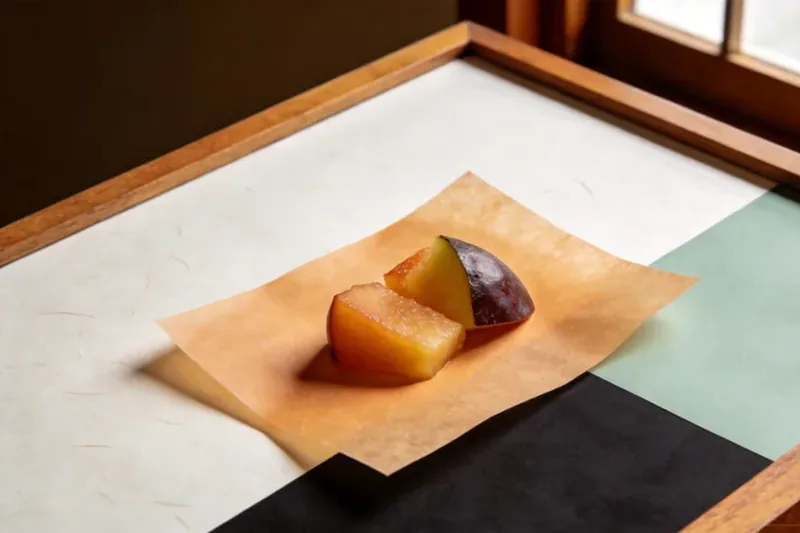
Direct answer: Kumquat (金橘, jīnjú) is Citrus japonica (formerly Fortunella japonica), a small-fruited citrus of the rue family (Rutaceae) whose thin, sweet, fragrant rind is eaten whole. It is a 清供 (scholar’s-table offering) and room-fragrance citrus, its name “golden orange” recorded in the Bencao Gangmu. It is a distinct fruit from the citron and finger citron.
Key facts
| Chinese | 金橘 (jīnjú) — “golden orange”; also 金柑, 卢橘 |
| Botanical source | Citrus japonica (syn. Fortunella japonica), family Rutaceae — the fruit |
| What it is | A small fragrant citrus fruit, eaten whole |
| Aroma | Citrus, sweet, floral, bright |
| Traditional role | 清供 offering fruit; room fragrance; edible citrus |
Aroma profile
金橘 is citrus and sweet, with a bright, floral, slightly honeyed rind scent that is more delicate and less tart than an orange, and more food-like than the citron’s reserved perfume. The fragrance lives in the thin, sweet rind — in the kumquat the rind is the eating part, unlike most citrus where it is discarded. In a room it reads as a clear, bright citrus-sweet, experienced by proximity and evaporation rather than by burning.
The 金橘 / citron relationship (read this)
金橘 sits within the broader fragrant-citrus group but is its own fruit:
- 金橘 (kumquat) — Citrus japonica (syn. Fortunella japonica), a small citrus eaten whole, rind and all. This entry.
- 香橼 (citron) — Citrus medica, the thick-rinded parent species of the finger citron. Its own entry.
- 佛手 (finger citron) — Citrus medica var. sarcodactylis, the fingered variety. Its own entry.
The Bencao Gangmu (本草纲目), in its fruit section (果之二), records 金橘 with the alternative names 金柑 and 卢橘, explaining: “此橘生时青卢色,黄熟则如金,故有金橘、卢橘之名” — the fruit is green when young and turns gold when ripe, hence the names 金橘 (“golden orange”) and 卢橘. This page describes 金橘 = the kumquat, a distinct small citrus, not the citron or finger citron.
Botanical source and origin
Citrus japonica (long placed in its own genus as Fortunella japonica, now usually returned to Citrus) is a small evergreen citrus tree of the rue family, native to southern China and long cultivated across East and Southeast Asia. Its fruit is small, oval or round, with a thin, sweet, fragrant rind and little pulp, and it is eaten whole. Flora of China treats the kumquats within Citrus, recording C. japonica.
In Chinese tradition
- 清供 (scholar’s-table offering): 金橘 is a classic 清供 fruit, displayed for its fragrance and its auspicious golden color, especially around the New Year.
- Edible citrus: unlike the citron, the kumquat is eaten whole — the sweet rind is the point, the scant pulp incidental.
- Room fragrance: the thin, oil-rich rind scents a room by evaporation — a fragrance of presence, not combustion.
Traditional use vs modern evidence
The 清供, culinary, and room-fragrance use is well documented. We make no medical claims. The documented, non-medical facts are botanical identity, the Rutaceae placement, and the fragrant offering-fruit use.
Quality and sourcing notes
Practical points for buyers:
- 金橘 is the kumquat (Citrus japonica, syn. Fortunella japonica); expect a bright, sweet, floral, citrus rind scent — the rind is the eating part.
- It is a 清供 offering fruit and edible citrus, not a burned incense material, and not a 香乘 ingredient.
- Distinguish it from the citron (香橼, Citrus medica) and finger citron (佛手) — related fragrant citrus, different fruits, each with its own entry.
Safety
Incense combustion produces smoke and particulate matter. Burn in a well-ventilated space, avoid inhaling concentrated smoke, and keep away from children and pets. This is editorial knowledge content, not medical advice.
FAQ
What is 金橘 (kumquat)? A small-fruited citrus, Citrus japonica (formerly Fortunella japonica), of the rue family (Rutaceae), native to southern China. Its thin, sweet, fragrant rind is eaten whole, and it is used in Chinese culture as a 清供 offering and room-fragrance fruit.
Why is it called 金橘 (golden orange)? Because of its color when ripe. The Bencao Gangmu (本草纲目) records that “此橘生时青卢色,黄熟则如金” — the fruit is green when young and turns gold when ripe — hence the names 金橘 and 卢橘.
Is kumquat the same as citron or finger citron? No. The kumquat (金橘, Citrus japonica) is a small citrus eaten whole, while the citron (香橼, Citrus medica) is a thick-rinded parent species and the finger citron (佛手) is its fingered variety. All are fragrant citrus, but distinct fruits, each with its own entry here.
What does kumquat smell like? Citrus and sweet, with a bright, floral, slightly honeyed rind scent — more delicate and less tart than an orange, and more food-like than the citron’s reserved perfume. The fragrance lives in the thin, sweet rind, which is the part eaten.
Is kumquat eaten? Yes — uniquely among the fragrant citrus here, the kumquat is eaten whole, rind and all. The thin, sweet rind is the point and the scant pulp is incidental, unlike the citron and finger citron, which are grown for fragrance rather than eating.
Is 金橘 a classical Chinese incense ingredient? No. Like the citron and finger citron, the kumquat does not appear in the classical incense compendium 香乘; its role is as a 清供 offering and room-fragrance fruit, scented by presence and evaporation rather than burned.
See also: citron, finger-citron, quince and the full scent guide.
Evidence & Sources
Botanical identity
Source: Citrus japonica in Flora of China · Citrus japonica on GBIF. Evidence type: Established.
Traditional Chinese use
Source: the Bencao Gangmu (本草纲目), 果之二, records 金橘 with the names 金柑 and 卢橘, explaining “此橘生时青卢色,黄熟则如金”. Evidence type: Historically documented — 清供, culinary, and room-fragrance use.
Authenticity / disambiguation
Source: 金橘 (Citrus japonica, kumquat) vs 香橼 (Citrus medica, citron) vs 佛手 (Citrus medica var. sarcodactylis, finger citron). Evidence type: Practical screening.
Safety
Source: incense combustion produces smoke and particulate matter; burn in a well-ventilated space. Evidence type: Established.
Evidence status
| Layer | Status |
|---|---|
| Botanical identity | Established |
| Traditional use | Historically documented (清供, culinary) |
| Authenticity test | Practical screening |
| Health claims | Not established |
Sources
Sources: botanical references on Citrus japonica and the Bencao Gangmu (本草纲目) 果之二 record of 金橘. 金橘 is documented as a 清供 and culinary fruit; no medical claims are made. This is editorial knowledge content, not medical advice.